
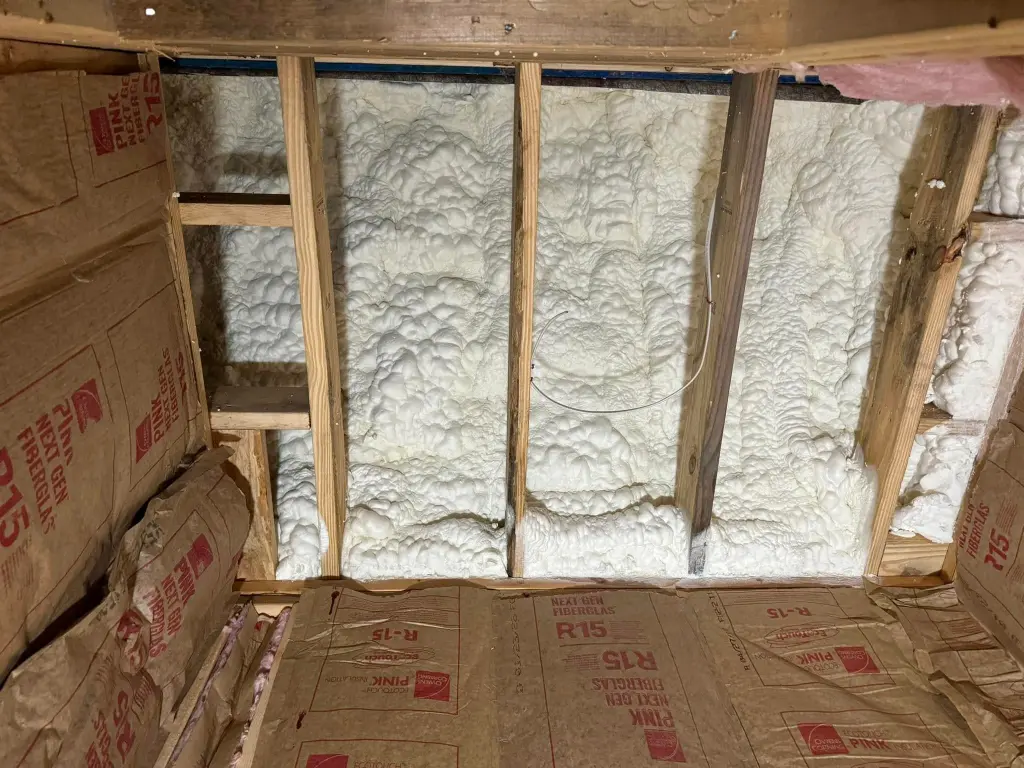
The right home insulation for Mint Hill, NC homes comes down to two things. The first is a hot, humid climate that makes summer cooling the biggest job. The second is the home’s layout: attic type, bonus rooms, crawl space, and where the ducts run. Home insulation for Mint Hill, NC should account for these factors. For most homes here, that means sealing air leaks first, then building attic insulation toward R-38 to R-49, then dealing with crawl spaces and ducts.
Climate sets the baseline for everything else. Before you pick a material, it helps to know what your insulation is up against most of the year.
North Carolina’s energy code places Mecklenburg County in Climate Zone 3, and the part of Mint Hill in Union County is also listed as Zone 3, subtype A. That means long, warm summers. Heat soaks into your attic for months, and your AC fights it all day. Winters are milder, but they’re cold enough that thin insulation still shows up as chilly floors and a heat pump that rarely shuts off.
The “A” in 3A stands for moist. Humid air carries water vapor into attics, walls, and crawl spaces through every gap it finds. When that air hits a cold AC duct or a cool surface, it can condense. The result can be damp insulation, mold, and rotting wood. Insulation here works best when air sealing comes with it, because batts with gaps around them let humid air slip right past.
Two houses on the same street can need very different work. The shape of the house often matters more than its size.
A simple vented attic over a flat ceiling is the easiest fix: seal it, then add loose fill. Bonus rooms over garages take more work. The U.S. Department of Energy lists knee walls in finished attic rooms and floors above unheated garages among the spots that need insulation. Miss one of them and that room stays hot all summer, no matter where you set the thermostat.
Vaulted ceilings leave very little space between the drywall and the roof deck. North Carolina’s code accounts for this. The insulation guide for Troy, NC can help homeowners understand local insulation requirements. Where a roof design can’t fit the full R-38, R-30 is allowed for those sections, up to 500 square feet of ceiling area. In tight cavities like these, closed-cell spray foam helps because it delivers more R-value per inch.
Many homes here sit on vented crawl spaces. Insulation between the floor joists helps, but a vented crawl space in a humid summer can pull in damp air. Home spray foam insulation solutions can help homeowners evaluate different insulation approaches. Some owners keep the floor insulation. Others seal the crawl space and insulate its walls instead. The right choice depends on moisture levels, drainage, and where your ducts and equipment sit.
Lots of homes run ductwork through a hot, vented attic. DOE advises sealing and insulating ducts that run through unconditioned space. Leaky attic ducts dump cooled air where nobody lives. Spraying foam on the roof deck instead of the attic floor brings those ducts inside the insulated space, which is one reason homeowners with attic HVAC choose it.
Older homes were built to older code levels. For example, an NC compliance guide based on the 2009 code listed R-30 ceilings for Zone 3, while the 2018 code raised that to R-38. Old fill also settles and compresses over time, so the real R-value is often lower than what was first installed.
Code minimums and recommended levels aren’t the same thing. Code sets the floor for new work. Recommended levels show what usually pays off in an existing home.
Mecklenburg County Code Enforcement states that the 2024 Energy Code remains on hold, and the 2018 NC Residential Code energy requirements stay in effect until further notice. Under the 2018 rules, Zone 3 calls for R-38 in ceilings and R-15 or R-13+2.5 in walls. For existing homes, ENERGY STAR gives Zone 3 retrofit targets of R-49 for an uninsulated attic, R-38 added where 3 to 4 inches already exist, and R-19 for floors.
| Area | 2018 NC Code (Zone 3) | ENERGY STAR Retrofit (Zone 3) |
|---|---|---|
| Attic | R-38 | R-49 empty / add R-38 |
| Walls | R-15 or R-13+2.5 | Fill cavity + R-5 sheathing when re-siding |
| Floors | R-19 | R-19 |
| Crawl space walls | Varies by design | R-5 board or R-13 batt |
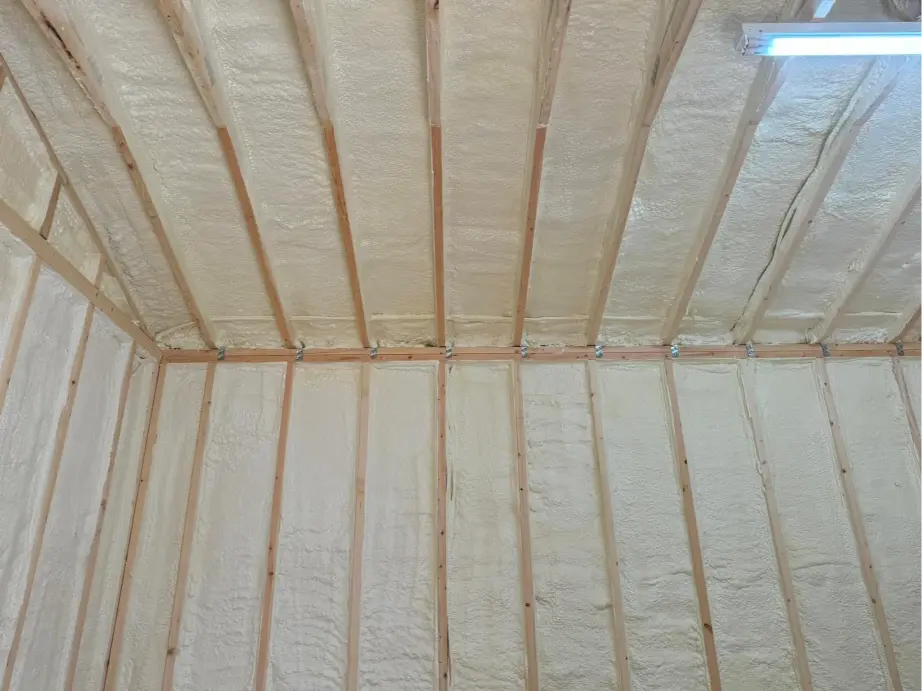
Most insulation for homes in Mint Hill, NC falls into four groups. The material should follow the house, not the other way around.
You can spot most problems in an afternoon. Here’s where to look:
If your upstairs runs hot, your crawl space feels damp, or your summer bills keep climbing, your insulation and air sealing are worth a look. Spray Foam Pro offers free quotes for homeowners in Mint Hill, NC. Call (910) 606-6247 or email [email protected] to request your free quote and get a clear plan for your attic, crawl space, or bonus room.
Often, yes. It blocks air movement along with heat, so less humid outdoor air reaches cool surfaces inside your attic or crawl space. It does cost more upfront than blown-in insulation, so it usually makes the most sense on roof decks, rim joists, and crawl space walls.
If your crawl space stays dry and your ducts aren’t down there, floor insulation can work fine. If it’s damp or holds ductwork, sealing it and insulating the walls usually controls moisture better.
Usually, if the old material is dry, clean, and free of mold or pest damage. Wet, moldy, or rodent-soiled insulation should come out first. Old fill that looks like gray-brown pebbles may be vermiculite, so leave it alone and have it checked before anyone disturbs it.
Closed-cell foam is denser, packs more R-value into each inch, and resists moisture, which suits crawl spaces and tight cavities. Open-cell foam is lighter, costs less, and dampens sound well, so it’s common on attic roof decks.
It depends on where you’re starting from. ENERGY STAR and DOE figures put average savings from proper insulation at around 15% on heating and cooling costs. Homes with very thin attic insulation or leaky ducts often see the biggest change.