

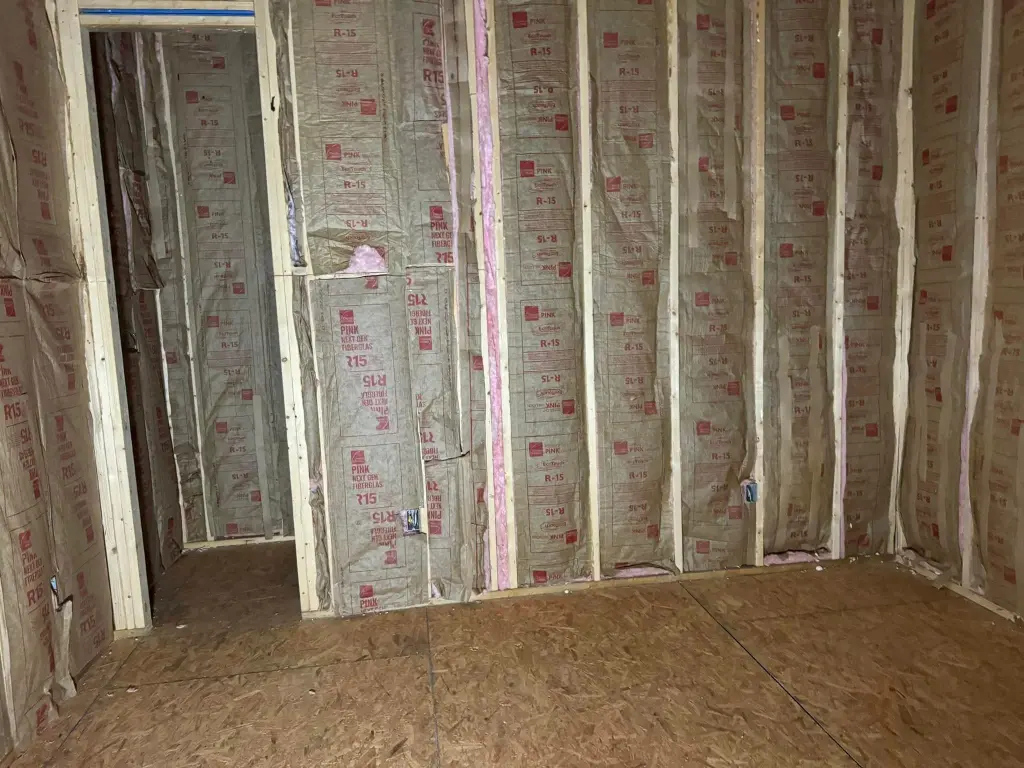
Upgrading insulation can be one of the fastest ways to fix uneven room temperatures in Badin, NC homes, but it depends on what is actually causing the imbalance. If the root cause is an under-insulated building envelope with air leaks and thermal bridging, then insulation, particularly spray foam, addresses the problem directly and often in a single day. If the issue stems from an unbalanced HVAC system, leaking ductwork, or a single thermostat controlling a multi-level home, then insulation alone will not fully solve it. For most older homes in Stanly County, the building envelope is the right place to start because it affects every room simultaneously, not just the rooms closest to or farthest from the air handler. Homeowners evaluating their options can also review the Insulation Guide for practical guidance on insulation materials, air sealing, R-values, and prioritizing problem areas.
The R-value (Insulation) is the physical separator between your conditioned living space and the outdoors. Its control functions, in order of importance, include rain control, air control, heat control, and vapor control. When any of these controls break down, rooms lose heat at different rates depending on their exposure, construction details, and proximity to unconditioned spaces like attics and crawlspaces.
In a typical Badin home, rooms over a garage, above a crawlspace, or with exterior walls facing west will experience wider temperature swings than interior rooms. This happens because heat flows through the path of least resistance. Rooms with more exterior envelope area relative to their floor plan lose conditioned air faster. When insulation is missing, compressed, or gap-filled, the rate of heat loss or gain varies dramatically from room to room, even if the HVAC system is delivering air at the same temperature to every supply register. Badin Insulation Services can help address these building-envelope weaknesses and improve temperature consistency throughout the home.
Insulation upgrades equalize this by raising the thermal resistance of the weakest parts of the envelope first. The rooms that were losing heat the fastest will show the most noticeable improvement, pulling the entire house closer to a uniform temperature.
A thermal bridge is any area where a material with higher thermal conductivity creates a path of least resistance for heat transfer. In standard framed construction, wood or steel studs span from the interior to the exterior, bypassing the insulation in the wall cavity. Window-to-wall junctions, door frames, floor-to-wall connections, and recessed lighting fixtures are all common thermal bridge locations.
Thermal bridges cause localized cold spots in winter and hot spots in summer. You might notice this as a cold stripe along an exterior wall behind the drywall, or a room that never seems to reach the set temperature even though the air vent is blowing warm air. The R-value of the insulation between the studs might look adequate on paper, but the framing itself undermines the overall assembly performance.
Spray foam insulation addresses thermal bridging more effectively than batt insulation because it fills gaps, voids, and irregular spaces around framing members. Closed-cell spray foam applied to exterior walls, rim joists, and attic roof decks creates a continuous layer of thermal resistance that interrupts the conductive path through studs and joists.
Badin, NC sits in ASHRAE Climate Zone 4A, which means mixed-humid winters and hot, humid summers. Homes in this zone experience both heating and cooling demands, so the building envelope needs to resist heat loss in winter and heat gain in summer. According to ENERGY STAR’s recommended R-values for retrofitting existing wood-framed buildings in Zone 4A:
| Location | If Uninsulated | If 3-4 Inches Existing |
|---|---|---|
| Attic | R-60 | R-49 |
| Floor | R-19 | R-19 |
| Wood-framed walls (when siding is removed) | R-5 to R-10 continuous sheathing + cavity fill | R-10 continuous sheathing |
Most older homes in the Badin area were built with far less than these levels. Attics may have R-11 to R-19 of fiberglass that has settled, compressed, or been disturbed over decades. Crawlspaces and rim joists are frequently uninsulated entirely. Homeowners comparing local contractors can see us on Google to review customer experiences and learn more before choosing an insulation professional. When these gaps exist, rooms above or adjacent to those weak spots will always run hotter or colder than the rest of the house, no matter how hard the HVAC system works.
Understanding when insulation is the right fix requires comparing it against other common solutions for uneven temperatures.
| Approach | What It Fixes | Speed of Results | Best For |
|---|---|---|---|
| Spray foam insulation upgrade | Envelope heat loss/gain, air leaks, thermal bridging | 1-2 days installation, immediate effect | Homes with inadequate or missing insulation, drafts, and rooms over unconditioned spaces |
| Duct sealing and balancing | Uneven airflow between rooms | 1 day | Homes where some rooms get strong airflow and others get very little |
| HVAC zoning system | Single-thermostat control of multi-level or large homes | 1-3 days | Two-story homes with consistent 3-5 degree differences between floors |
| New HVAC equipment | Aging, undersized, or failing system | 1-2 days | Systems that cannot maintain set temperature even in well-insulated rooms |
| Window replacement | Single-pane or failed glazing heat loss | Multi-day per window | Homes with significant window-to-wall ratio on exposed sides |
The reason insulation is often the fastest overall fix is that it addresses multiple problems at once: conductive heat loss through under-insulated assemblies, convective heat loss through air leaks, and radiant heat gain through attic roofs in summer. Other solutions target a single variable, like airflow or equipment capacity.
Weatherization is the practice of sealing a building against air infiltration and the elements. Whereas insulation primarily reduces conductive heat flow, weatherization primarily reduces convective heat flow through cracks, gaps, and penetrations. The two work together. You can insulate an attic to R-60, but if the attic hatch is unsealed and the recessed lights are leaking air, the room below will still feel drafty and inconsistent.
Common weatherization measures that pair with insulation include sealing around windows, doors, pipes, and wiring penetrations with caulk or foam, adding weatherstripping to exterior doors, and sealing ductwork with mastic. In Badin’s humid climate, sealing the building envelope also reduces moisture infiltration, which protects insulation performance and indoor air quality.
Spray foam insulation serves as both an insulator and an air barrier simultaneously. When we spray foam into a rim joist, crawlspace, or attic, it adheres to the substrate and expands to fill cavities, sealing air leaks that would otherwise require separate weatherization work. This dual function is why spray foam installations often produce faster, more noticeable temperature improvements than insulation types that leave gaps.
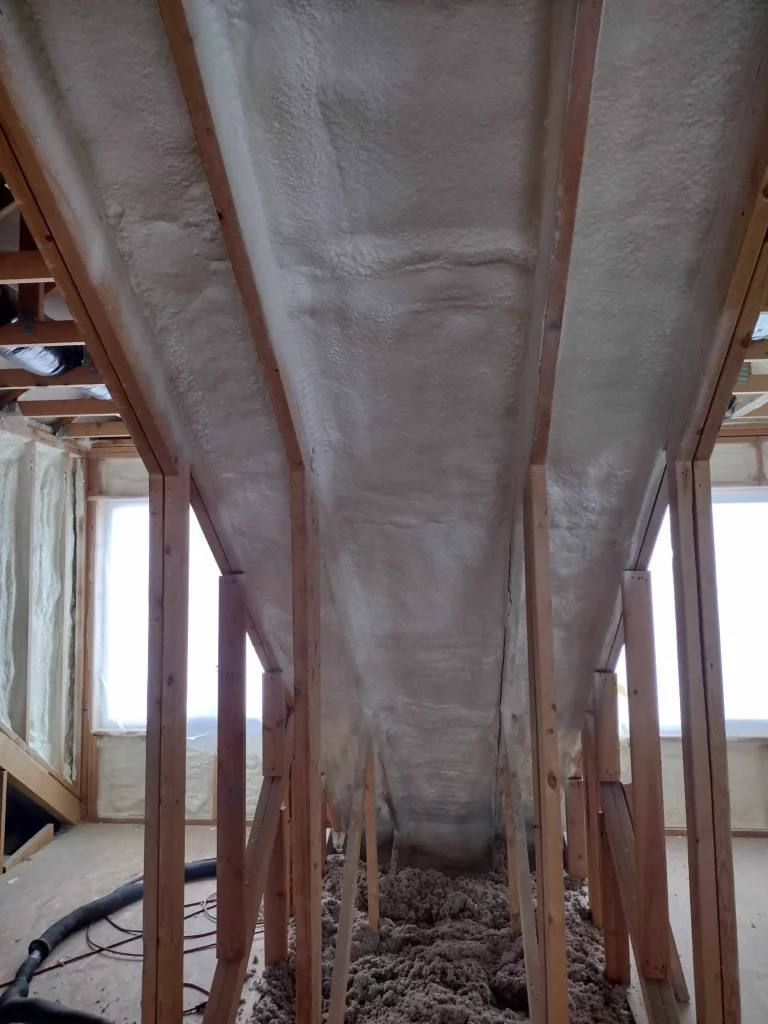
Older homes (pre-1990) with minimal insulation: Start with the attic and crawlspace or basement rim joists. These areas represent the largest envelope weaknesses and affect multiple rooms. Spray foam in the attic roof deck and rim joists will produce the fastest temperature stabilization.
Two-story homes with upstairs/downstairs imbalance: Focus on the attic floor or roof deck first. Heat rises, so an under-insulated attic causes the second floor to run hotter in summer and colder in winter. Duct sealing in the floor cavity may also be needed.
Homes with rooms over the garage: These rooms have conditioned space above unconditioned space with little or no insulation beneath. Spray foam on the garage ceiling will address both the insulation deficit and the air barrier in one step.
Newer homes (2000+) with complaints about specific rooms: The issue may be duct design, closed vents, or thermal bridging at specific locations rather than a whole-house insulation deficit. A targeted inspection of the problem room’s envelope and duct supply is the right starting point.
Spray Foam Pro helps homeowners in Badin, NC solve uneven room temperatures by identifying and addressing the real source of the problem, whether that is inadequate attic insulation, air-leaky rim joists, or under-insulated walls. Our team assesses your entire building envelope and recommends spray foam solutions that combine high R-value insulation with air sealing for faster, more complete results. Call us at (910) 606-6247 or email [email protected] to request a quote or schedule your home temperature assessment today.
Request a Quote | Schedule a Temperature Assessment
If the room has more exterior wall area, sits above an unconditioned space, or has significant air leaks, upgrading insulation and air sealing in those areas will often resolve the temperature difference without any HVAC changes.
Most homeowners notice temperature improvements within 24 hours of spray foam installation, as the building envelope immediately begins retaining conditioned air more effectively.
Yes. Insulation reduces conductive heat flow while air sealing reduces convective heat flow. Without air sealing, conditioned air escapes through gaps and undermines the insulation’s performance.
It can. An uninsulated attic allows heat to escape in winter, forcing your HVAC system to work harder. This increases run times and can affect air delivery to all rooms, not just those directly below the attic.
If some rooms have weak airflow from the vents, the issue is likely duct-related. If airflow feels consistent but rooms still will not hold temperature, the building envelope and insulation are the more likely culprits.