
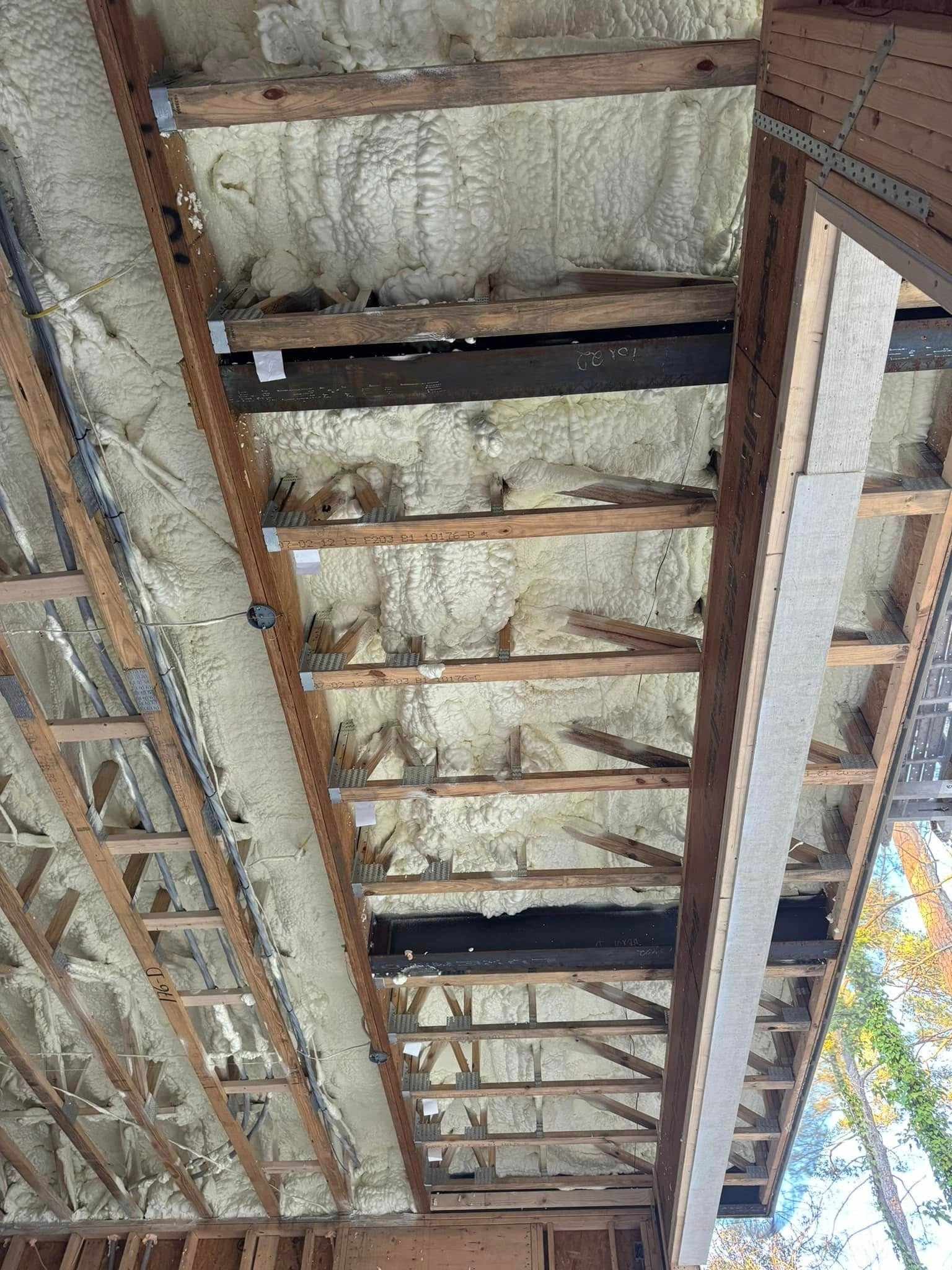
Does noise from televisions, conversations, or street traffic disrupt your peace at home? Are your energy bills climbing despite running your heating and cooling system around the clock? With open-cell spray foam insulation from Spray Foam Pro, you can enjoy a quieter, more comfortable home while dramatically reducing monthly utility expenses through superior air sealing and thermal performance.
Open-cell spray foam insulation represents a smart investment for homeowners seeking an affordable alternative to traditional insulation materials. This lightweight, expanding foam fills every cavity and gap in your home's structure, creating a continuous air barrier that prevents conditioned air from escaping and outdoor air from infiltrating your living spaces. The material's vapor-permeable nature allows moisture to pass through gradually, preventing trapped moisture issues while still delivering exceptional energy savings.
North Carolina homes benefit significantly from open-cell spray foam's unique properties, especially in our humid climate, where moisture management is crucial. Open-cell spray foam offers an R-value of approximately R-3.6 per inch, providing solid thermal performance while allowing you to achieve recommended insulation levels without the higher cost associated with closed-cell alternatives. The material expands up to 150 times its original volume during application, ensuring complete coverage in hard-to-reach areas where traditional batt insulation simply cannot reach. These advantages make it an ideal solution for high-performance attic insulation systems, where complete air sealing and moisture control are essential.
Polyurethane foam types
Homeowners choosing open-cell spray foam insulation gain multiple advantages beyond basic thermal protection. The material's sound-dampening properties make it an excellent choice for noise reduction between rooms and floors, creating peaceful living spaces throughout your home. Additionally, the quick expansion during application seals gaps and cracks that contribute to air leakage, addressing comfort issues that traditional insulation materials cannot resolve.
The cost-effectiveness of open-cell spray foam makes professional insulation accessible to more homeowners without sacrificing performance or longevity. A properly installed open-cell system maintains its R-value for decades without settling, sagging, or degrading, unlike fiberglass batts, which can compress over time. This long-term reliability means your insulation investment continues delivering energy savings and comfort improvements for the life of your home.
Deciding between open-cell and closed-cell foam insulation depends on your specific needs, budget constraints, and application requirements. Open-cell spray foam excels in interior applications such as attics, walls, and ceilings, where its sound-damping properties and affordability provide exceptional value. The material's lower density and vapor-permeable characteristics make it particularly suitable for our humid North Carolina climate, enabling controlled moisture transmission to prevent condensation.
Closed-cell foam offers a higher R-value per inch and superior moisture resistance, making it ideal for crawl spaces, basements, and metal buildings where water exposure is a concern. However, closed-cell installation costs significantly more per square foot, which can strain budgets for whole-home insulation projects. Many homeowners achieve optimal results by combining both materials, using closed-cell foam in moisture-prone areas and open-cell spray foam throughout the rest of the home for balanced performance and affordability.
| Feature | Open-Cell Spray Foam | Closed-Cell Spray Foam |
|---|---|---|
| R-Value per Inch | R-3.5 to R-3.6 | R-6 to R-7 |
| Expansion Rate | 100x to 150x | 30x to 40x |
| Vapor Permeability | Permeable | Vapor Barrier |
| Sound Dampening | Excellent | Moderate |
| Cost per Square Foot | Lower | Higher |
| Best Applications | Attics, Walls, Ceilings | Crawl Spaces, Basements |
Understanding the open-cell spray foam R-value helps you determine proper insulation thickness for optimal energy efficiency. Climate Zone 4, which includes Troy and surrounding areas, recommends attic insulation levels of R-38 to R-49 for maximum performance. With open-cell spray foam's R-3.6 per inch rating, achieving these targets requires approximately 11 to 14 inches of foam material in attic applications, providing comprehensive thermal protection that significantly reduces heating and cooling loads.
Wall cavities typically require lower R-values ranging from R-13 to R-21, depending on construction type and local building codes. Open-cell spray foam achieves these levels easily within standard 2x4 or 2x6 wall depths while simultaneously sealing air leakage points around electrical outlets, plumbing penetrations, and framing irregularities. This dual action of insulating and air sealing creates a more effective thermal barrier than fiberglass batts alone can provide.
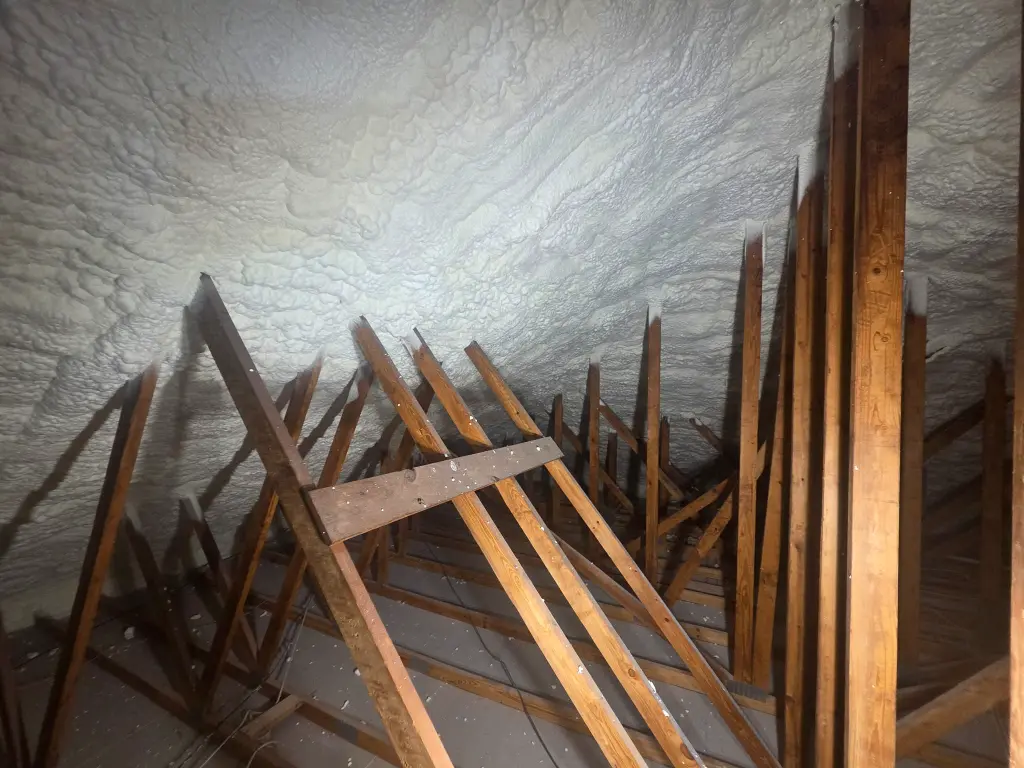
Our installation begins with a thorough evaluation of your home's insulation needs, identifying air leakage points, existing insulation deficiencies, and specific comfort issues you experience. We recommend open-cell spray foam applications based on your home's unique characteristics, budget considerations, and performance goals for energy efficiency and sound control. This customized approach ensures you receive the right solution for your specific situation rather than a one-size-fits-all recommendation.
During installation, we prepare your work areas by protecting surfaces and ensuring proper ventilation throughout your home. Our professionals apply open-cell spray foam using specialized equipment that meters, mixes, and sprays the material precisely for optimal coverage and expansion. The foam cures within minutes, allowing us to complete most projects in a single day, and we clean every job site thoroughly before leaving your home.
Troy's climate demands insulation that handles hot, humid summers and cool winters while managing moisture effectively. Open-cell spray foam insulation addresses these challenges by providing excellent thermal performance while allowing controlled moisture vapor transmission, preventing condensation buildup. This vapor-permeable quality makes open-cell particularly well suited for our region, where humidity can cause problems with less breathable insulation materials.
Many homes in Troy and the surrounding areas were built with minimal insulation, resulting in uncomfortable living spaces and wasted energy due to air leaks and poor thermal barriers. Retrofitting open-cell spray foam into attics, walls, and ceilings dramatically improves comfort while reducing the burden on your heating and cooling systems. The energy savings become particularly noticeable during extreme weather months when your HVAC system works hardest to maintain consistent indoor temperatures.
Noise transmission between rooms and floors disrupts daily life and privacy in many homes. Open-cell foam for soundproofing walls absorbs sound energy rather than blocking it completely, creating quieter spaces without the echo-like qualities that some denser materials can produce. This makes open-cell spray foam an excellent choice for home offices, bedrooms, media rooms, and any space where noise control matters for your comfort and productivity.
The material's cellular structure traps sound waves across multiple frequencies, reducing both airborne noise like voices and music and impact noise like footsteps from above. Unlike traditional insulation that provides minimal sound reduction, open-cell spray foam delivers meaningful acoustic improvements while simultaneously providing thermal insulation and air sealing. This multi-function performance makes it an intelligent choice for renovations and new construction alike.
Ready to enjoy a quieter, more comfortable home with lower energy bills? Contact Spray Foam Pro today for a free, no-obligation quote on open-cell spray foam insulation for your home. Call us at (910) 606-6247 or email [email protected] to schedule your free consultation.
Yes, building codes require a thermal barrier like drywall or intumescent coating over exposed spray foam insulation for fire safety, which we include in our installation recommendations.
Homeowners typically see energy savings of 20-40% after installing open-cell spray foam insulation, with exact amounts depending on your home's size, current insulation, and local climate conditions.
Open-cell spray foam insulation lasts indefinitely, typically the lifetime of your home, without settling, sagging, or losing its insulating properties over time.
Yes, open-cell spray foam's vapor-permeable design allows controlled moisture transmission while sealing air leaks that bring humid outdoor air inside, helping manage overall home humidity.
While open-cell foam handles moisture better than some materials, we recommend fixing roof leaks before installation to prevent water damage and ensure optimal insulation performance.