
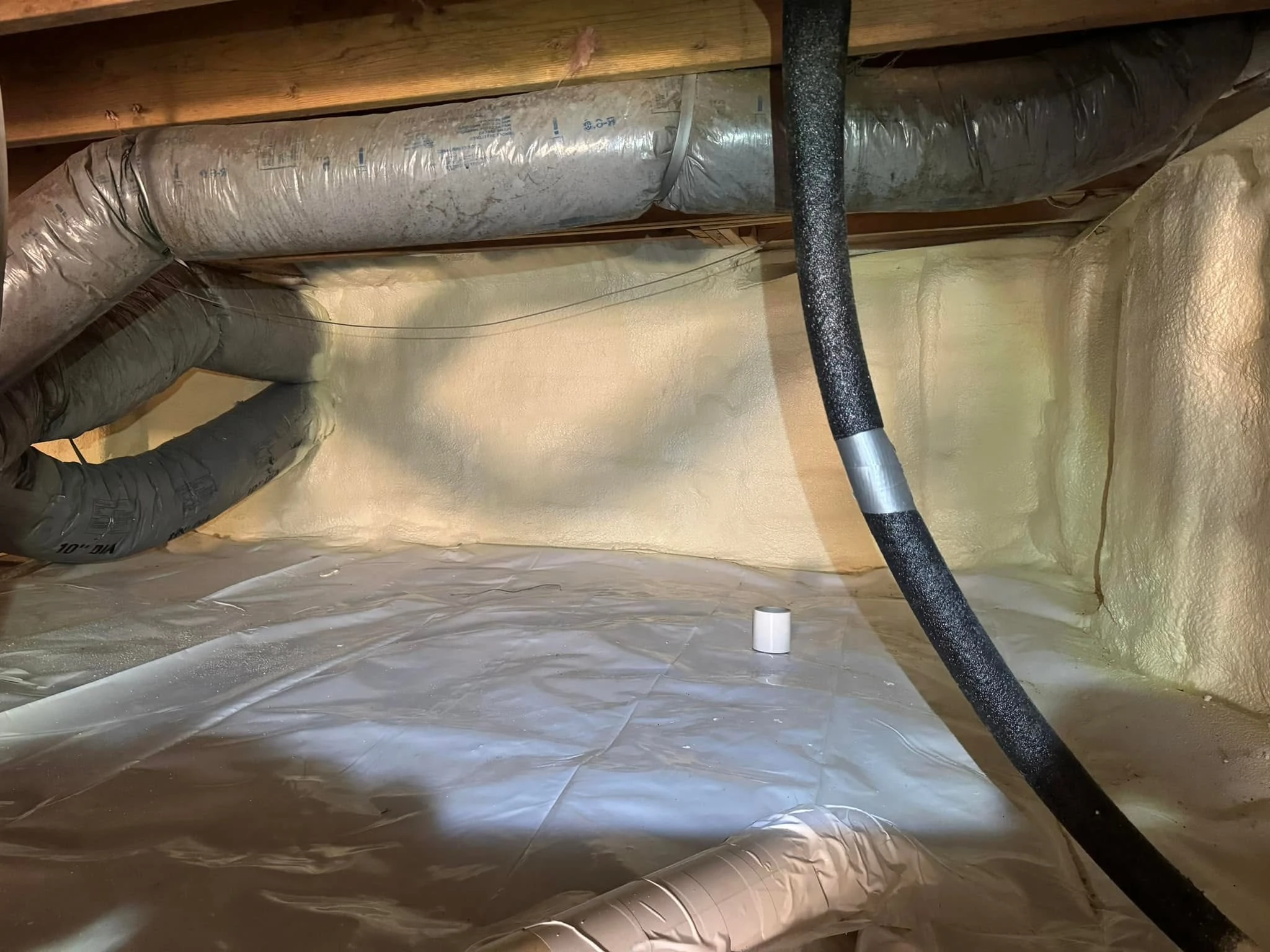
If you are dealing with musty odors in your home, cold floors, or rising energy bills, your crawl space is likely the culprit. Many homeowners in Troy, NC, face these issues because traditional crawl space insulation methods often fail in our humid, subtropical climate. Crawl space insulation solutions can help you move beyond simple fiberglass batts and address moisture control at the source. Understanding the benefits homeowners can expect is an important first step toward creating a more comfortable and energy-efficient home.
The standard approach to crawl space insulation for decades involved installing fiberglass batts between floor joists and leaving foundation vents open. In theory, this allowed air to circulate. In reality, it created a moisture trap.
North Carolina’s high humidity levels mean that outdoor air is frequently heavy with moisture. When this warm, damp air enters a vented crawl space, it comes into contact with cool floor joists and fiberglass insulation. The crawl space encapsulation guide explains how addressing moisture at the source can help protect insulation from condensation. Over time, that fiberglass soaks up moisture, sags, and loses its insulating value. It also becomes a breeding ground for mold and mildew.
This moisture doesn’t stay beneath your home. Through the stack effect, the air in your crawl space naturally rises into your living area. If your crawl space is damp, that moisture, along with mold spores and musty odors, enters your home. This is why installing crawl space insulation on floor joists alone is rarely enough; if you don’t control the environment inside the crawl space, the insulation will eventually fail.
To achieve a comfortable, energy-efficient home, modern building science favors a “closed” or sealed crawl space system. This method treats the crawl space as part of the home’s conditioned envelope rather than an outdoor area. Choosing between different crawl space insulation types that Troy, NC homeowners may encounter depends on the condition of the crawl space, moisture levels, and the home’s specific needs.
| Material | R-Value (per inch) | Moisture Resistance | Best Use Case |
| Closed-Cell Spray Foam | High (~6.0–7.0) | Excellent | Sealing walls and rim joists |
| Rigid Foam Board | Moderate (~5.0–6.0) | High | Foundation walls and perimeter |
| Fiberglass Batts | Low (~3.0–3.5) | Poor | Not recommended for NC crawl spaces |
Closed-cell spray foam is the gold standard for this application. Because it is dense and impermeable to water, it acts as both a high-performance insulator and an air barrier. It adheres directly to surfaces, which prevents air leaks that fiberglass cannot stop. Rigid foam board is an effective secondary option for foundation walls, provided the seams are properly sealed with specialized tape. For homeowners comparing the best insulation for crawl space in Troy, NC, closed-cell spray foam is often the preferred option when moisture control and air sealing are major concerns.
You cannot simply spray foam or install boards and expect problems to disappear. If you insulate a crawl space that still has standing water or high humidity, you are effectively sealing in the moisture you are trying to combat. Proper crawl space insulation installation in Troy, NC should begin with moisture assessment and preparation before insulation materials are installed.
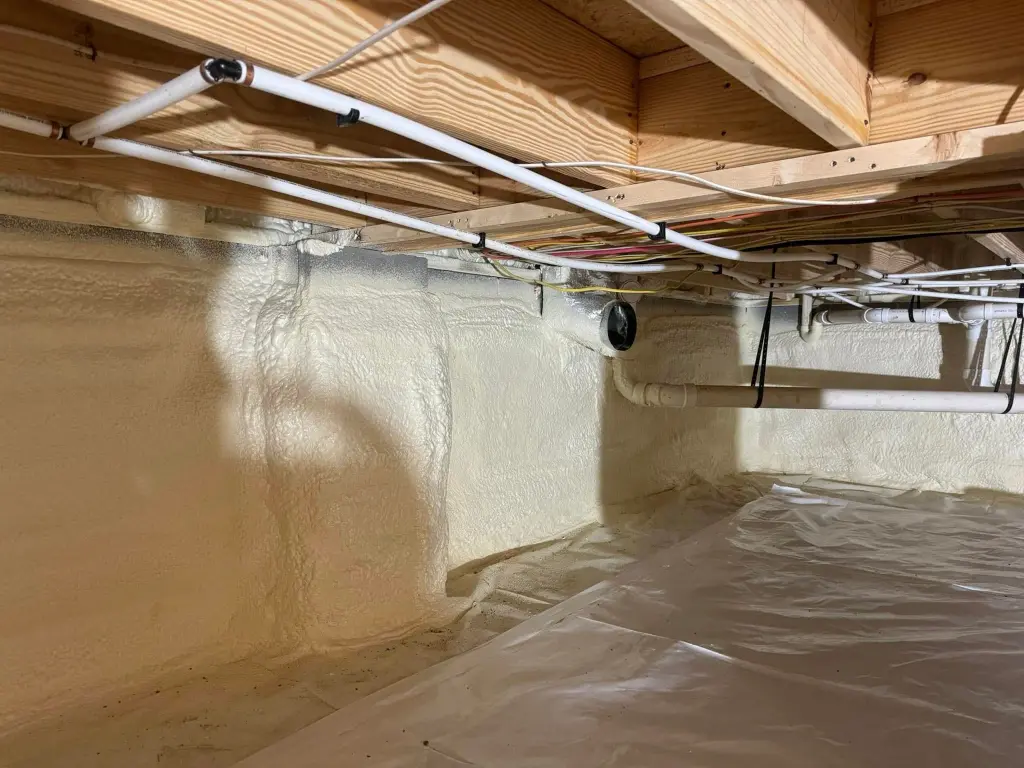
Before any installation occurs, you must ensure the space is dry. This includes addressing exterior drainage issues, such as cleaning gutters and ensuring downspouts divert water away from the foundation. Read our customer reviews to learn about other customers’ experiences with our services. If groundwater enters the crawl space, a sump pump or interior drainage system may be necessary.
A heavy-duty vapor barrier must cover the entire crawl space floor and extend up the foundation walls. This prevents moisture from the soil, which is a constant source of humidity, from rising into the crawl space air.
When insulating the foundation walls of your home, you must comply with North Carolina building requirements regarding termite protection. Professional installers are required to leave a 3-inch inspection gap at the top of the foundation wall. This exposed strip allows termite inspectors to see if pests are attempting to tunnel up from the soil into your home’s wood framing. Never allow an installer to foam or board over this gap.
If you are ready to address your crawl space issues, you need a professional assessment. A qualified contractor will evaluate your foundation, moisture levels, and existing ventilation to determine the most effective path forward. During your consultation, you can also discuss factors such as crawl space insulation cost in Troy, NC, available materials, and the most suitable installation approach for your home.
If you are looking for an expert evaluation in the Troy area, our team at Spray Foam Pro is ready to help. We specialize in crawl space insulation installation designed for the North Carolina climate. You can reach us at (910) 606-6247 or email [email protected] to schedule your assessment and take the first step toward a healthier home.
No. Insulation helps regulate temperature, but it does not stop mold. Mold requires moisture to grow. You must eliminate the moisture source through drainage, vapor barriers, and air sealing before installing insulation.
Sealing vents without also installing a vapor barrier and dehumidification or conditioned air can actually worsen moisture issues. You must create a complete system to control the environment, not just block the airflow.
When installed correctly in a sealed crawl space, closed-cell spray foam and rigid foam are permanent solutions that do not settle, sag, or absorb moisture like fiberglass. They are designed to last for the life of the home.
If your crawl space is vented, cold winter air moves freely underneath your floors. Even with insulation batts, the “stack effect” allows that cold air to bypass the insulation and keep your floors chilly. Sealing the crawl space stops this air movement.
By installing a vapor barrier, sealing foundation vents, and using closed-cell spray foam on walls, you decouple your crawl space from the humid exterior, creating a stable, dry environment.