
Insulation installation vs. insulation replacement comes down to the condition of the material already in your attic, walls, and crawl space. This insulation guide for Troy, NC provides additional context for understanding insulation needs. Installation adds new insulation to areas that are bare or under-insulated, often layered directly over existing material. Replacement removes old or damaged insulation first, then rebuilds the assembly with new product. For Southern Pines homeowners, the right choice depends on four factors: moisture history, pest activity, current R-value, and the age of the home. Installation serves homes that simply need more thermal resistance for our long cooling season. Replacement serves homes with wet, moldy, compacted, or contaminated insulation that can no longer do its job. The sections below explain when each approach fits, what North Carolina’s energy code expects, and how our team helps you decide.
Installation covers any project where insulation is added to a space that has none, or where more is added to bring the assembly up to target. Common examples in Moore County include insulation installation options such as topping off attic insulation in an older home, insulating a floor over a vented crawl space, and spraying foam in a new addition or garage conversion.
The fastest self-check comes from ENERGY STAR: look across your attic. If insulation sits level with or below the floor joists, you should add more. If the joists are buried and coverage is even with no low spots, you likely have enough. Their guidance puts the recommended attic level at R-38, or about 10 to 14 inches of material.
Two points matter for planning:
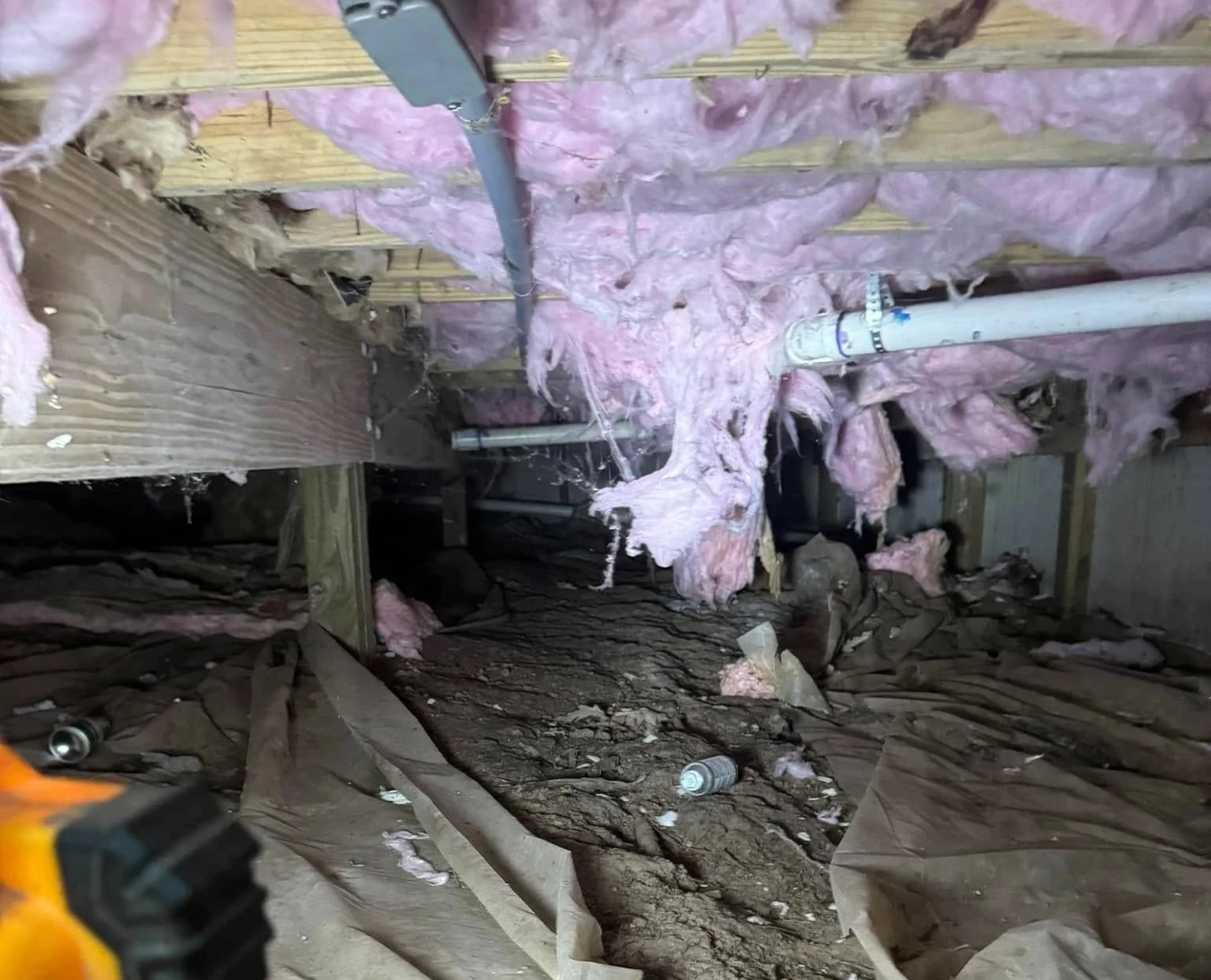
Replacement is a two-step project: remove the old material, correct the underlying cause, then install new insulation. The triggers are condition-based rather than age-based. Per the EPA, materials that stay wet or grow mold cannot be cleaned effectively and must be removed. Their guidance also stresses drying affected areas within 24 to 48 hours, which is hard to achieve inside a closed wall cavity or a humid Southern Pines crawl space.
Typical replacement triggers include:
NC State Extension is direct on this point for our region: remove and replace wet insulation in crawl spaces and walls, do not seal anything up until wood moisture content is 19 percent or lower, and stay on mold alert afterward. Replacement done without fixing the moisture source simply sets up the next failure.
| Factor | New Installation | Full Replacement |
|---|---|---|
| Starting condition | Bare or under-insulated, material dry and intact | Wet, moldy, contaminated, compacted, or disturbed |
| Existing material | Stays in place, new layers added over it | Removed and disposed of first |
| Typical triggers | Visible joists, uneven coverage, addition, code upgrade | Water damage, pests, musty odors, major renovation |
| Prep work required | Air sealing and depth mapping | Moisture correction, sanitation, framing inspection |
| Disruption level | Low, most attic work finishes in a day | Moderate to high, includes removal and drying time |
| Best-fit outcome | Comfort gains and lower cooling load | A clean, healthy, correctly insulated assembly |
Southern Pines sits in central North Carolina’s mixed-humid climate, zone 4 under the state energy code. That means long, humid summers drive attic heat gain and crawl space moisture, while occasional cold snaps still reward good thermal resistance. The North Carolina Office of State Fire Marshal publishes the residential insulation targets below for climate zone 4.
| Assembly | NC Code Target (Zone 4) |
|---|---|
| Ceiling/attic | R-38 |
| Wood frame wall | R-15, or R-13 plus R-2.5 continuous |
| Floor above unconditioned space | R-19 |
| Crawl space wall | R-10 continuous or R-13 cavity |
| Ducts in unconditioned space | R-8 |
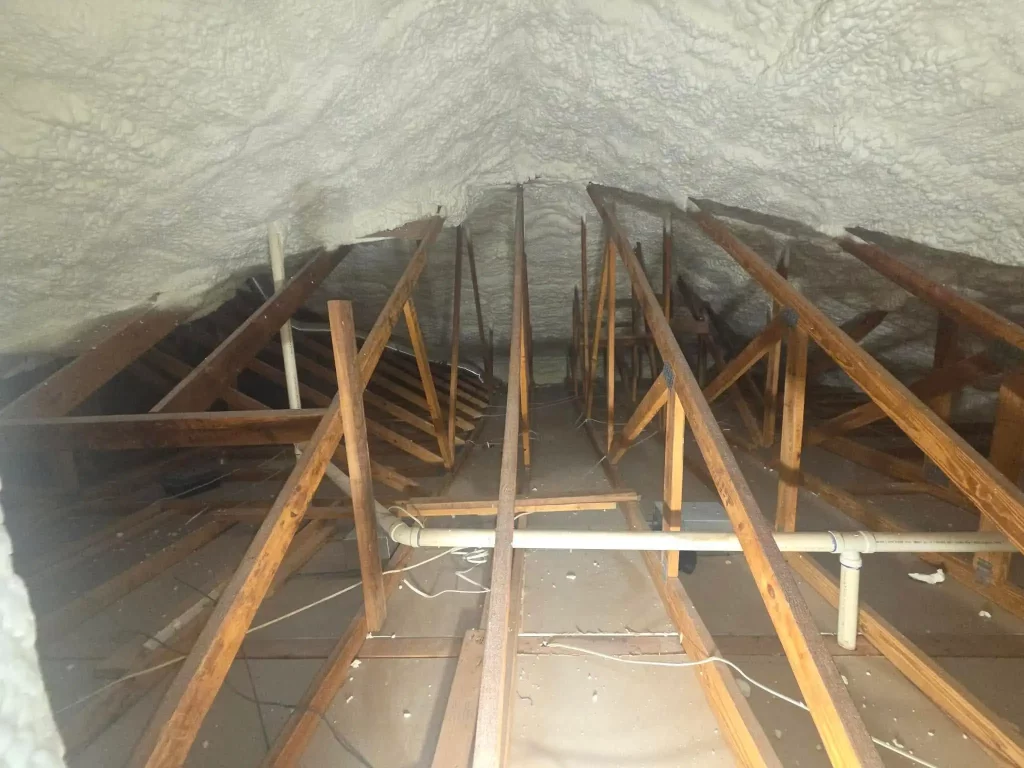
| Unvented attic, air-impermeable foam at roof deck | R-25 deemed to satisfy R-38 |
Humidity shapes the decision more here than in drier regions. The EPA advises keeping indoor relative humidity below 60 percent, ideally between 30 and 50, because sustained humidity feeds mold growth, and crawl spaces with high relative humidity are common sites of hidden mold on insulation. Many Southern Pines homes built on crawl spaces hold that humid air against floor insulation all summer, which is why reading local customer reviews before any installation decision can help homeowners learn about local service experiences.
Choose installation when:
Choose replacement when:
When in doubt, measure rather than guess. A depth check in the attic, a moisture reading on framing, and a review of the current assembly against the zone 4 table above will settle the question quickly.
| Your Situation | Recommended Approach | Key Notes |
|---|---|---|
| Home under 10 years old, high power bills | Installation | Air seal and top off the attic toward R-38; verify ducts are wrapped to R-8 |
| Home 15 to 30 years old, never re-insulated | Assessment first | Often a mix: replacement where disturbed, installation everywhere else |
| Musty crawl space or springy floors | Replacement | Wet or contaminated floor insulation must go; address vents and ground moisture before insulating |
| Recent roof or plumbing leak | Replacement | Remove affected material, dry framing to 19 percent moisture or lower, then rebuild |
| Planning an unvented spray foam attic | Replacement of floor insulation plan | Zone 4 allows R-25 air-impermeable foam at the roof deck to satisfy the R-38 ceiling target |
Spray Foam Pro installs and replaces insulation across Southern Pines and the greater Sandhills, and we start every project with the same question: does your existing insulation deserve to stay, or does it need to go? Our team measures attic depths, tests crawl space moisture, and compares what you have against North Carolina’s zone 4 targets, then gives you a clear written scope either way. Call us at (910) 606-6247 or email [email protected] to talk through your home, or use the buttons below to get started.
Your home’s comfort in July depends on decisions made in the attic, so make them with a team that inspects first.
Yes, as long as the existing material is dry, intact, and uncontaminated. ENERGY STAR confirms you can layer loose fill over batts or unfaced batts over loose fill without removing anything.
Not always, but usually. The EPA states that wet or moldy insulation should be removed and replaced because it cannot be cleaned effectively, and materials that dry fully within 24 to 48 hours may avoid mold growth.
There is no fixed schedule. Insulation is replaced based on condition, not age, so check for settling, moisture damage, pest activity, and uneven coverage rather than watching the calendar.
Target R-38 in the attic, which is roughly 10 to 14 inches of material depending on type. That matches both ENERGY STAR guidance and North Carolina’s climate zone 4 ceiling requirement.
Most attic or crawl space projects are completed in one to two days, including removal and reinstallation. Timelines stretch when framing must dry to 19 percent moisture content before the new insulation is installed.