
If you have ever stepped into one room of your house and felt a noticeable temperature difference compared to another, or watched your energy bills climb during a Montgomery County summer without understanding why, you have already experienced the real-world effects of inadequate insulation. Insulation is not a luxury upgrade or an afterthought; it is one of the most fundamental systems in any home, quietly working around the clock to keep conditioned air inside and extreme temperatures outside.
Choosing the right insulation involves more than picking a product off a shelf. Your climate, your home’s construction, your budget, and even the specific rooms you use most all factor into the equation. Whether you are exploring options for a new build or upgrading an existing property, working with experienced professionals who specialize in high-quality insulation services can help you achieve better comfort, energy efficiency, and long-term savings. This guide draws on years of hands-on experience installing insulation throughout the Troy, NC area, and we have put together every detail you need to make a confident, well-informed decision. Here is what we will cover:
Before you can choose the best insulation, you need to understand what it actually does. Heat flows in three ways: conduction (through solid materials), convection (through air movement), and radiation (through direct heat emission). In your home, heat moves from warmer areas to cooler areas until there is no temperature difference left. That means in winter, the warmth you pay for escapes through your walls, ceiling, and floors. In summer, the blazing heat outside pushes its way in. This process is documented by the U.S. Department of Energy.
According to energy programs, insulation works by providing resistance to this heat flow. It slows down the transfer of heat between the inside and outside of your home, which means your heating and cooling systems do not have to work as hard to maintain a comfortable temperature.
The effectiveness of insulation is measured in R-value, which stands for thermal resistance. A higher R-value means better resistance to heat flow. The R-value of insulation depends on the material itself, its thickness, and its density. When you see an insulation product labeled R-13 or R-30, that number tells you how well that particular product resists heat transfer.
Key Takeaways: How Heat Flow and R-Value Work
Expert Tip: Do not assume that doubling the thickness of insulation doubles your energy savings. The law of diminishing returns applies. Each additional inch of insulation provides less incremental benefit than the last. Our team helps homeowners find the sweet spot where you get maximum performance without paying for R-value you will not actually benefit from.
Troy sits in Montgomery County, which the North Carolina Energy Conservation Code classifies as Climate Zone 3A (moist, warm). This humid-subtropical classification has direct implications for how you should insulate your home.
Summers in Troy bring sustained heat and humidity, with temperatures regularly pushing into the 90s from June through September. Winters are milder than the mountains to our west, but overnight lows in the 20s and 30s are common from December through February, and cold snaps can bring even lower temperatures. Your insulation has to perform in both directions, resisting heat gain in summer and heat loss in winter. Choosing the right insulation solutions for year-round comfort can help maintain consistent indoor temperatures while improving energy efficiency throughout every season.
The moisture component matters just as much as the temperature. Humid air carries more energy than dry air, which means moisture management has to be part of your insulation strategy. According to the North Carolina Department of Environmental Quality, the Piedmont area, where Montgomery County falls, has specific requirements for wall, ceiling, and floor insulation to handle both temperature extremes and humidity loads.
For Climate Zone 3 homes, the DOE recommends R-38 to R-49 for uninsulated attics, R-13 to R-20 for wood-frame walls, and R-19 for uninsulated floors over crawl spaces or unconditioned basements.
Expert Tip: Many homes in the Troy area were built before modern energy codes existed. If your home is more than 25 years old, there is a good chance it has far less insulation than what current codes require, and upgrading can make an immediate, noticeable difference in your comfort and energy bills.
Understanding the available options is the most important step in this process. Each type of insulation has strengths and weaknesses, and the best choice depends on where it will be installed, your budget, and your performance goals.
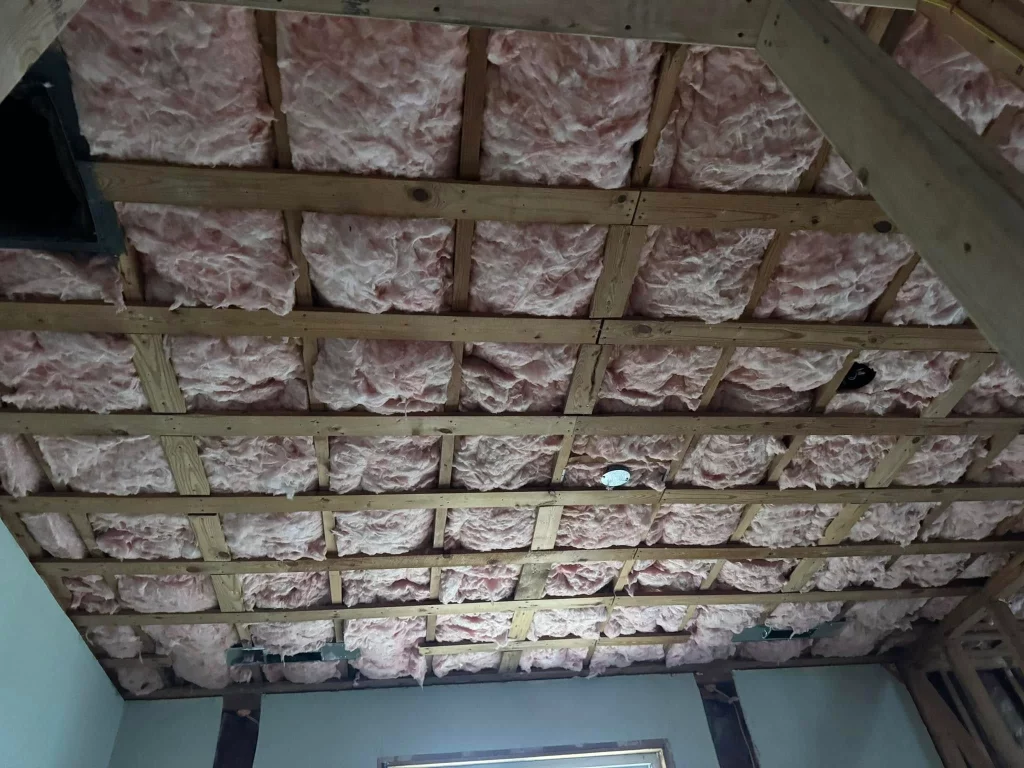
Fiberglass insulation is the most widely recognized type on the market. It comes in pre-cut batts or continuous rolls designed to fit between standard wall studs, floor joists, and ceiling rafters. Made from finely spun glass fibers, fiberglass batts are relatively inexpensive and can be installed by homeowners with basic tools and some careful attention.
R-value per inch ranges from R-2.9 to R-3.8, depending on the density and manufacturer. A standard 2×4 wall cavity can hold R-13 or R-15 batts, while a 2×6 cavity accommodates R-19 or R-21.
The main drawback of fiberglass batts is that installation quality makes or breaks performance. Gaps around electrical boxes, compressed sections where the material was stuffed into tight spaces, and missing pieces in irregular areas all create paths for air to move through. Fiberglass does not seal against air leakage on its own.
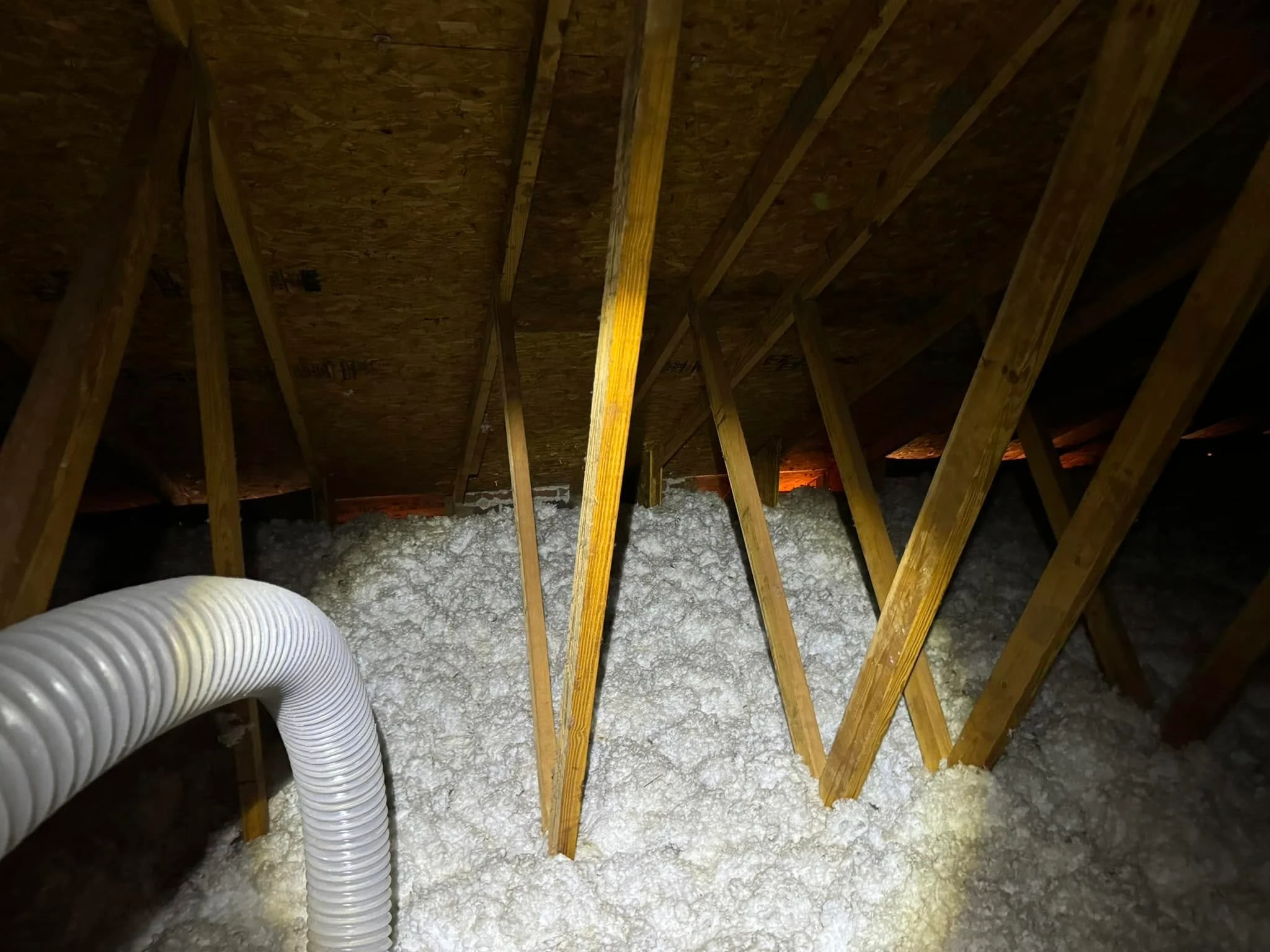
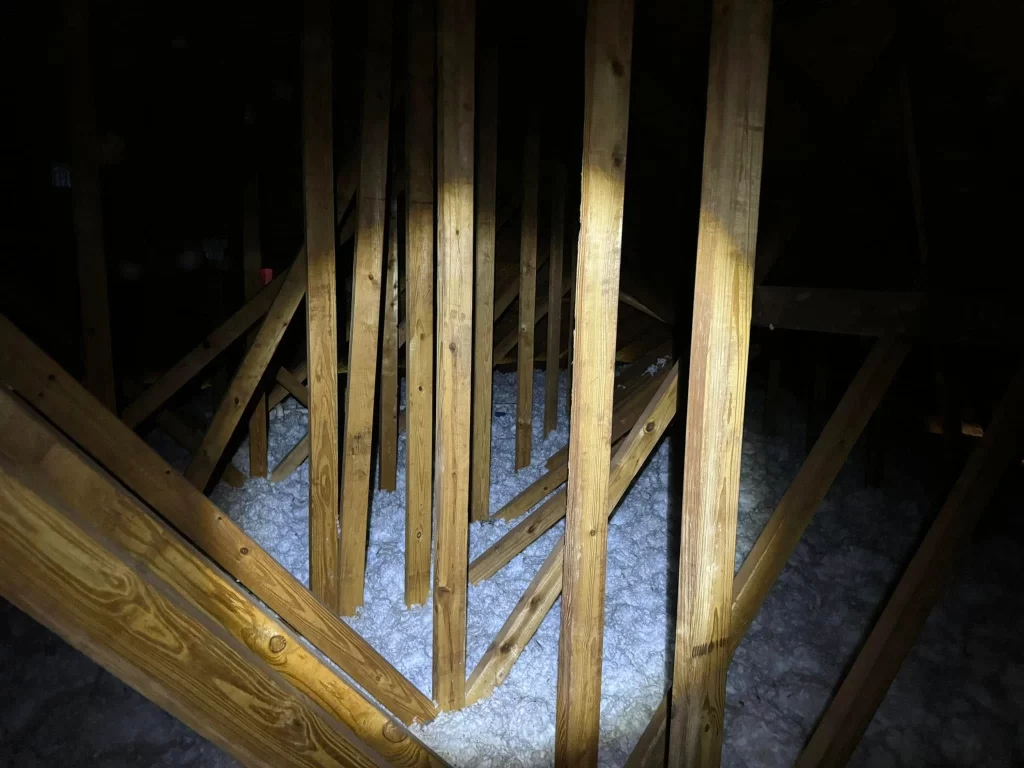
Cellulose insulation is made primarily from recycled paper, treated with borate for fire and pest resistance. It is installed by blowing the loose material into wall cavities, attic floors, or other hard-to-reach spaces using specialized equipment. Cellulose achieves roughly R-3.2 to R-3.8 per inch and does a better job than fiberglass batts at filling irregular gaps and cavities because the loose particles flow around obstructions like wiring and plumbing.
Dense-pack cellulose, installed at higher pressures, can significantly reduce air infiltration in wall cavities. The material does settle over time, though, which means the installed R-value can decrease slightly over the years if it was not packed at the correct density from the start.
Similar to cellulose in application, blown-in fiberglass uses loose fiberglass particles instead of paper fiber. It is blown into attics and wall cavities to provide better coverage than batts in irregular spaces. R-value per inch is slightly lower than cellulose, typically R-2.2 to R-2.7. Blown-in fiberglass is noncombustible and will not settle as much as cellulose over time, which helps it maintain its installed R-value.
Mineral wool insulation comes in both batt and loose-fill forms. Made from basalt or industrial slag that is spun into fibers, it offers excellent fire resistance (it can withstand temperatures above 1,800 degrees Fahrenheit without melting) and good sound-dampening properties. R-value per inch runs from R-3.3 to R-4.2. Mineral wool is denser than fiberglass, which gives it better sound attenuation and makes it more effective at reducing air movement through the insulation layer.
Open-cell spray foam is applied as a liquid that expands and cures into a soft, spongy material with tiny open cells filled with air. It typically delivers R-3.5 to R-3.7 per inch. While its per-inch R-value is lower than closed-cell foam, open-cell spray foam expands significantly (up to 100 times its liquid volume), allowing it to fill cavities thoroughly and seal against air leakage.
Open-cell foam is effective at sound dampening and is generally more affordable than closed-cell alternatives. It should not be used in below-grade applications or areas exposed to moisture because the open-cell structure can absorb water.
Closed-cell spray foam is denser, with cells that are completely sealed and filled with a gas that provides higher insulating power. It delivers R-5.6 to R-7.0 per inch, making it one of the highest-performing insulation materials available. The dense structure also acts as a vapor barrier and provides significant structural rigidity to the assemblies where it is applied.
Closed-cell foam is the preferred choice for crawl spaces, rim joists, basement walls, and any area where moisture resistance is essential. It seals air leaks completely, which is a benefit that fiberglass and cellulose simply cannot match on their own. [Link to: Detailed Guide on Spray Foam Insulation]
Rigid foam boards come in three main types: expanded polystyrene (EPS, R-3.8 to R-4.4 per inch), extruded polystyrene (XPS, R-5.0 to R-5.6 per inch), and polyisocyanurate (polyiso, R-5.6 to R-6.5 per inch). These panels are used as continuous insulation on exterior walls, under siding, in basement interiors, and on foundations. Their strength lies in providing a continuous layer of insulation that eliminates thermal bridging through wood studs and framing members.
| Insulation Type | R-Value Per Inch | Air Sealing | Moisture Resistance | Best Applications | DIY Friendly |
|---|---|---|---|---|---|
| Fiberglass Batts | 2.9 – 3.8 | Poor | Low | Walls, attics, floors | Yes |
| Blown-In Cellulose | 3.2 – 3.8 | Moderate | Low-Moderate | Attics, walls, retrofits | No |
| Blown-In Fiberglass | 2.2 – 2.7 | Moderate | Low | Attics, hard-to-reach areas | No |
| Mineral Wool Batts | 3.3 – 4.2 | Poor | Moderate | Walls, floors, ceilings | Yes |
| Open-Cell Spray Foam | 3.5 – 3.7 | Excellent | Low | Walls, attics, ceilings | No |
| Closed-Cell Spray Foam | 5.6 – 7.0 | Excellent | Excellent | Crawl spaces, rim joists, walls | No |
| Rigid Foam Board | 3.8 – 6.5 | Good (when taped) | Varies by type | Continuous exterior, basements | Moderate |
Not all areas of your home lose heat equally. Some spots bleed energy far more than others, and knowing where to focus your efforts and budget makes a real difference in results.
Your attic is almost always the priority. Heat rises, which means your attic floor is the primary barrier between your living space and the outside. In Troy’s climate, an uninsulated or under-insulated attic lets summer heat radiate down into your home and lets winter warmth escape upward. Most homes in Climate Zone 3 need between R-38 and R-60 in the attic, depending on whether there is existing insulation.
Air sealing the attic floor before adding insulation is essential. Gaps around recessed lights, plumbing vents, electrical runs, and chimney chases create direct paths for conditioned air to escape. Spray foam or caulk is used to seal these penetrations before any blown-in or batt insulation goes down.
Walls represent a large surface area of your home’s envelope, and upgrading wall insulation can dramatically improve comfort. For existing homes, blown-in cellulose or fiberglass can be retrofitted into wall cavities through small holes drilled in the exterior or interior. For new construction or remodeling projects, you have more options, including spray foam, fiberglass batts, mineral wool, and continuous rigid foam on the exterior.
Crawl spaces are a major source of moisture and energy loss in North Carolina homes. Many older homes in Montgomery County have vented crawl spaces with fiberglass batts hung between the floor joists, a practice that is now widely considered problematic. The fiberglass absorbs moisture, sags, and eventually falls out of place.
The modern approach is to seal and condition the crawl space: close the vents, install a vapor barrier on the floor, and insulate the crawl space walls with closed-cell spray foam or rigid foam board. This keeps moisture out, prevents condensation on ductwork, and makes the floor above noticeably more comfortable.
Rim joists, the area where the floor framing meets the foundation wall, are often left uninsulated even in homes that have good attic insulation. Sealing and insulating rim joists with spray foam or rigid foam is one of the most cost-effective upgrades you can make.
If your heating and cooling ducts run through unconditioned spaces like attics or vented crawl spaces, they should be insulated. Duct insulation prevents the air you have already paid to heat or cool from losing its temperature before it reaches your living spaces. Rigid fiber board insulation is commonly used for ductwork because it can withstand high temperatures.
Expert Tip: We frequently find homes where the homeowner invested in attic insulation but ignored the crawl space and rim joists. The result is a house that still has cold floors, drafty lower levels, and higher-than-expected energy bills. A whole-home approach, addressing the attic, walls, crawl space, and rim joists together, delivers the best results.
Understanding the building code is important even if you are not building new. The code sets minimum standards that serve as a useful baseline for evaluating whether your existing insulation meets current recommendations.
Montgomery County falls under Climate Zone 3A per the North Carolina Energy Conservation Code. For residential construction, the code requires certain minimum R-values for different parts of the building envelope.
These are the minimum requirements. The DOE recommendations for optimal energy efficiency in Climate Zone 3 often exceed code minimums, suggesting R-49 to R-60 for attics and R-20 to R-23 for walls. Building code is the floor, not the ceiling, of good performance.
When spray polyurethane foam is used, the code requires that the installer provide a certification listing the installed thickness and R-value for each insulated area. This documentation must be posted in a conspicuous location on the job site.
The financial case for upgrading insulation is well-documented. The EPA estimates that homeowners can save an average of 15% on heating and cooling costs by air sealing their homes and adding insulation in attics, floors over crawl spaces, and accessible basement rim joists. For Climate Zone 3 specifically, which includes Montgomery County, these savings are calculated using the Energy Savings Methodology.
Perhaps more telling is a statistic from ENERGY STAR: nine out of ten homes in the United States are under-insulated. That means the odds are very much in favor of your home having room for improvement.
Beyond the dollar figures, proper insulation delivers benefits that are harder to measure but impossible to ignore:
Key Takeaways: The Impact of Proper Insulation
After years of working on homes across the Troy area, we have seen the same mistakes repeated far too often. Knowing what to watch for can save you money and frustration.
Insulation alone does not stop air movement. If you install R-49 of blown-in fiberglass in your attic but leave gaps around plumbing stacks, electrical penetrations, and recessed light housings, conditioned air will still escape through those openings. Air sealing should always come before insulation, not as an afterthought. Spray foam, caulk, and weatherstripping should be used to seal penetrations before adding bulk insulation.
Fiberglass batts and blown-in materials rely on their thickness and loft to achieve their rated R-value. Compressing a batt to fit it into a tight cavity, or storing boxes on top of attic insulation, reduces its effectiveness. An R-13 batt compressed to half its intended thickness delivers far less than R-13 in actual performance. This is one of the most common errors in DIY installations.
Adding insulation to a space with an existing moisture problem without addressing the moisture first will make things worse. In a vented crawl space with damp conditions, adding fiberglass batts between the floor joists creates a perfect environment for mold growth. The insulation absorbs humidity, loses its R-value, and can eventually become a biological hazard. Moisture problems must be resolved before insulation goes in.
In some attic designs, soffit vents at the eaves allow outside air to flow up and out through ridge vents or gable vents. If blown-in insulation blocks these soffit vents, the attic cannot ventilate properly, which leads to heat buildup in summer and moisture problems in winter. Baffles or insulation dams should be installed at the eaves to keep the ventilation pathway clear.
Using open-cell spray foam below grade, installing fiberglass in a chronically damp crawl space, or placing reflective insulation without an adjacent air gap are all examples of mismatching materials to their application. Each insulation type has environments where it performs well and environments where it will fail. Understanding these limitations is essential.
Expert Tip: We often get calls from homeowners who tried to save money by adding fiberglass batts over existing insulation in their attic without air sealing first. The new insulation covers the problem but does not fix it. The house still loses air through the same gaps, and the homeowner wonders why the energy bills have not improved. Seal first, then insulate.
Not sure whether your home’s insulation is doing its job? Here are the most reliable indicators that something needs attention:
If you are experiencing several of these issues, an insulation audit is the logical next step. Our team evaluates homes throughout the Troy area, checking R-values, air leakage, moisture conditions, and overall building envelope performance.
With all the options and considerations in mind, here is a practical framework for making your decision:
Expert Tip: Do not get fixated on a single material. The best insulation strategy often uses a combination of products. Spray foam in the crawl space and rim joists, blown-in cellulose or fiberglass in the attic, and fiberglass batts or mineral wool in accessible wall cavities can give you the best balance of performance and cost for each area of your home. Frequently Asked Questions About Insulation in Troy, NC
The right insulation makes your home more comfortable, more energy-efficient, and more resilient against the humid summers and cool winters that define life in Montgomery County. We have covered the science behind R-value, the specific climate challenges facing Troy homeowners, every major insulation type with honest pros and cons, code requirements, common mistakes to avoid, and practical steps for making your decision.
The most important thing to remember is that insulation is not a one-size-fits-all decision. A thorough assessment of your home’s current condition, your specific goals, and your budget should drive your choice of material and installation approach. When insulation is matched correctly to the application and installed with care, it delivers measurable comfort and energy improvements that you will notice every single day, not just on your utility bill.
Keep this guide handy as you move forward. Whether you are building new, remodeling, or simply trying to make your existing home more comfortable, the principles here apply. And when you are ready to take the next step, professional guidance makes all the difference.
Choosing and installing insulation is one of the most impactful decisions you can make for your home. If you would like a professional assessment of your current insulation, recommendations tailored to your specific situation, or a straightforward conversation about your options, our team is here to help. Reach out to Spray Foam Pro at [email protected] or call us directly at (910) 606-6247. We serve homeowners throughout the Troy, NC area and would be glad to walk through your project with you.
For Montgomery County’s Climate Zone 3A, the Department of Energy recommends R-38 to R-60 for attics, depending on your current insulation levels. If your attic is completely uninsulated, aim for R-49 to R-60. If you already have 3 to 4 inches of existing insulation, adding enough to reach R-38 to R-49 is typically sufficient.
Open-cell spray foam has a spongy texture, expands up to 100 times its liquid volume, and delivers about R-3.5 to R-3.7 per inch. Closed-cell spray foam is dense, rigid, and delivers R-5.6 to R-7.0 per inch while acting as a vapor barrier. Closed-cell is better for moisture-prone areas like crawl spaces, while open-cell is well-suited for walls and attics where moisture is less of a concern.
Fiberglass batts and rolls can be installed by homeowners with proper safety equipment and attention to detail. Blown-in materials, spray foam, and rigid foam installations require professional equipment and training. Even with batts, if you are not confident in your ability to fit the material properly without gaps or compression, hiring a professional will deliver better results.
Most insulation materials last 30 years or more when properly installed and protected from moisture. Fiberglass and mineral wool can last the lifetime of the home. Spray foam, once cured, is a permanent installation. Cellulose can last 20 to 30 years but may settle over time, reducing its effectiveness if not installed at the correct density.
When properly installed by trained professionals following manufacturer guidelines, spray foam insulation is safe. During installation, the chemicals involved can release vapors that require protective equipment and ventilation. Once cured, typically within 24 to 48 hours, the foam is inert and stable. Proper curing time and ventilation are critical, which is why professional installation matters.
Homeowners can save significantly on heating and cooling costs by air sealing and adding insulation. Actual savings depend on your home’s current insulation levels, air leakage, HVAC equipment efficiency, and personal habits.