
Crawl space insulation vs. encapsulation comes down to the problem you’re fixing. Insulation slows heat loss so your floors feel warmer. Encapsulation seals out ground moisture and outside air with a sealed liner, closed vents, and humidity control. A crawl space insulation contractor can help assess the space and determine the right approach. If your crawl space is damp or musty or has ductwork in it, deal with moisture first. Many homes get the best results with both.
TL;DR
Both jobs happen in the same cramped space, so people mix them up. They solve different problems, and picking the wrong one can mean paying twice.
Insulation slows heat moving between your living space and the crawl space. In a vented crawl space, it usually goes between the floor joists as fiberglass batts or spray foam. The crawl space insulation guide explains the differences between these approaches. In a sealed crawl space, insulation goes on the foundation walls and rim joists instead.
Insulation alone doesn’t stop water. Batts under a damp floor can soak up moisture, sag and fall, and then they stop working.
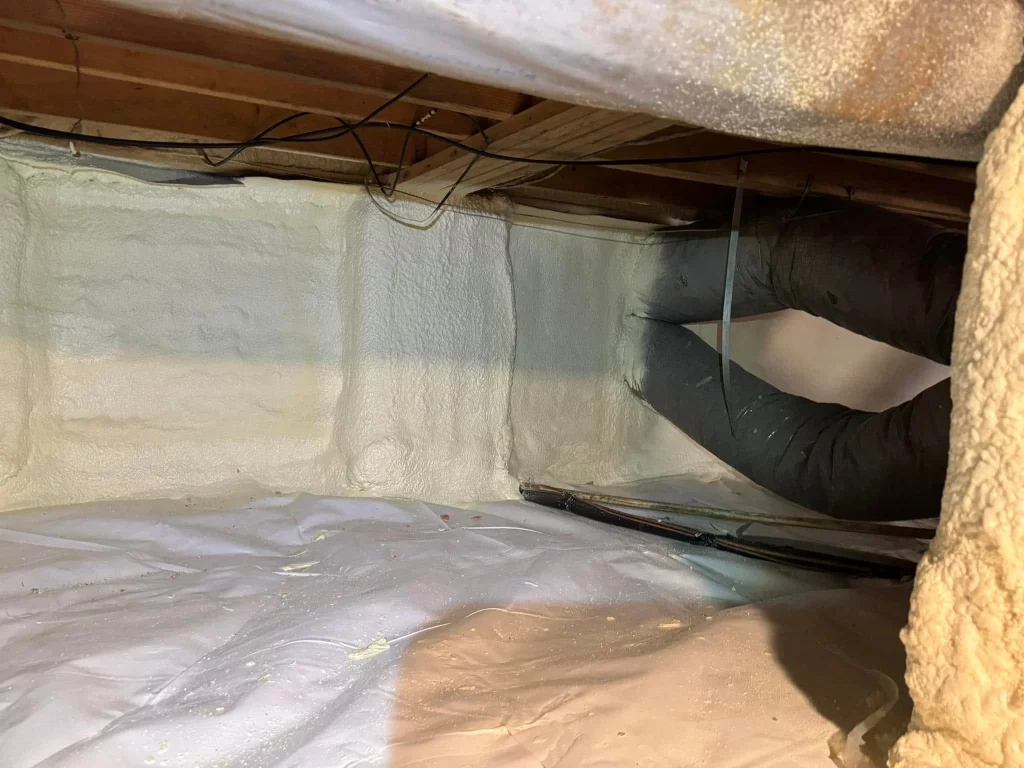
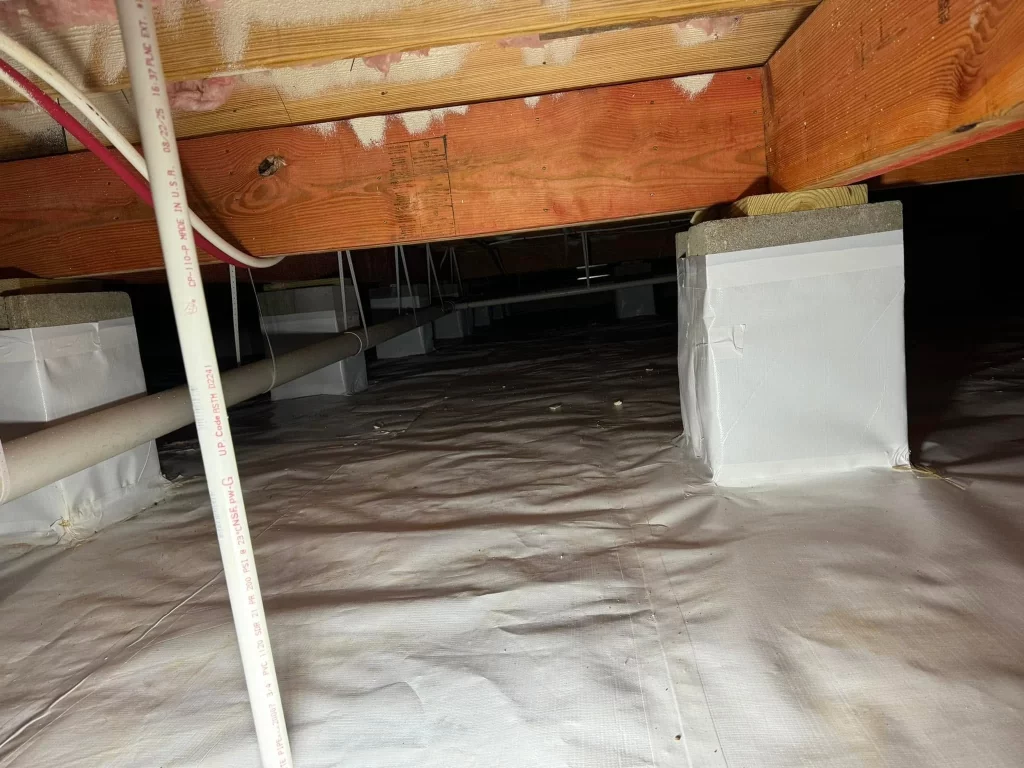
Encapsulation turns the crawl space into a closed, dry room under your house. The crew seals vents and air leaks, lines the ground and walls, seals the seams, and adds humidity control. Done right, the crawl space becomes part of your home’s conditioned space. According to the Building America Solution Center, this gives heating and cooling equipment and ducts in the crawl space a milder environment, so they can last longer and run more efficiently.
A vapor barrier is the plastic sheet laid over the dirt floor. On its own, it cuts down on ground moisture but leaves the vents open and the edges loose. In a sealed crawl space, the barrier becomes a full liner. PNNL’s rigid foam guide calls for a 6-mil or thicker sheet covering the whole floor and fastened 12 to 18 inches up the walls and piers. Thicker liners hold up better when a plumber or HVAC tech has to crawl across them.
Here’s how the two stack up on the things homeowners ask about most.
| Factor | Insulation Only | Encapsulation |
|---|---|---|
| Main job | Slows heat loss | Stops moisture and outside air |
| Where it goes | Floor joists or walls | Floor, walls, vents, rim joist |
| Moisture control | Little to none | Main goal |
| Cold floors | Helps | Helps when walls are insulated |
| Ducts below | Sit in outside air | Sit in conditioned air |
| Upkeep | Check for sagging, damp batts | Check liner and dehumidifier |
Sales pitches promise a lot. Here’s what federal research shows.
Research from the U.S. Department of Energy found that in humid parts of the country, closed and conditioned crawl spaces outperformed vented ones. Those crawl spaces used 15% to 18% less energy for heating and cooling and cut humidity by more than 20%. These are research results, not a guarantee. Your savings depend on your climate, the size of your home, and the condition of your ducts.
The health side matters too. The EPA says controlling moisture is the key to controlling mold, and it recommends keeping indoor humidity below 60%, ideally between 30% and 50%. Crawl space air can drift up through gaps around pipes, wires, and ducts, so a damp crawl space can mean musty smells in your bedrooms.
Start with what you see and smell down there, not with what’s on sale. These signs point you in the right direction:
Plenty of homes end up needing both. Encapsulation keeps water out, and insulation on the walls and rim joist keeps your floors warm. The order matters: moisture first, insulation second.
A common and costly mistake is installing new insulation over an old moisture problem. The insulation fails, and you pay for the job again.
Spray foam works well on rim joists and foundation walls because it insulates and air seals in one step. Closed-cell foam also stands up to damp conditions better than fiberglass.
Run through this list before you sign anything:
If your floors are cold, your crawl space smells musty, or you’re not sure which fix fits your home, Spray Foam Pro can take a look and walk you through your options. We offer free quotes, so you’ll know the scope and price before any work starts. Call (910) 606-6247 or email [email protected] to schedule your free quote.
Most residential jobs take a few days. Crawl space size and height, old insulation removal, wood repairs, and drainage work all add time. You’ll get a timeline with your free quote.
You can lay and tape a liner yourself if the space is dry and you’re comfortable in tight quarters. The harder parts are sealing the vents and rim joists, setting up humidity control, and meeting fire rules for foam. Mistakes there can trap moisture instead of removing it.
Usually, yes. Wet, moldy, sagging or rodent-damaged batts should come out. When the crawl space is sealed and the walls are insulated, the old floor batts typically come out anyway.
It can if you only close the vents. In humid weather, outside air coming through the vents often adds moisture instead of drying the space. Sealed vents work when the ground is covered and humidity is controlled.
It helps. Sealed vents, a tight access door, and a liner remove easy entry points and the damp conditions many pests like. It isn’t pest control, though. Treat an active infestation first.