
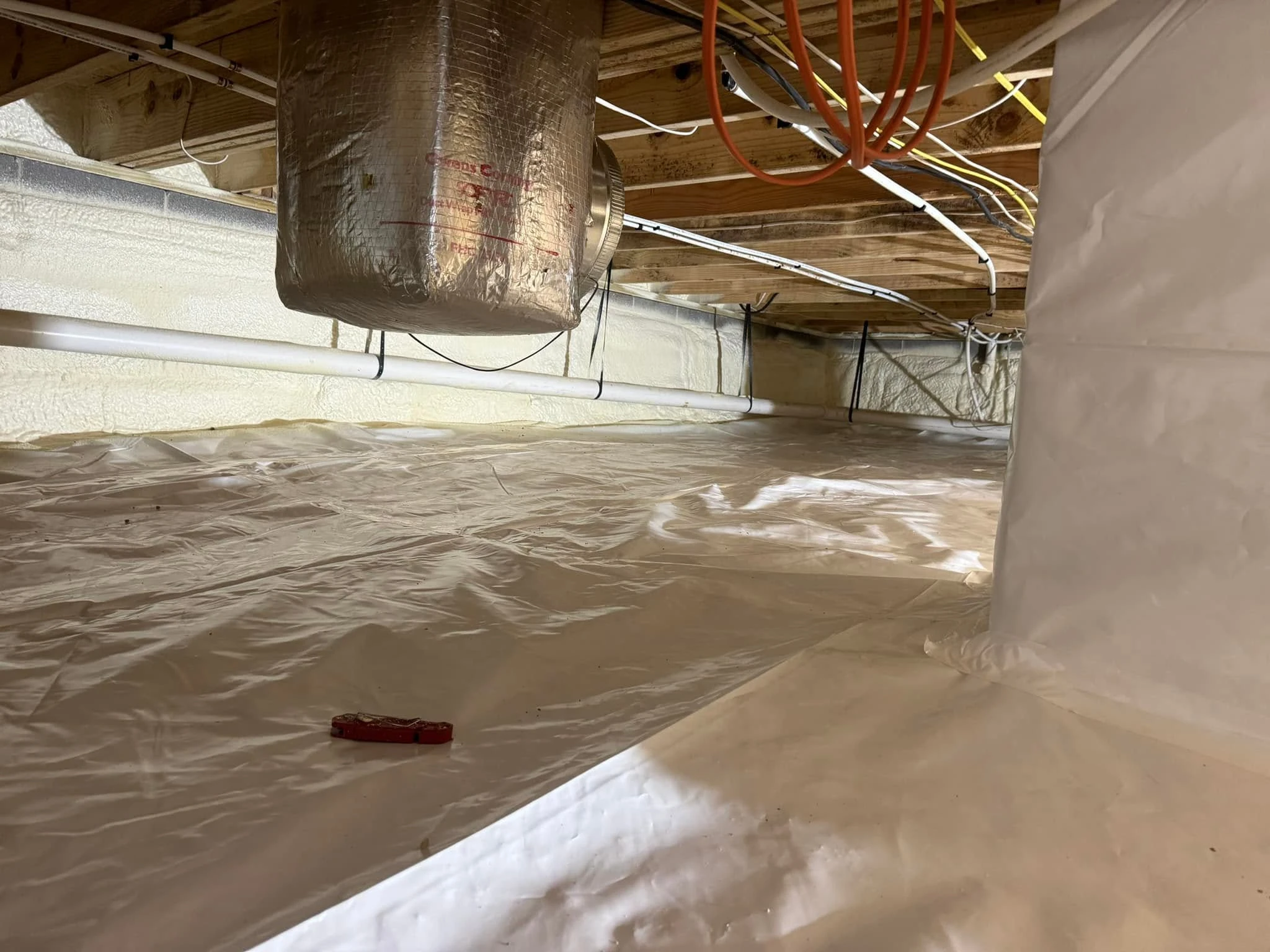
Uninsulated crawl spaces in Troy, NC steadily degrade both the structural integrity of your floors and the air your family breathes every day. Troy sits in North Carolina’s Piedmont region, which falls within a humid subtropical climate where average annual precipitation reaches roughly 47 inches and summer humidity routinely drives indoor crawl space conditions above the 60% relative humidity threshold the EPA identifies as a mold risk zone. Professional crawl space insulation services can help address these moisture and insulation concerns by improving the thermal and air-control performance of the crawl space. When a crawl space lacks insulation and proper sealing, that warm, humid outdoor air enters freely through foundation vents, condenses on cooler surfaces like floor joists and ductwork, and creates a persistent moisture problem that worsens year after year. The damage does not happen overnight, but the compounding effects on wood structures and indoor air quality follow a predictable and costly path.
Troy, NC sits in the Piedmont region of North Carolina, an area characterized by hot, humid summers and mild but cool winters. This climate classification, humid subtropical, is precisely the type of environment where vented crawl spaces fail. During summer months, outdoor air in the Piedmont carries significant moisture. When that air enters a crawl space through foundation vents and contacts cooler surfaces such as air-conditioned ductwork, plumbing lines, and floor joists, condensation forms. The Building America Solution Center notes that in warm, humid climates, vented crawl spaces can actually encourage condensation because the vents allow warm, humid air to enter and condense on cooler surfaces.
The problem is not limited to summer. During spring and fall, temperature swings create repeated condensation cycles. Even in winter, the lack of insulation means cold air beneath the floor makes rooms above uncomfortably cold and forces heating systems to compensate. Over the course of years, these seasonal moisture cycles compound, creating an environment where organic materials steadily deteriorate. Crawl Space Insulation in Troy, NC can help address these seasonal temperature and moisture challenges.
The floor damage from an uninsulated crawl space follows a clear progression. Understanding each stage helps homeowners recognize problems before they become expensive structural repairs.
Stage 1: Persistent moisture and condensation. Without insulation and a sealed vapor barrier, moisture from the ground and from humid outdoor air continuously enters the crawl space. Floor joists, girders, and subflooring absorb this moisture. The wood fiber saturation point, where wood begins to degrade, starts at around 28-30% moisture content. In an uninsulated crawl space in a humid climate like Troy’s, wood moisture content can remain elevated for months at a time.
Stage 2: Mold and fungal growth. The EPA’s mold guide states that mold begins growing indoors when spores land on surfaces that are wet, and that molds gradually destroy the materials they grow on. On wood surfaces, this destruction is literal. Mold and wood-decay fungi break down cellulose and lignin in the wood fibers, weakening the structural members that support your floor.
Stage 3: Wood rot and floor deflection. As fungal activity continues, floor joists lose their structural capacity. Homeowners in Troy may first notice soft spots in flooring, tiles cracking, or floors that feel bouncy or uneven. By the time these symptoms appear inside the living space, the damage beneath is often advanced. The Wikipedia entry on crawl spaces notes that problems like moisture and potential wood damage in crawl spaces may not be noticed quickly because people rarely enter their crawl space.
Stage 4: Pest activity accelerates damage. Damp, decaying wood attracts termites and carpenter ants, both of which are active in North Carolina’s Piedmont. The Building America Solution Center specifically references the termite infestation probability map from the IRC, showing high termite risk across the southeastern United States, including the Troy area. These pests compound the structural damage already underway from moisture and fungal decay.
| Damage Stage | What Happens | Visible Signs Inside the Home |
|---|---|---|
| Early moisture | Wood absorbs moisture from condensation and ground evaporation | Musty odors, slight floor chill |
| Mold growth | Mold colonizes wood surfaces, begins breaking down fibers | Persistent musty smell, allergy symptoms |
| Wood rot | Fungi degrade joist and subfloor structural integrity | Bouncy or sagging floors, cracked tiles |
| Structural failure | Joists lose load-bearing capacity, floors deflect significantly | Visible floor unevenness, sticking doors |
The air quality impact of an uninsulated crawl space is often more immediately harmful to occupants than the structural floor damage, even though it is less visible. The connection between a vented, uninsulated crawl space and the air inside the living space above is direct and continuous.
The stack effect draws crawl space air upward. Warm air inside a home rises and exits through upper levels, creating negative pressure at the lower portions of the building. This pulls air from the crawl space up through gaps in the floor, around plumbing penetrations, through electrical openings, and through any other unsealed penetrations between the crawl space and the living area. The Wikipedia entry on crawl spaces explains that encapsulation is used to prevent the passage of air from the crawl space to the living environment, since air in the crawl space tends to rise due to the stack effect.
Mold spores and allergens travel with that air. When mold grows on crawl space surfaces, the spores it releases become part of the air circulating through the home. The EPA notes that molds produce allergens, irritants, and in some cases potentially toxic substances, and that inhaling or touching mold spores may cause allergic reactions including sneezing, runny nose, red eyes, and skin rash. For households in Troy with family members who have asthma or allergies, this can mean chronic symptoms that improve only when the moisture source is addressed.
Soil gases and volatile organic compounds add to the burden. An uninsulated, unsealed crawl space allows soil gases, including radon, to enter the home. The Building America Solution Center recommends installing a radon venting system under the vapor barrier as part of a proper crawl space encapsulation. While radon risk varies by location, the pathway for entry is the same: open soil and unsealed floor penetrations that allow mold spores and moisture to migrate upward. Homeowners dealing with these concerns can review the Crawl Space Insulation Guide to better understand insulation, sealing, and moisture-control considerations.
HVAC ducts in the crawl space make it worse. Many homes in Troy have HVAC ductwork running through the crawl space. When those ducts are in an uninsulated, humid environment, condensation forms on the duct exterior. Any leaks in the ductwork then pull contaminated crawl space air directly into the forced-air system and distribute it throughout the home. A U.S. Department of Energy study found that sealed crawl spaces in the Southeast significantly reduced duct infiltration and improved energy performance compared to vented crawl spaces.
The distinction between vented and sealed crawl spaces matters significantly for homes in Troy, NC. Building codes historically required crawl space vents based on the assumption that ventilation would dry out the space. Research in the Southeast has shown the opposite effect in humid climates.
| Feature | Vented Uninsulated Crawl Space | Sealed Insulated Crawl Space |
|---|---|---|
| Moisture control | Humid air enters freely through vents; condensation on cool surfaces | Vapor barrier and sealed vents block moisture entry |
| Floor protection | Wood joists exposed to high humidity and condensation | Wood remains dry, within safe moisture content range |
| Indoor air quality | Stack effect pulls mold spores and soil gases into living area | Air barrier between crawl space and living space blocks contaminant migration |
| Energy efficiency | HVAC ducts in unconditioned space lose or gain heat; duct leaks pull bad air | Ducts in semi-conditioned space operate more efficiently |
| Pest resistance | Open vents and damp wood attract insects and rodents | Sealed perimeter with foam insulation deters pest entry |
The DOE’s 2005 field study, conducted across 12 homes in the southeastern United States, found that properly closed crawl spaces produced substantially drier conditions and significantly reduced energy use for heating and cooling compared to traditional vented crawl spaces. The study, conducted by the North Carolina Advanced Energy Corporation, measured relative humidity, wood moisture content, duct infiltration, and bioaerosol levels, confirming that closed crawl spaces outperformed vented ones on every metric in humid conditions.
Not every home in Troy faces the same level of risk from an uninsulated crawl space. Several factors determine how quickly and severely damage develops.
Older homes with vented crawl spaces. Homes built before modern energy codes typically have perimeter vents, no ground vapor barrier, and fiberglass batt insulation between the floor joists. This configuration is the most vulnerable in Troy’s climate because the fiberglass does not stop air movement or moisture transfer, and the vents actively introduce humid air during warm months.
Homes with HVAC equipment or ductwork in the crawl space. When ductwork runs through an uninsulated crawl space, two problems compound: the ducts themselves can sweat and contribute to moisture, and any leaks pull contaminated air directly into the distribution system. This affects air quality throughout the entire home.
Homes on flat or poorly drained lots. Water that collects around the foundation or beneath the crawl space floor increases the moisture load that the space must handle. Without proper grading and drainage, even a sealed crawl space can face elevated moisture levels.
Homes with occupants who have respiratory conditions. While this does not change the physical damage to the structure, it raises the urgency of addressing air quality concerns. The EPA notes that mold can cause asthma attacks in people with asthma who are allergic to mold, and can irritate the eyes, skin, nose, throat, and lungs of both allergic and non-allergic individuals.
Most homeowners in Troy rarely go into their crawl space, so the first signs of trouble usually appear inside the living space. Recognizing these indicators early can mean the difference between a straightforward insulation project and a major structural repair.
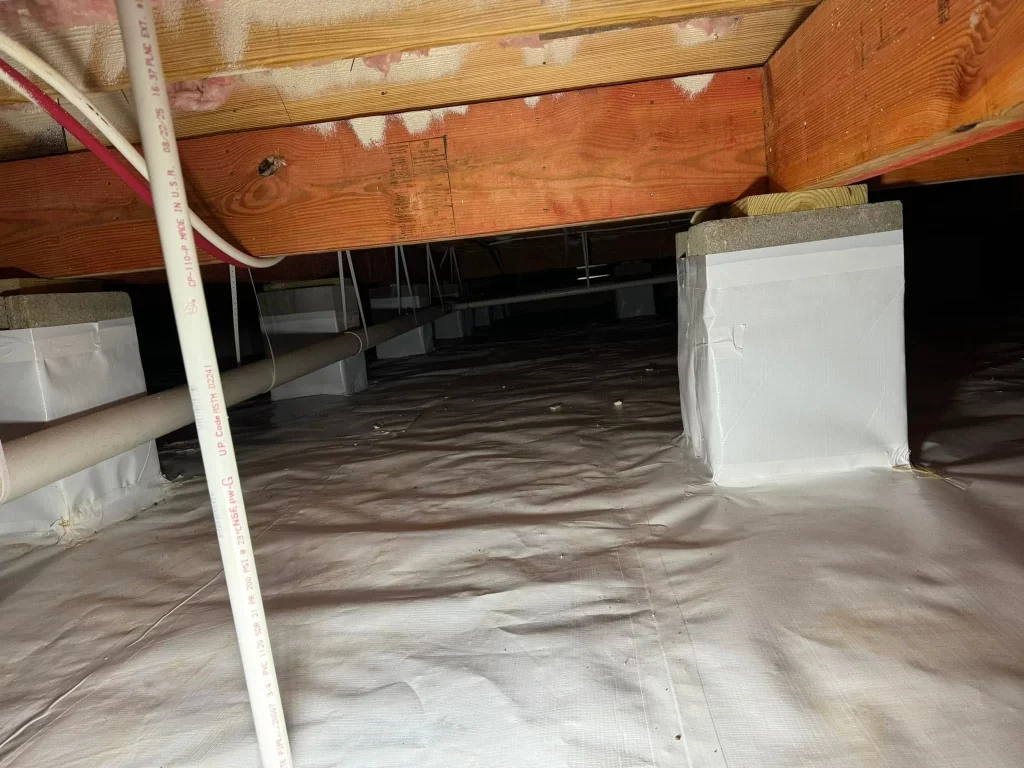
Addressing an uninsulated crawl space in Troy, NC means more than just adding material. The approach must account for both thermal performance and moisture control, because in a humid climate, one without the other does not solve the problem.
Vapor barrier on the ground. A continuous 6-mil polyethylene sheet covering the crawl space floor and extending up the walls is the first line of defense. The Building America Solution Center specifies that seams should overlap 12 inches and be sealed with adhesive and tape, creating a continuous liner that retards moisture from the soil.
Wall insulation with spray foam. Spray foam applied to the interior perimeter walls provides both insulation value and an air seal in a single application. Unlike rigid foam boards that require mechanical fasteners and leave gaps, spray foam conforms to irregular surfaces and seals penetrations as it is applied. This is particularly effective at the rim joist area, where gaps between the floor framing and foundation wall are common sources of air and moisture infiltration.
Sealed vents and penetrations. Existing foundation vents are sealed, and all plumbing, electrical, and HVAC penetrations through the floor above are air-sealed to prevent the stack effect from drawing crawl space air into the living space.
Conditioned air supply or dehumidification. Building codes require that sealed crawl spaces include a drying mechanism. This can be a small supply of conditioned air from the HVAC system or a dedicated dehumidifier to maintain humidity at safe levels.
Spray Foam Pro has been helping Troy, NC homeowners protect their floors and improve their indoor air quality through professional crawl space insulation and encapsulation. Our team evaluates each crawl space individually, identifying moisture sources, air sealing needs, and the right insulation approach for your home. Whether your crawl space has visible mold, standing water, or simply lacks any insulation at all, we provide a clear assessment and a plan to address it properly.
Request a Quote | Schedule a Crawl Space Assessment
Call us at (910) 606-6247 or email [email protected] to get started. Your floors and your air quality depend on what is happening beneath them.
Mold growth can begin within 24 to 48 hours of sustained moisture exposure, but visible floor damage like sagging typically develops over several years of repeated moisture cycles.
Insulating between floor joists in a humid climate like Troy’s leaves the crawl space itself unconditioned and still vulnerable to condensation, mold, and wood rot on the joists and subfloor.
A properly sealed crawl space includes a drying mechanism such as conditioned air supply or dehumidification, and building codes require this to prevent moisture buildup.
The stack effect creates negative pressure at the bottom of the home, drawing crawl space air upward through floor penetrations, gaps around plumbing, and any unsealed openings.
Early-stage moisture damage can often be addressed by drying the space and sealing it, but advanced wood rot or structural compromise requires replacement of affected joists and girders before insulation is installed.