
Troy, NC, sits in IECC Climate Zone 4A, a mixed-humid region where summers are hot and muggy, winters dip into the teens, and humidity management matters year-round. The right insulation choice for your home depends on where you are insulating, the existing structure, your budget, and whether you need air sealing alongside thermal resistance. The main insulation types homeowners encounter include fiberglass batts and rolls, blown-in cellulose and fiberglass, spray foam (both open-cell and closed-cell), rigid foam boards, and reflective or radiant barrier systems. Each material offers different R-values, installation methods, and performance characteristics suited to specific areas of a home. For homeowners comparing these options, our detailed insulation guide for Troy, NC, explains how different insulation materials perform in local climate conditions and where each type delivers the greatest value.
The International Energy Conservation Code (IECC) assigns climate zones based on heating degree days, cooling degree days, and humidity. North Carolina spans two zones, Zone 3A and Zone 4A, with Zone 4A covering the central and northern portions of the state. Montgomery County, where Troy is located, falls squarely within Climate Zone 4A, classified as mixed-humid per the Building America Solution Center.
According to ENERGY STAR’s recommended R-values, homes in Zone 4A should target R-60 for uninsulated attics, R-49 for attics with existing 3 to 4 inches of insulation, R-19 for uninsulated floors, and R-20 wall cavities with an additional R-5 to R-10 of continuous exterior insulation. The Department of Energy’s Insulation guide reinforces that the amount of insulation you need depends on your climate, your heating and cooling system, and the specific part of the house you plan to insulate.
| Home Area | Uninsulated | Existing 3-4 Inches | Notes |
|---|---|---|---|
| Attic | R-60 | R-49 | Highest priority for energy savings |
| Wood-Frame Walls | R-20 or R-13 + R-5 CI | Add R-10 CI | CI = continuous insulation on exterior |
| Floors Over Unconditioned Space | R-19 | R-19 | Crawl spaces and overhangs |
| Basement / Crawlspace Walls | R-10 sheathing or R-13 batt | R-10 sheathing or R-13 batt | Moisture control is critical |
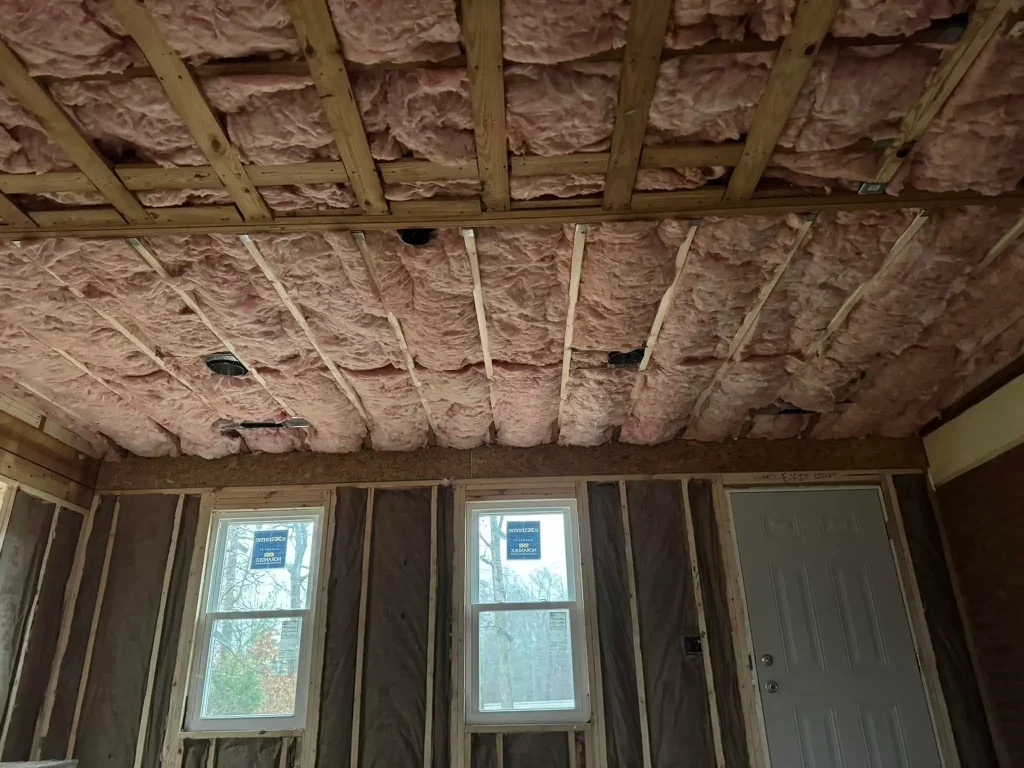
Fiberglass is the most widely used insulation material in the United States. It comes in two primary forms: batts and rolls, which are fitted between studs, joists, and beams, and loose-fill blown-in, which is pneumatically installed using specialized equipment.
Per the Department of Energy’s insulation materials guide, fiberglass batts for standard 2×4 walls deliver R-11 to R-15, while 2×6 walls accommodate batts rated R-19 to R-21. Higher-density products are available for areas with limited cavity depth, such as cathedral ceilings. Most fiberglass products contain 40% to 60% recycled glass.
Best applications for fiberglass in Troy homes:
Limitations: Fiberglass batts can leave gaps around framing, electrical boxes, and pipes if not carefully fitted. Compressed fiberglass loses R-value, and fiberglass alone does not provide an effective air seal.
Cellulose insulation is made primarily from recycled newsprint, giving it one of the highest recycled material contents of any insulation type at 82% to 85%. It is treated with borate for fire and insect resistance and can be installed as loose-fill in open attics or dense-packed into enclosed wall cavities.
For existing Troy homes, cellulose is one of the most practical options for retrofitting wall insulation. Installers drill holes through the exterior sheathing, blow the material into each stud bay at a density of 1.5 to 3.5 pounds per cubic foot, then plug and seal the holes before replacing siding. While this process can improve thermal performance, homeowners should also address hidden air leakage pathways that can reduce overall efficiency. Understanding the relationship between air leaks and insulation performance is essential for maximizing energy savings and indoor comfort.
Best applications:
Limitations: Cellulose can settle over time if not installed at the proper density, and it is susceptible to moisture damage if exposed to water intrusion. Professional installation is strongly recommended.
Spray foam insulation is applied as a liquid that expands and cures into a solid foam, filling cavities and sealing gaps as it goes. The DOE’s types of insulation guide notes that foam-in-place insulation can yield higher R-values than traditional batt insulation for the same thickness and creates an effective air barrier in a single step.
Open-cell foam is lighter, less dense, and expands significantly to fill cavities. It has a spongy texture and a lower R-value per inch compared to closed-cell foam, typically around R-3.5 to R-3.7 per inch. It allows vapor to pass through, which can be beneficial in some wall assemblies but means it should never be used below ground level or in direct contact with moisture.
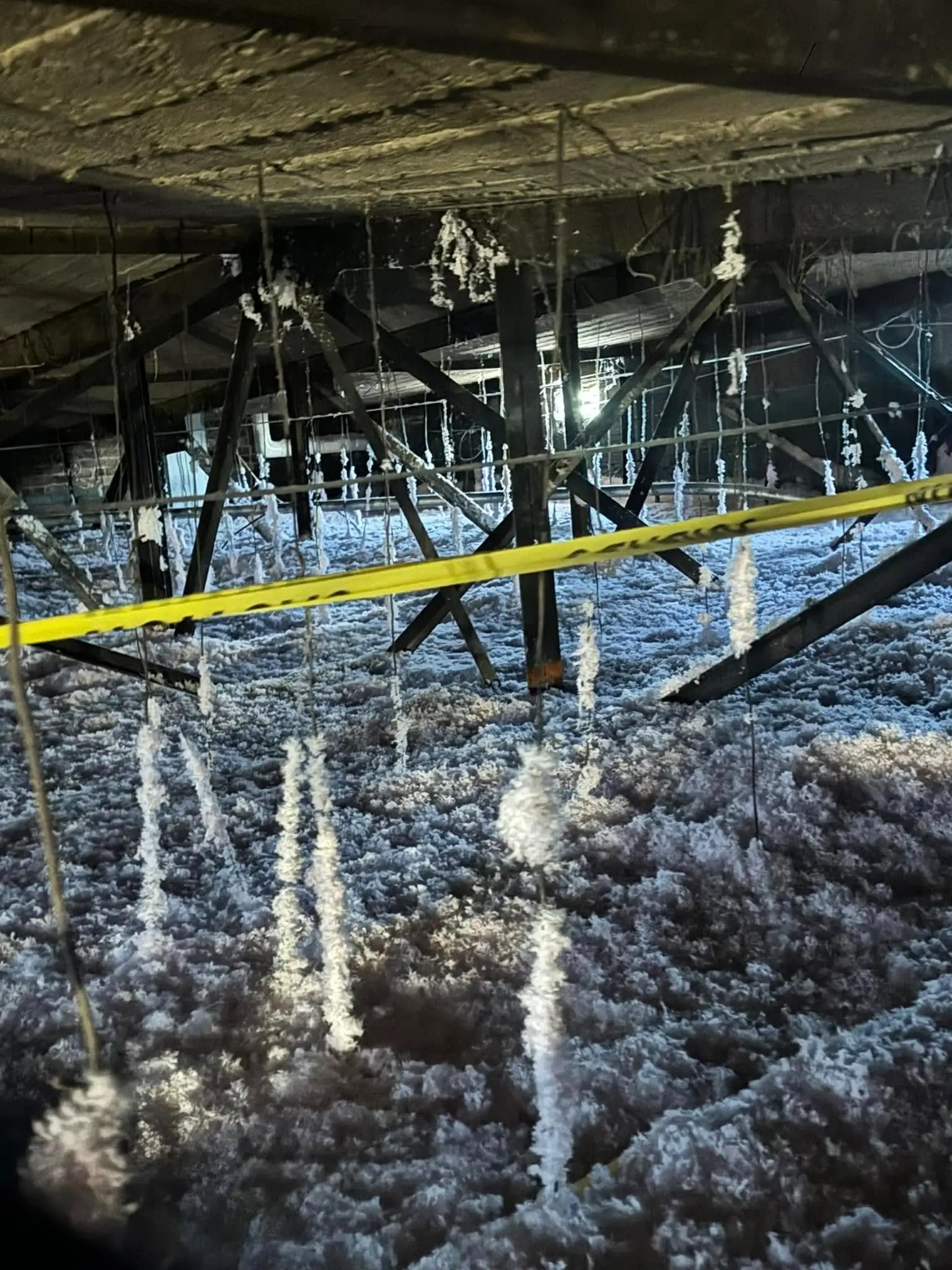
Closed-cell foam is denser, with smaller gas-filled cells that give it an R-value of approximately R-6.0 to R-7.0 per inch. It acts as both a vapor barrier and an air barrier, provides structural rigidity, and resists moisture. These properties make it the preferred choice for crawl spaces, rim joists, basements, and any area prone to humidity exposure, all of which are common concerns in Troy’s mixed-humid climate.
Best applications for spray foam:
Limitations: Spray foam requires professional installation with specialized equipment and certification. It carries a higher material cost per R-value than fiberglass or cellulose, and building codes may require an additional thermal barrier (such as half-inch gypsum board) over exposed foam.
Rigid foam boards are manufactured from polystyrene (EPS or XPS), polyisocyanurate, or polyurethane. They deliver high thermal resistance in thin profiles, often two times greater than most other insulating materials of the same thickness. The DOE notes that foam boards can block thermal bridging through wood and steel studs when installed as a continuous layer over framing.
Polyisocyanurate (polyiso) boards are particularly common and offer some of the highest R-values per inch of any rigid foam, though thermal drift can reduce R-value slightly over time as low-conductivity gas escapes. Foil-faced polyiso can also function as a radiant barrier when installed facing an air space.
Best applications:
Limitations: Foam boards must be covered with a thermal barrier such as gypsum board for fire safety in interior applications. They require precise cutting and sealing at joints to maintain effectiveness.
Radiant barriers and reflective insulation systems work differently from other insulation types. Rather than resisting conductive heat flow, they reflect radiant heat away from living spaces. According to the DOE, radiant barriers are installed primarily in attics to reduce summer heat gain and can lower cooling costs by 5% to 10% in warm, sunny climates.
For Troy homes, where cooling loads are significant during long summer months, a radiant barrier in the attic can complement thermal insulation effectively. The reflective surface must face an open air space to work properly.
Best applications:
Limitations: Radiant barriers have no inherent R-value and are less effective in winter. They should supplement, not replace, traditional thermal insulation.
| Insulation Type | R-Value Per Inch | Air Sealing | Moisture Resistance | Best Location |
|---|---|---|---|---|
| Fiberglass Batts | 2.9 – 3.8 | None | Low | Attics, walls (new construction) |
| Blown-In Cellulose | 3.1 – 3.8 | Minimal | Low | Attics, existing wall cavities |
| Open-Cell Spray Foam | 3.5 – 3.7 | Yes | Low | Walls, ceilings (above grade) |
| Closed-Cell Spray Foam | 6.0 – 7.0 | Yes | High | Crawl spaces, rim joists, basements |
| Rigid Foam Board | 3.8 – 6.5 | When taped/sealed | Varies by material | Exterior walls, foundations, roofs |
| Radiant Barrier | No R-value | None | N/A | Attic rafters (cooling climates) |
For homes being built in Troy, combining closed-cell spray foam in the wall cavities with rigid foam board as continuous exterior insulation delivers the strongest thermal envelope and air barrier. This combination meets and exceeds Zone 4A requirements while reducing the need for separate air-sealing steps.
Many older homes in Montgomery County were built with little or no wall insulation. For these properties, dense-packed cellulose blown into wall cavities through drilled access holes is one of the most practical and cost-effective approaches. If the budget allows, open-cell spray foam injected into wall cavities provides better air sealing in the same application.
Attic insulation delivers the biggest energy savings per dollar spent in most homes. For Troy homeowners, adding blown-in fiberglass or cellulose to achieve R-49 to R-60 in the attic should be the priority. Pair this with air sealing around penetrations, ductwork, and the attic floor before insulation goes down.
Troy’s humid climate makes crawl space moisture a recurring concern. Closed-cell spray foam on crawl space walls and the rim joist area provides both insulation and a moisture-resistant air seal. Combined with proper encapsulation, this approach keeps ground moisture out and conditioned air in.
At Spray Foam Pro, we help Troy, NC, homeowners choose and install the right insulation for every part of their home, from attics and walls to crawl spaces and rim joists. Our team assesses your home’s specific needs, recommends materials based on actual conditions and Zone 4A code requirements, and installs everything to deliver lasting comfort and energy savings. Reach out to us at [email protected] or call (910) 606-6247 to get started.
Troy is in Climate Zone 4A, which calls for R-49 to R-60 in the attic, depending on whether it already has existing insulation. If your attic is uninsulated, target R-60.
Insulation alone does not control humidity, but combined with proper air sealing and moisture barriers, it reduces the amount of warm, humid outdoor air that enters your home. Spray foam is particularly effective because it seals air leaks while insulating.
For many Troy homeowners, spray foam is worth considering when air sealing, moisture resistance, and high R-value per inch are priorities, such as in crawl spaces, rim joists, and vaulted ceilings. In standard attic floors where cavity depth is not limited, blown-in fiberglass or cellulose often provides excellent value.
Common warning signs include high energy bills, uneven room temperatures, drafts near floors and windows, and visible gaps, settling, or moisture damage in the attic. A professional assessment can measure current R-values and identify air leakage points.
Not always. If the existing insulation is dry, in good condition, and free of mold or pests, new insulation can often be installed over it. However, if the old insulation has been compressed, water-damaged, or contaminated, removal is recommended before adding new material.