
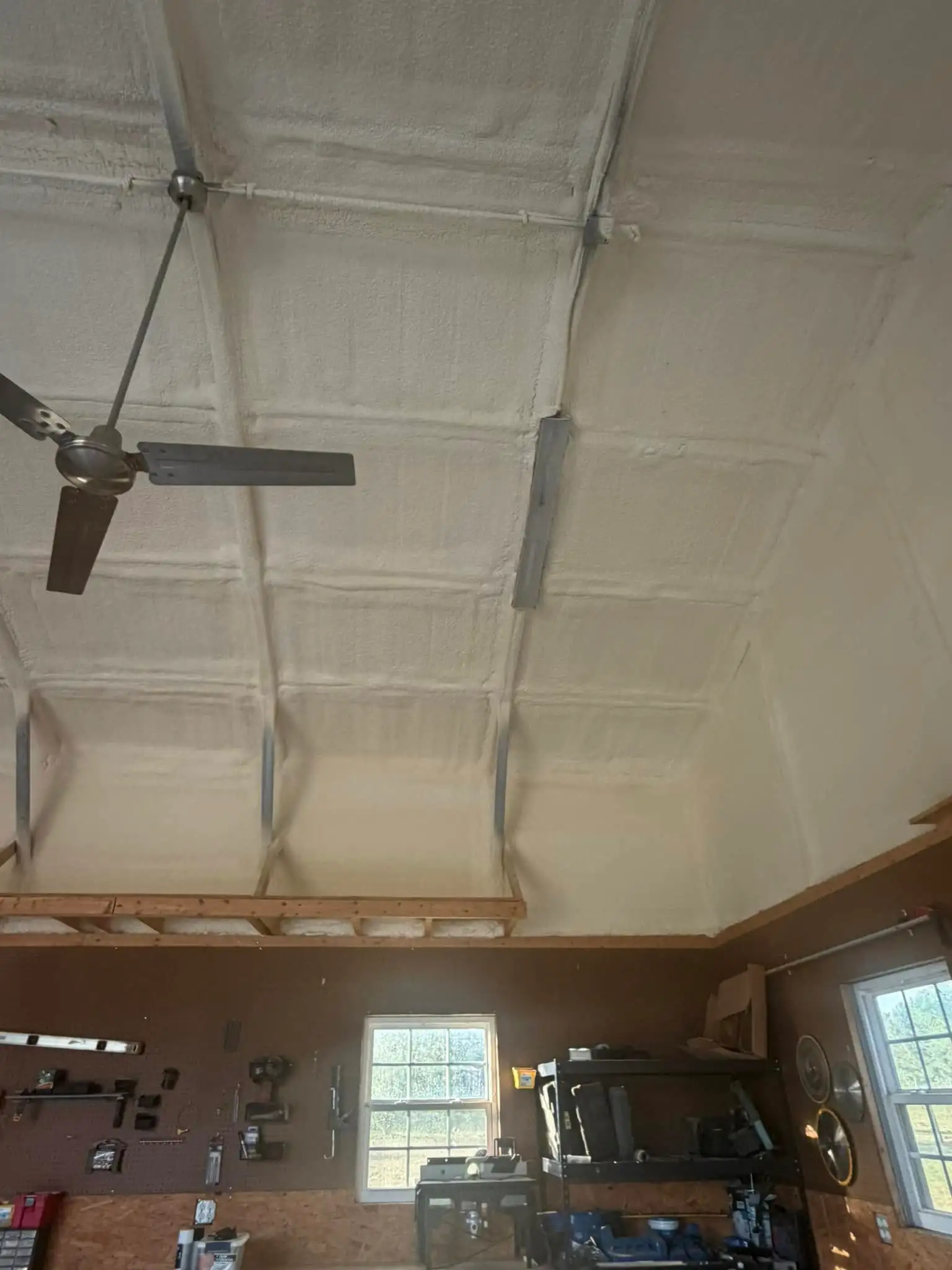
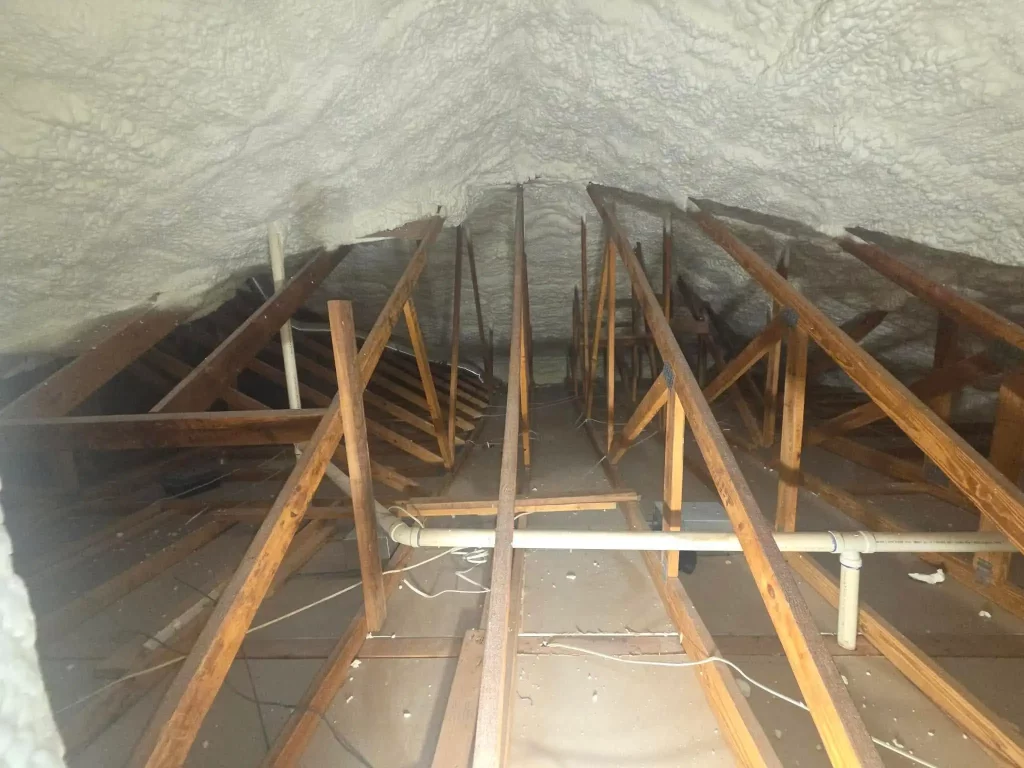
Troy, North Carolina, sits squarely in IECC Climate Zone 4A, a mixed-humid region where hot, sticky summers and chilly winters create a constant push-pull on your home’s building envelope. Most homes in this area were built with traditional insulation materials like fiberglass batts or blown cellulose that do not seal air leaks, which means moisture-laden air moves freely through wall cavities, attic floors, and crawl spaces. Spray foam insulation tackles this problem head-on by combining high thermal resistance (R-value) with an airtight seal that blocks moisture infiltration, drafts, and energy waste simultaneously. Whether your home struggles with high cooling bills in July, cold floors in January, musty crawl space odors, or condensation buildup, the right spray foam application can resolve the root cause rather than just treat the symptoms. Homeowners who want a deeper understanding of how spray foam works, where it should be installed, and the long-term benefits it provides can explore our comprehensive spray foam insulation guide for additional insights.
North Carolina spans two IECC climate zones, with Troy in the predominantly warm-humid Zone 4A classification. This zone brings winter design temperatures as low as 13 degrees Fahrenheit and summer highs reaching 91 degrees, with a wet-bulb reading of 75 degrees that signals heavy moisture loads during the cooling season. According to the U.S. Department of Energy, insulation requirements in Zone 4 call for R-49 ceiling insulation in uninsulated attics and R-20 for wood-frame walls under the 2021 IECC.
The challenge for Troy homeowners is not just meeting those R-values, but also controlling the moisture that accompanies this climate. Fiberglass batts and blown cellulose can reach the right R-value on paper, but they allow air and water vapor to pass through. When warm outdoor air carries humidity into wall cavities during summer months, that moisture condenses on cooler interior surfaces, creating the ideal conditions for mold growth and wood rot.
Gaps around rim joists, sill plates, window frames, pipe penetrations, and top plates let unconditioned air infiltrate your home year-round. The Department of Energy notes that walls and rim joists account for more than 40% of total envelope area, making them the largest source of air leakage in most homes. Spray foam expands into cracks and crevices as it is applied, forming a continuous seal that traditional insulation simply cannot match. This superior air-sealing capability is one of the main reasons builders and homeowners continue to choose spray foam for better energy efficiency, indoor comfort, and long-term building performance.
The EPA states that “the key to mold control is moisture control” and that indoor mold growth can and should be prevented by controlling moisture indoors. In Troy’s humid climate, moisture infiltration through the building envelope is the single biggest threat to indoor air quality and structural durability. Closed-cell spray foam serves as both insulation and a Class II vapor retarder, preventing water vapor from entering wall cavities and crawl spaces where it would otherwise condense and feed mold growth.
ENERGY STAR estimates that proper air sealing combined with attic and crawl space insulation can save homeowners an average of 15% on heating and cooling costs, or roughly 11% on total household energy bills. When fiberglass batts compress, settle, or leave gaps around framing, the effective R-value drops well below the rated value. Spray foam maintains its R-value over time and does not sag or settle, so the performance you get on day one is the performance you keep for decades.
Crawl spaces are a particular concern in North Carolina’s mixed-humid climate. Vented crawl spaces allow humid outdoor air to enter, where it condenses on cool surfaces, saturates insulation, and creates musty smells that migrate into the living space above. Building science experts on Green Building Advisor recommend closed-cell spray foam at rim joists in sealed crawl spaces for its ability to provide both air sealing and moisture control. Spray foam encapsulation seals the crawl space walls and floor, eliminates the venting that introduces humidity, and converts the space into a clean, conditioned area.
The Insulation Institute reports that 89% of U.S. single-family homes are under-insulated by modern IECC standards. Many homes in Troy were built decades ago with minimal insulation, and those materials have degraded over time. Spray foam retrofit allows our team to insulate areas that would be difficult or impossible to reach with batts or blown-in material, including tight rim joist bays, irregular framing cavities, and around existing ductwork and plumbing.
The right spray foam type depends on where it is being installed and what problems need solving. Here is how the two types compare for common Troy, NC applications:
| Application | Recommended Type | R-Value Per Inch | Key Advantage |
|---|---|---|---|
| Attic rafters (conditioned attic) | Open-cell | R-3.5 to R-3.8 | Lower cost, fills larger cavities, sound dampening |
| Exterior walls (new construction) | Closed-cell | R-6.0 to R-7.0 | Vapor retarder, structural rigidity, higher R in thin space |
| Rim joists and band boards | Closed-cell | R-6.0 to R-7.0 | Blocks air infiltration and moisture at the foundation transition |
| Crawlspace walls (encapsulation) | Closed-cell | R-6.0 to R-7.0 | Acts as vapor barrier, resists moisture from ground contact |
| Interior partition walls (sound control) | Open-cell | R-3.5 to R-3.8 | Excellent sound absorption at lower cost |
Closed-cell foam is generally the better choice for Troy’s moisture-heavy climate because it functions as a vapor retarder in addition to an air barrier. Open-cell foam provides good thermal resistance and sound control but does not block moisture vapor, so it should be limited to applications where a vapor barrier is already in place or where moisture drive is minimal.
| Home Type | Primary Concern | Recommended Approach | Expected Outcome |
|---|---|---|---|
| Older home (pre-1990) | Under-insulated walls and attic | Blown-in or retrofit spray foam in walls, closed-cell on rim joists, open-cell in attic | Reduced drafts, lower energy use, improved comfort |
| New construction | Long-term durability and code compliance | Closed-cell on rim joists and crawl space walls, open-cell in wall cavities and attic | Meets or exceeds IECC Zone 4A requirements, moisture managed from day one |
| Home with vented crawl space | Musty odors, moisture damage, cold floors | Crawl space encapsulation with closed-cell spray foam, vapor barrier on floor | Eliminated moisture source, warmer floors, better indoor air quality |
| Renovation or room addition | Consistent comfort in new space | Closed-cell in walls and ceiling, air seal all penetrations | No thermal bridging, no condensation risk, quiet interiors |
Choosing the right team matters as much as choosing the right material. Look for these indicators:
Spray Foam Pro has been helping Troy, NC, homeowners and builders solve insulation and moisture problems with spray foam solutions tailored to our local climate. Our team evaluates every home individually and recommends the right foam type, thickness, and application method to meet your comfort and efficiency goals. We handle everything from new construction insulation packages to full crawl space encapsulations for older homes.
Request a Free Quote | Schedule an Assessment
Call us at (910) 606-6247 or email [email protected] to get started. Our team is ready to inspect your home, identify the root causes of your insulation problems, and deliver a lasting solution.
Spray foam provides both insulation and air sealing in a single step, while fiberglass only insulates and leaves gaps around framing and penetrations that allow air and moisture to pass through. In Troy’s humid climate, that air sealing makes a meaningful difference in both energy costs and moisture control.
For vented or damp crawl spaces in Troy’s Zone 4A climate, closed-cell foam is the stronger choice because it acts as a vapor retarder and blocks ground moisture from entering the home. Open-cell foam does not offer this moisture resistance and is not recommended for below-grade or crawl space applications.
Yes. Spray foam seals the air leaks and gaps that allow hot outdoor air to infiltrate your home and let cooled air escape. ENERGY STAR data shows that combining air sealing with insulation upgrades can reduce heating and cooling costs by an average of 15%.
In many cases, yes. Our team can apply spray foam to attics, crawl spaces, rim joists, and other accessible areas without disturbing your living spaces. For existing wall cavities, we evaluate whether injection foam or other retrofit methods are appropriate for your situation.
Properly installed spray foam insulation is a permanent installation. It does not settle, sag, or degrade over time the way fiberglass and cellulose can. The thermal and air-sealing performance you get on installation day is maintained for the life of the home with no maintenance required.