

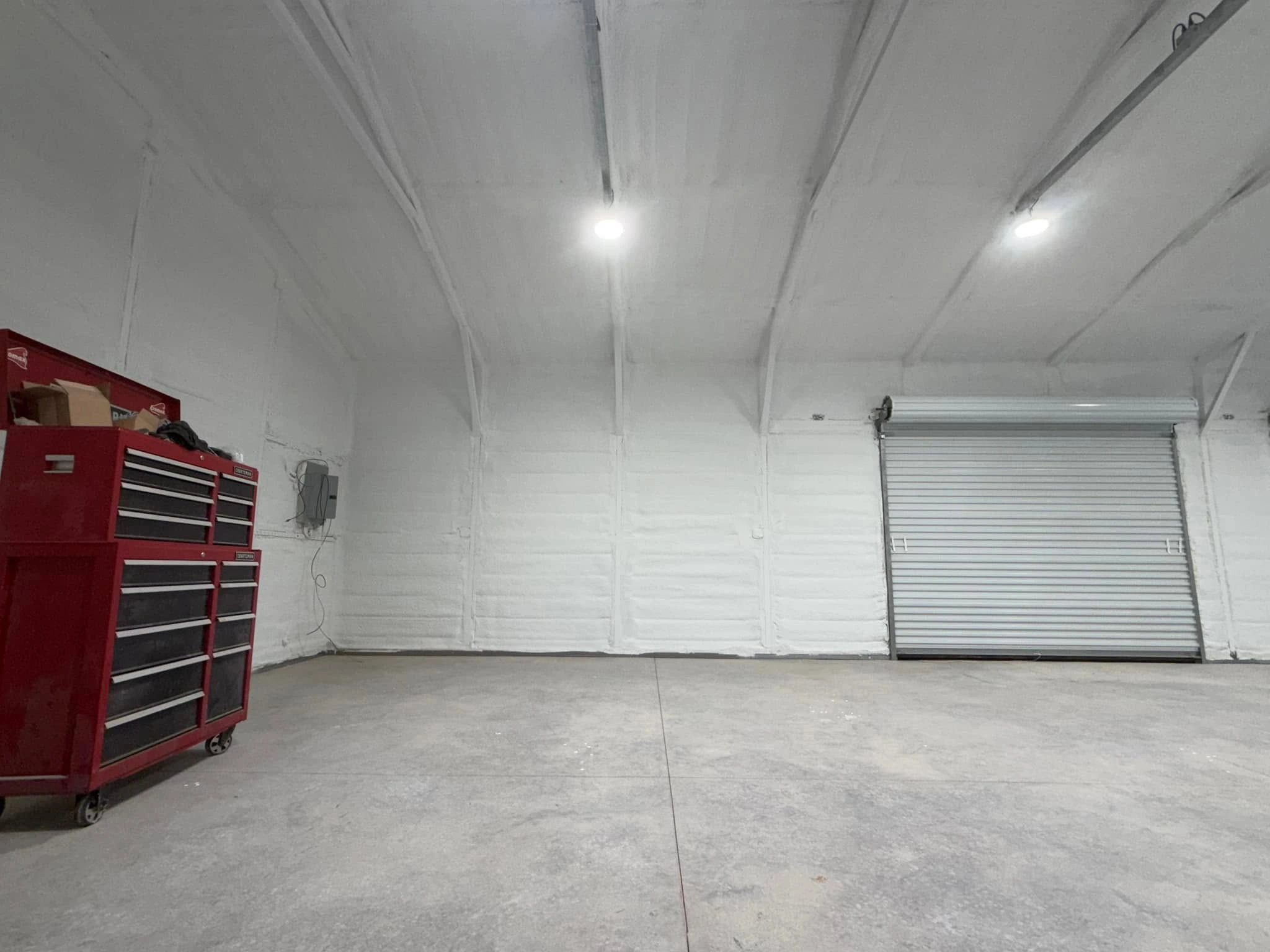
Homeowners in Boone, NC are turning to spray foam insulation because the town’s high-elevation climate, which features long, cold winters with frequent snow and an average January temperature of just 31.5°F, demands an insulation solution that both seals air leaks and delivers high thermal resistance. According to the EPA, air sealing combined with proper insulation can save homeowners an average of 15% on heating and cooling costs nationally, with savings climbing even higher in northern climate zones that experience heavier heating loads. For a mountain town like Boone, where winters resemble those of southern New England more than the Southeast, those benefits multiply. Spray foam insulation stands apart from traditional materials because it expands to fill gaps and crevices, creating an airtight barrier that fiberglass batts and blown cellulose simply cannot match. The right approach depends on factors like the home’s age, construction type, and which areas need the most attention, whether attics, crawl spaces, walls, or rim joists. A spray foam insulation guide can help homeowners understand which applications make the most sense.
Most of North Carolina falls within a humid subtropical climate, but Boone is an exception. At an elevation of 3,333 feet in the Blue Ridge Mountains, Boone features a warm-summer humid continental climate, classified as Köppen Dfb, which is rare for the Southeastern United States. The daily average temperature in January sits at just 31.5°F, and the town receives nearly 25 inches of snowfall annually, with blizzard-like conditions occurring regularly in winter. Summers are moderate, with July averaging 68.4°F, but the real challenge for homeowners is the extended heating season.
Boone’s climate places it firmly in the range where insulation performance directly impacts quality of life and energy bills. Homes built before modern energy codes, especially those constructed with standard fiberglass batts, often lack sufficient R-value and have significant air leakage through the building envelope. When you combine high heating demand with an older housing stock, the case for upgrading to a material that both insulates and seals becomes clear. Understanding insulation limitations is an important part of planning a long-term upgrade.
Spray foam insulation is applied as a liquid that expands into a foam, filling cavities and sealing gaps in a single step. The U.S. Department of Energy’s Guide to Home Insulation classifies spray foam as a “sprayed or foamed-in-place” insulation type that can fill even the smallest cavities, distinguishing it from blankets, loose-fill, and rigid board options.
There are two primary categories:
Open-cell spray foam is lighter, more flexible, and expands significantly to fill large wall cavities and attic spaces. It has an R-value of approximately 3.6 to 3.7 per inch.
Closed-cell spray foam is denser, more rigid, and provides a higher R-value at approximately 6.0 to 6.5 per inch. It also acts as a vapor barrier and adds structural strength to walls and roof decks.
What separates spray foam from other insulation types is the air-sealing function. Fiberglass and cellulose insulate but do not seal. Air leaking through gaps around framing, plumbing penetrations, electrical boxes, and rim joists bypasses traditional insulation entirely. Spray foam adheres to surfaces and expands into those gaps, creating a continuous thermal and air barrier.
| Insulation Type | Air Sealing | R-Value Per Inch | Moisture Barrier | Best Application |
|---|---|---|---|---|
| Open-cell spray foam | Yes, fills gaps | ~3.6 | No | Walls, attics, ceilings |
| Closed-cell spray foam | Yes, fills gaps | ~6.0 to 6.5 | Yes | Crawl spaces, rim joists, basement walls |
| Fiberglass batts | No | 2.9 to 3.8 | No | Standard wall cavities (new construction) |
| Blown cellulose | Partial | 3.1 to 3.8 | No | Attic floors, existing wall cavities |
| Rigid foam board | No (needs sealing) | 3.8 to 6.5 | Varies | Basement walls, continuous exterior insulation |
For Boone homeowners, the combination of air sealing and thermal resistance matters. The Department of Energy notes that recommended R-values for Climate Zone 4 (which covers Boone’s region) call for R-38 to R-60 in attics and R-25 to R-30 in walls. Spray foam solutions help reach those targets while simultaneously addressing air infiltration that undermines the effectiveness of other materials.
Air that leaks through your home’s envelope wastes a significant amount of energy. ENERGY STAR reports that if you added up all the leaks, holes, and gaps in a typical home’s envelope, it would be the equivalent of having a window open every day of the year. In a climate like Boone’s, where the temperature differential between indoors and outdoors can exceed 50 to 70 degrees during winter, every air leak represents measurable heat loss.
Sealing leaks and adding insulation reduces noise from outside, limits pollen and dust entry, improves humidity control, and lowers the chance of ice dams on the roof. These benefits are particularly noticeable in mountain homes where high winds can drive cold air through even small openings. Spray foam addresses both the insulation layer and the air barrier in a single application, which is why it has become the preferred choice for homeowners focused on comprehensive building performance.
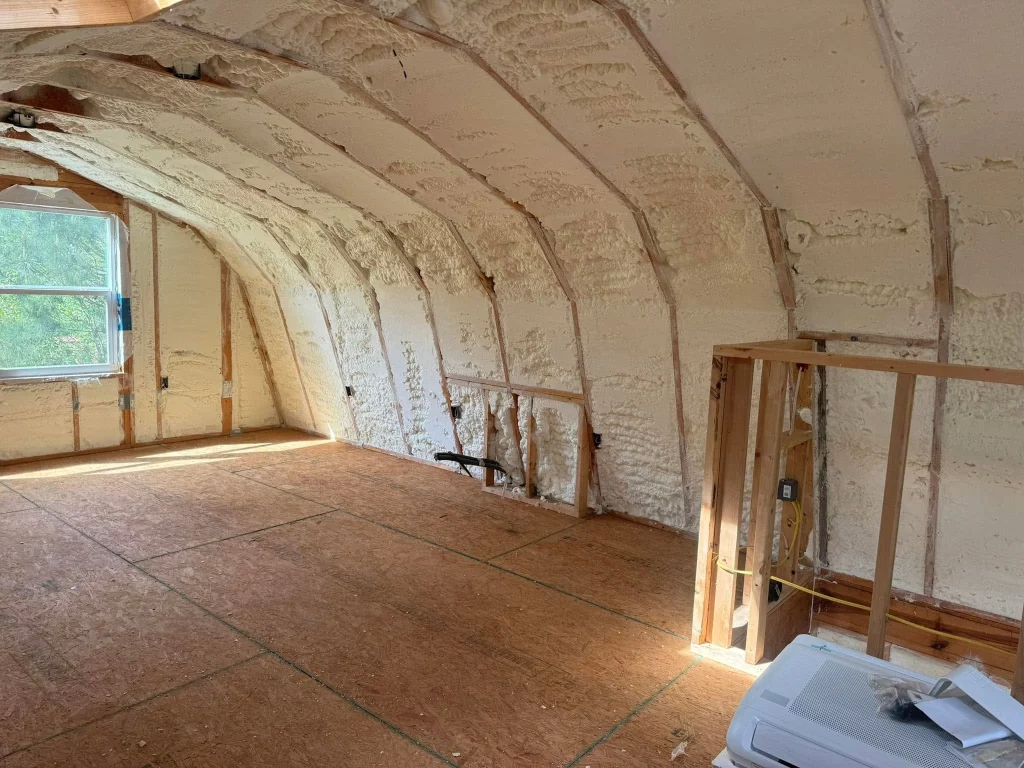
Boone receives about 59 inches of precipitation annually, making moisture management a constant concern for homeowners. Humidity, condensation, and water infiltration can compromise insulation effectiveness and create conditions for mold growth. According to the EPA’s guidance on identifying greener insulation, considerations for insulation selection should account for local temperature ranges, construction type, and moisture exposure.
Closed-cell spray foam functions as both an insulator and a vapor retarder, which is particularly beneficial for crawl spaces and basements where ground moisture is a persistent issue. By sealing out humid air, spray foam helps maintain consistent indoor humidity levels and reduces the likelihood of condensation forming within wall cavities or attic assemblies. This is an advantage that fiberglass and cellulose simply cannot provide.
The ideal spray foam strategy depends on the specific characteristics of your home. Here is guidance based on common Boone housing scenarios:
Older mountain homes (pre-1980 construction): These homes often have minimal insulation, balloon framing that allows air to move freely through wall cavities, and poor air sealing. Closed-cell spray foam in the rim joist and crawl space areas, combined with open-cell foam in the attic, provides the most comprehensive upgrade.
Cabin-style homes with cathedral ceilings: Traditional insulation in vaulted ceiling assemblies often leaves gaps and cannot achieve code-level R-values without excessive thickness. Spray foam applied directly to the roof deck in cathedral ceilings maintains R-value performance in a thinner profile and eliminates the need for ventilation in the attic assembly.
Homes with vented crawl spaces: Many Boone homes were built with vented crawl spaces, which can introduce cold air and moisture in winter. Encapsulating the crawl space with closed-cell spray foam on the walls and floor creates a conditioned space that reduces heating load and prevents moisture-related issues.
New construction builds: Homeowners building new homes in the High Country have the advantage of designing insulation into the structure from the start. Spray foam applied to wall cavities and roof decks during construction maximizes R-value, minimizes thermal bridging through framing, and creates an airtight envelope that will perform for decades.
Choosing the right installer is as important as choosing the right material. Look for these indicators when evaluating a spray foam contractor for your Boone home:
A contractor who takes the time to evaluate your home’s specific conditions and builds a plan around those findings will deliver better results than one offering a one-size-fits-all approach.
Several errors can reduce the effectiveness of a spray foam investment. The most frequent mistake is insulating without air sealing first. While spray foam does both simultaneously, homeowners who use other materials in some areas and spray foam in others may leave air leaks that bypass the insulated sections. Another common error is under-insulating by stopping at code minimums rather than targeting the upper end of recommended R-values for the climate zone. In a place like Boone, exceeding minimum standards pays back over time through reduced heating costs and improved comfort.
Ventilation mistakes are also common, particularly in attic assemblies. When spray foam is applied to the roof deck, the attic becomes a conditioned space, and traditional ridge and soffit vents must be sealed. Leaving vents open in a foam-sealed attic creates convective loops that undermine the insulation’s performance.
Spray Foam Pro helps Boone homeowners upgrade their home’s insulation with professional spray foam installation tailored to the specific demands of mountain living. Our team evaluates your attic, walls, crawl spaces, and rim joists to build a customized plan that addresses air sealing, R-value targets, and moisture control for your home. Reach out to us at [email protected] or call (910) 606-6247 to discuss your project with our specialists.
Request a Quote | Schedule a Home Insulation Assessment
Given Boone’s cold winters, high elevation, and continental climate, the combination of air sealing and high R-value that spray foam provides makes it one of the most effective insulation upgrades available for mountain homes.
When properly installed, spray foam insulation is a permanent building material that does not settle, sag, or degrade over time, maintaining its R-value and air-sealing properties for the life of the home.
Yes, spray foam applied to the roof deck or attic floor raises the surface temperature of the roof by preventing warm indoor air from escaping into the attic, which reduces the conditions that cause ice dams to form.
In most cases, existing fiberglass or cellulose insulation should be removed when spray foam is applied to the same cavity, as the old material can trap moisture and interfere with the foam’s adhesion and expansion.
Attics, crawl spaces, rim joists, and basement walls typically show the greatest improvement from spray foam because these areas experience the most air leakage and are hardest to insulate effectively with traditional materials.