
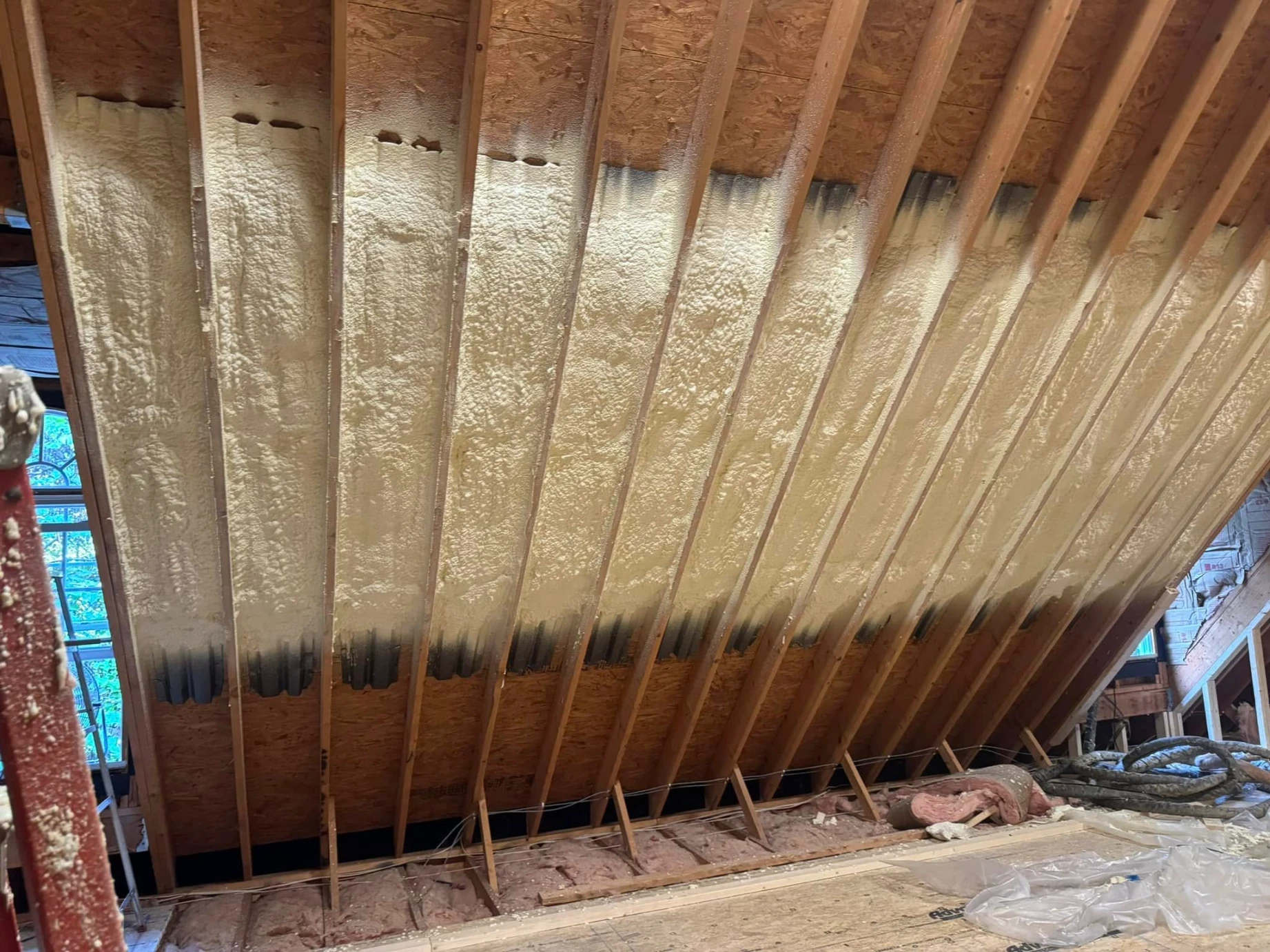
Spray foam insulation can be a strong fit for builders in Troy, North Carolina, but the right choice depends on your project goals, budget, and build type. For builders focused on energy-efficient homes, spray foam delivers a combination of air sealing and thermal insulation that traditional materials like fiberglass batts simply cannot match. Many contractors begin with a detailed spray foam insulation guide to compare system performance, application methods, and long-term efficiency benefits. The decision comes down to understanding the two main spray foam types, open cell and closed cell, knowing how Troy’s Climate Zone 3 code requirements factor in, and weighing the long-term performance gains against the upfront investment. For custom home builders and production builders targeting Energy Star or high-performance standards, spray foam insulation in Troy is worth serious consideration.
Troy sits in IECC Climate Zone 3, which means hot, humid summers and mild but unpredictable winters. According to the Insulation Institute’s IECC Compliance Guide for North Carolina, new residential construction in Climate Zone 3 requires a minimum ceiling insulation of R-30, wood frame wall insulation of R-13, and floor insulation of R-19. These are baseline prescriptive requirements, and builders aiming for higher performance standards often exceed them.
Spray foam insulation helps builders meet and exceed these requirements more efficiently because it provides a continuous layer of insulation that also serves as an air barrier. Traditional insulation like fiberglass or cellulose can leave gaps around framing, electrical penetrations, and plumbing runs. Spray foam expands into those spaces, creating a sealed thermal envelope in a single application, making it a key solution for meeting 2026 spray foam energy code standards.
The U.S. Department of Energy recommends reducing air leakage as much as possible and supplementing with controlled ventilation, noting that air leakage contributes to moisture problems, comfort issues, and higher energy costs. For builders in Troy’s humid climate, controlling that moisture infiltration is especially important to prevent mold and structural damage.
Understanding the differences between spray foam types helps builders match the right product to each part of the build. Both have distinct advantages depending on the application zone and performance targets.
| Feature | Open Cell Spray Foam | Closed Cell Spray Foam |
|---|---|---|
| R-Value per Inch | R-3.5 to R-3.7 | R-6.0 to R-7.0 |
| Density | Low (0.5 lb/ft³) | High (1.5 to 2.0 lb/ft³) |
| Air Barrier | Yes | Yes |
| Vapor Barrier | No (vapor permeable) | Yes (vapor retarder) |
| Structural Strength | Minimal | Adds wall racking strength |
| Best Applications | Interior walls, attics, crawl spaces | Rim joists, exterior walls, and foundations |
| Expansion | Expands significantly | Expands moderately |
For builders in Troy, open-cell spray foam is often the practical choice for interior wall cavities and unvented attics. It fills cavities, reduces sound transmission between rooms, and costs less per square foot than closed-cell. Closed cell is the better pick where moisture control and structural reinforcement matter most, such as basement rim joists, crawl space walls, and below-grade applications.
One of the strongest arguments for spray foam insulation in Troy is how it simplifies energy code compliance. The Spray Polyurethane Foam Alliance (SPFA) reports that as much as 40% of a building’s energy is lost due to air infiltration through gaps, cracks, and penetrations. Spray foam is the only insulation product that both insulates and air seals in a single step, without secondary tapes, sealants, or fasteners.
Beyond code compliance, spray foam enables builders to offer real performance benefits to homebuyers:
Spray foam insulation is effective, but builders need to understand and communicate the safety protocols involved. The U.S. Consumer Product Safety Commission (CPSC) advises that building occupants, including pets, should vacate the premises during and for at least 24 hours after spray foam application. Re-occupancy times can vary based on product type, building conditions, and whether sensitive individuals such as children or elderly residents are present.
The EPA notes that spray foam contains isocyanates, which can cause asthma, lung damage, skin irritation, and respiratory problems when proper safety measures are not followed during installation. Builders should verify that their insulation contractor follows these practices:
Proper installation by a trained, experienced applicator eliminates most of the risks associated with spray foam. Builders who cut corners on installation quality or hire uncertified applicators expose themselves to callbacks, liability, and reputational damage.
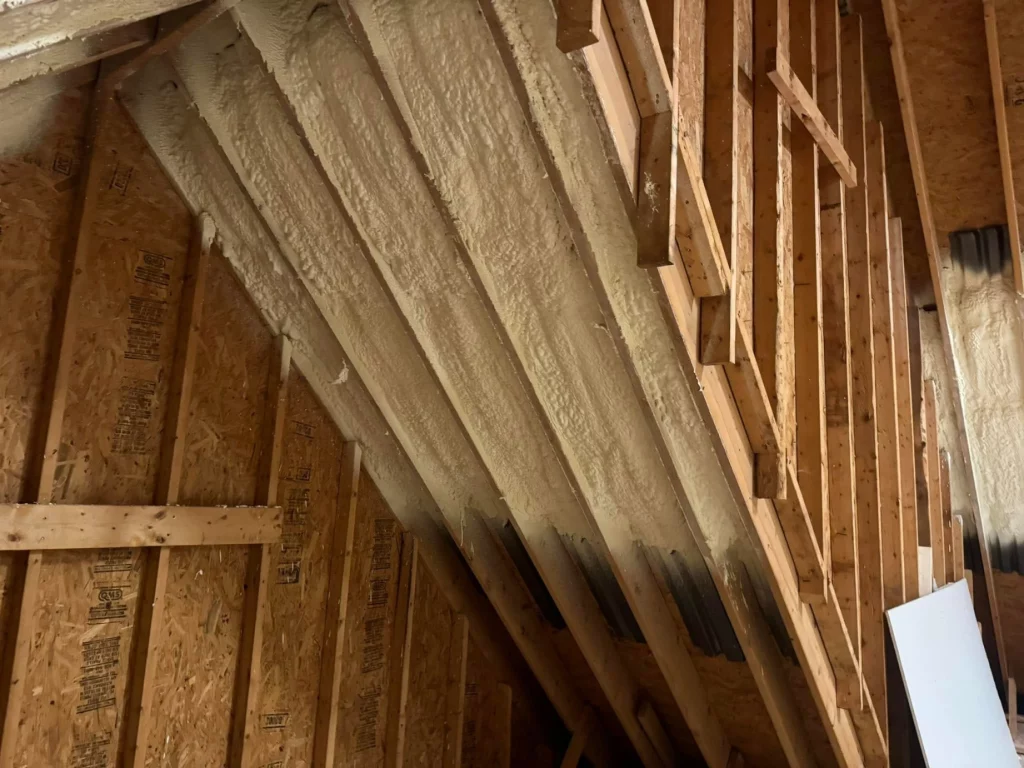
Not every project needs spray foam throughout the entire building envelope. Strategic application in high-impact areas often delivers the best return on investment for builders in Troy.
Rim joists and band joists: These areas are notoriously difficult to insulate with traditional materials. Spray foam fills the irregular cavities and provides an air seal that prevents conditioned air from escaping at the floor line.
Unvented attics: Moving the insulation plane to the roof deck with spray foam keeps ductwork and HVAC equipment inside the conditioned space, improving efficiency and simplifying the build.
Crawl spaces: Sealing and insulating crawl space walls with closed-cell foam prevents moisture intrusion and keeps floors above warm in winter.
Interior partition walls: Open-cell spray foam in shared walls dramatically reduces sound transmission, which is a selling point for custom homes and townhome projects.
| Build Type | Recommended Approach | Key Notes |
|---|---|---|
| Custom luxury homes | Full envelope spray foam (open cell walls/attic, closed cell rim joist) | Maximizes efficiency and comfort, supports premium pricing |
| Production/tract homes | Spray foam in rim joists, attics, and critical air-seal points | Balances cost control with code compliance and energy performance |
| Multifamily/townhomes | Open cell in party walls for sound isolation, closed cell at exterior transitions | Sound control between units adds real market value |
| Renovations/additions | Targeted spray foam in attics, crawl spaces, and rim joists | Addresses the worst air-leakage areas without full gut jobs |
Choosing the right insulation contractor matters as much as choosing the right product. Here are the indicators that a spray foam installer is worth partnering with:
For builders in Troy looking to upgrade their insulation strategy, Spray Foam Pro offers the expertise and reliability your projects demand. Our team handles everything from material selection and code compliance to safe, professional installation across residential and commercial builds. Whether you need closed-cell foam for a moisture-critical crawl space or open-cell for a full envelope approach, we help you specify and install the right solution for every project.
Request a quote for your next build by calling our team at (910) 606-6247 or emailing [email protected].
Schedule a consultation with our insulation specialists to discuss your build plans, code requirements, and the spray foam approach that fits your goals.
Our professionals are ready to help you build tighter, more efficient homes in Troy. Reach out today.
Yes. Troy is in IECC Climate Zone 3, requiring R-30 ceilings and R-13 walls. Both open-cell and closed-cell spray foam can meet or exceed these requirements when installed at the proper thickness.
The CPSC recommends that all occupants, including pets, vacate the premises for at least 24 hours after spray foam application, with re-entry times varying based on product type and building conditions.
Yes. The spray foam industry reports that HVAC systems can be downsized by up to 35% when spray foam creates a tight building envelope, because heating and cooling loads drop significantly.
Both have their place. Open cell works well for interior walls and attics where cost efficiency and sound control matter. Closed cell is better for rim joists, crawl spaces, and any below-grade application where moisture resistance is needed.
Spray foam contains isocyanates that can cause respiratory issues and skin irritation during installation. Proper PPE, ventilation, and certified applicators are essential to managing these risks safely.