
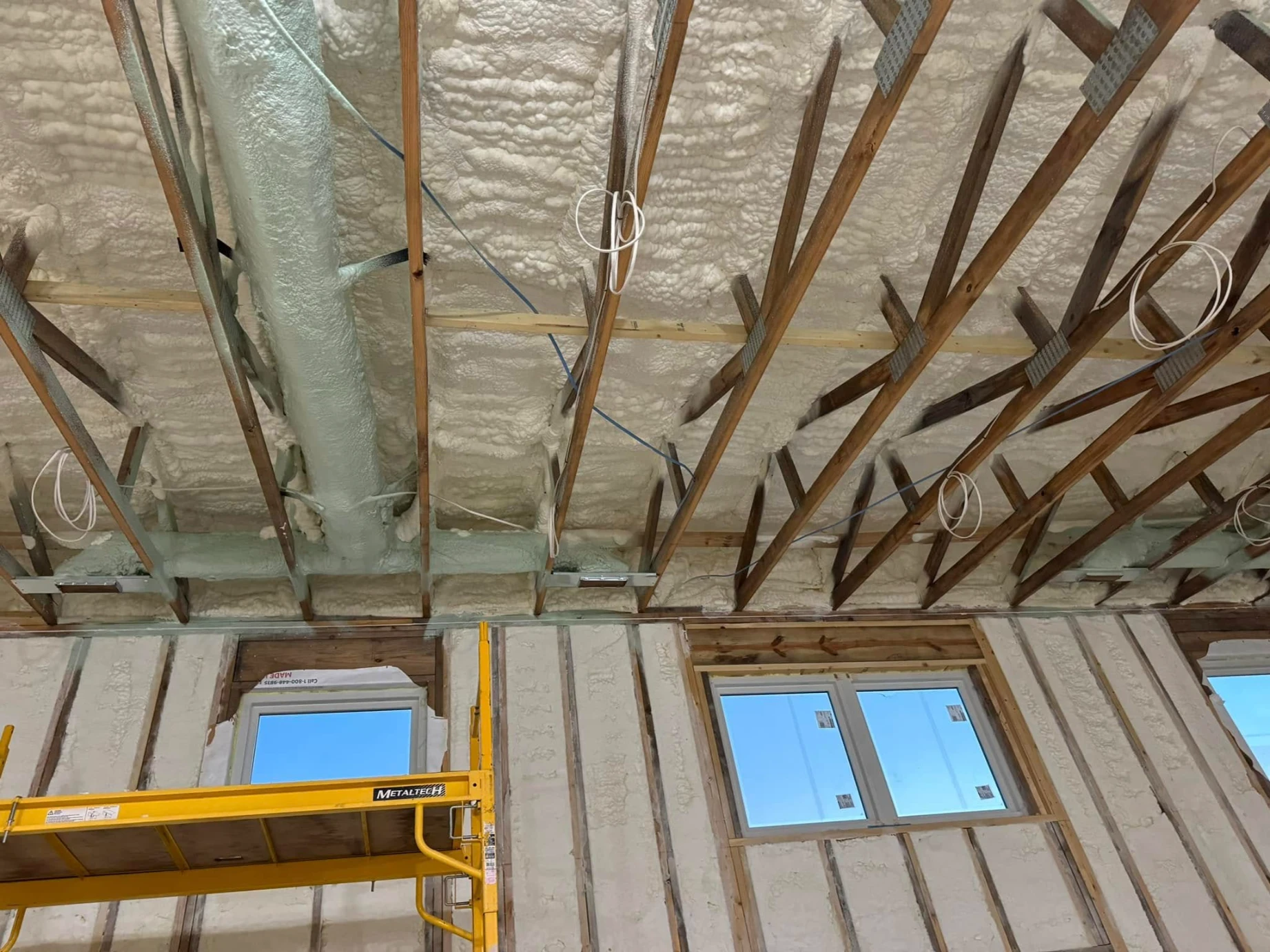
Sealing air leaks with spray foam insulation is one of the most effective ways to improve comfort and reduce energy waste in Troy, NC homes. Air leakage accounts for 25% to 40% of the energy used for heating and cooling in a typical house, according to the U.S. Department of Energy. Our team at Spray Foam Pro uses professional-grade spray polyurethane foam to locate and seal those hidden gaps, creating a continuous air barrier that traditional insulation materials like fiberglass batts simply cannot match. Homeowners researching long-term efficiency improvements often start with a complete spray foam insulation homeowner guide before choosing the right system for their property. Troy sits in North Carolina’s central piedmont region within IECC Climate Zone 4A, meaning homes here deal with both hot, humid summers and cold winter snaps. That mix of weather makes air sealing especially important, since uncontrolled airflow carries moisture into framing cavities, drives up utility bills, and creates uncomfortable drafts year-round.
Troy, North Carolina, experiences a full range of seasonal weather. Summers bring heat and humidity that push air conditioning systems hard, while winters deliver cold snaps that test heating equipment. In both seasons, air leaks undermine your home’s thermal performance.
The U.S. Department of Energy – Detecting Air Leaks recommends that homeowners start by identifying where air enters and exits the building envelope. Common problem areas include electrical outlets, switch plates, door and window frames, attic hatches, fireplace dampers, and wherever plumbing or wiring passes through walls and ceilings. In older homes throughout Montgomery County, these gaps have often been accumulating for decades.
Three forces drive air through these gaps: wind pressure, the stack effect, and mechanical ventilation from fans and HVAC systems. The stack effect is especially relevant in two-story homes common around Troy, where warm air rises and escapes through attic leaks while pulling cold air in through the foundation and rim joists. According to Building Science Corporation, air leaks can be responsible for a third or more of total energy loss in typical houses, and they also carry moisture into wall cavities, where it causes mold and rot.
Spray polyurethane foam is created by mixing two chemical components, commonly called Side A (isocyanate) and Side B (polyol resin), at the tip of a spray gun. The reaction produces an expanding foam that conforms to every surface it touches, according to Wikipedia – Spray Foam. This expansion fills irregular gaps, wraps around obstructions, and bonds directly to wood, metal, concrete, and other building materials.
Once cured, spray foam blocks all three modes of heat transfer:
This triple-action approach is what sets spray foam apart from fiberglass batts or blown-in cellulose, which only address conductive heat transfer and still allow air to pass through gaps around their edges.
We use two primary types of spray foam, each suited to different applications in Troy homes. Choosing the right one depends on where it will be applied, the space available, and moisture considerations.
| Property | Open-Cell Spray Foam | Closed-Cell Spray Foam |
|---|---|---|
| Density | Low (half-pound) | Medium (2-pound) |
| R-Value per Inch | ~3.5 to 3.8 | ~5.1 to 6.5 |
| Expansion Rate | Expands up to 100x | Expands approximately 30x |
| Texture | Soft, sponge-like | Rigid, dense |
| Moisture Barrier | No | Yes |
| Air Barrier | Yes (at 5.5+ inches) | Yes (at minimum thickness) |
| Best Application | Interior walls, attics, sound control | Crawl spaces, rim joists, exterior walls, and basements |
Open-cell foam is well-suited for interior applications where sound reduction is also a benefit. Its aggressive expansion fills large cavities efficiently. Closed-cell foam, with its higher R-value per inch and moisture resistance, performs better in tight spaces and areas exposed to humidity, making it the right choice for crawl spaces and rim joists common in Troy-area homes.
Our team begins every project with a thorough inspection of your home’s building envelope. We look for visual indicators of air leakage: dirty spots on ceiling paint, stained carpet near wall-to-floor joints, and gaps around utility penetrations. For a more precise measurement, we use blower door testing to depressurize the home and identify exactly where air is entering and escaping.
Based on the assessment, we create a targeted plan. The most common leak zones in Troy homes include:
Before spraying, our crew cleans surfaces to ensure proper adhesion. We mask off areas that should not receive foam, protect finished surfaces, and verify that no moisture issues are present that could compromise the seal.
Our technicians apply spray foam using professional-grade high-pressure equipment. Open-cell foam goes on in layers to allow proper expansion and curing, while closed-cell foam is applied at the thickness needed to achieve both the target R-value and an effective air barrier. The foam expands into every crack, crevice, and void, bonding directly to framing members and sheathing to create a continuous seal. This level of precision is why many contractors rely on experienced spray foam insulation partners for new construction projects to ensure long-term energy performance and code compliance.
After the foam has fully cured, we trim any excess material flush with framing members. We then perform a quality walkthrough to verify complete coverage, consistent thickness, and proper adhesion across all treated areas. If any gaps or thin spots are found, we apply additional foam to ensure an unbroken air seal.
A tight home needs controlled ventilation for healthy indoor air quality. We advise homeowners on appropriate ventilation strategies to ensure that fresh air comes from known sources at controlled rates, rather than from random leaks of unknown size and quality.
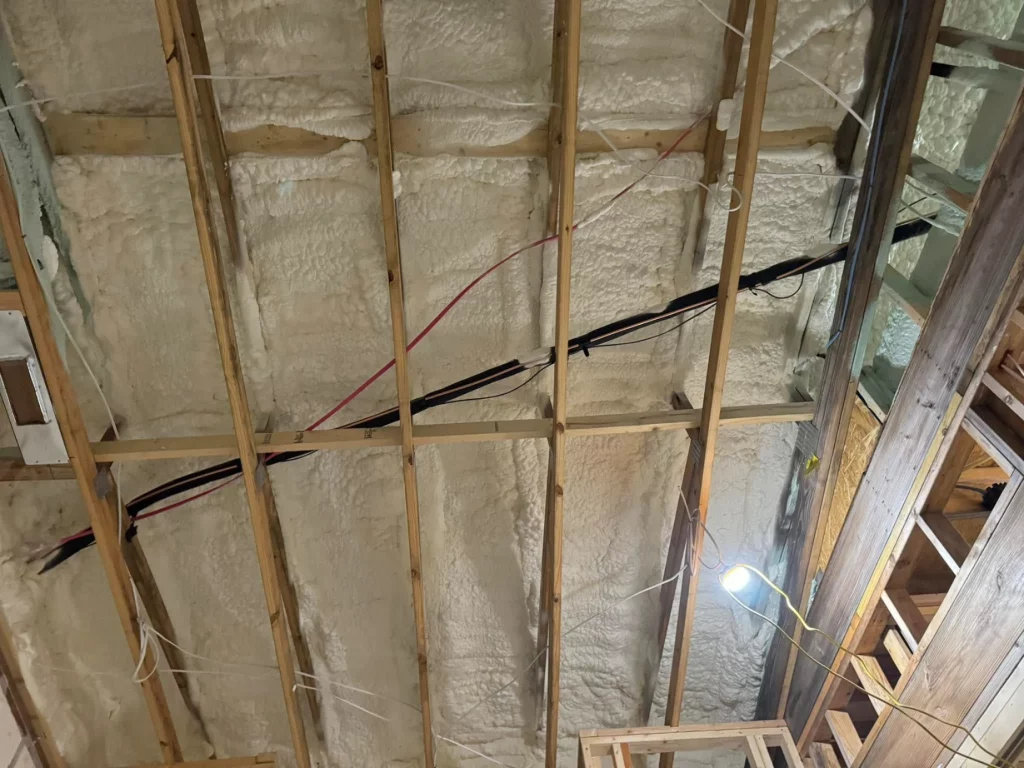
Many homes in the Troy area were built before modern air sealing standards took effect. These houses often have significant gaps around rim joists, through balloon framing, and at plumbing and electrical penetrations. Closed-cell spray foam in the crawl space and rim joist areas delivers the greatest improvement, since these zones are primary sources of uncontrolled air entry.
Even homes built to more recent codes can have substantial air leakage at attic penetrations, around recessed lighting, and at the tops of interior partition walls. Open-cell spray foam in the attic and wall cavities targets these specific leak paths while also adding sound insulation between rooms.
Common throughout Montgomery County, manufactured homes often have floor system leaks where the belly board meets the perimeter framing. Spray foam applied to the underside of the floor and at marriage line joints can significantly reduce air infiltration in these structures.
The right air sealing strategy shares several clear indicators:
At Spray Foam Pro, we specialize in identifying and sealing air leaks throughout Troy, NC, and the surrounding communities. Our experienced technicians use professional-grade spray foam to create a continuous air barrier that keeps conditioned air inside and outside air where it belongs. Whether your home needs targeted leak sealing around rim joists and attic penetrations or a comprehensive envelope upgrade, we have the tools and expertise to get the job done right.
Call us at (910) 606-6247 or email [email protected] to get started.
Request a Quote Schedule an Air Sealing Assessment
Stop paying to heat and cool the outdoors. Let our team show you exactly where your home is losing energy and seal those gaps for good.
Spray foam typically cures within minutes of application and is fully inert within 24 hours. We recommend that homeowners and pets vacate the immediate work area during application and for the curing period specified by the manufacturer, which is generally 24 hours for professional high-pressure systems.
Yes. For existing wall cavities, we can use a wall injection technique that involves drilling small holes between studs and injecting a lower-expansion foam that fills the cavity without removing drywall. Attics, crawl spaces, and rim joists can be treated directly with no demolition required.
Closed-cell spray foam acts as both an air barrier and a moisture barrier, making it effective at preventing condensation in crawl spaces and rim joists. Open-cell foam allows moisture to pass through, so it is best used in interior applications where a separate vapor control strategy is in place.
Fiberglass insulation resists conductive heat flow but does not stop air movement through gaps. Spray foam expands to fill those gaps and adheres to surrounding surfaces, creating an airtight seal that fiberglass cannot achieve on its own.
Once fully cured, spray polyurethane foam is inert and non-toxic. During application, our technicians follow strict safety protocols, including respiratory protection and ventilation. After the recommended curing period, the foam does not off-gas and poses no indoor air quality concerns.