
Scheduling a professional spray foam insulation contractor in Boone, NC means working through several important decisions before any material is sprayed. The mountain climate in Watauga County demands insulation that handles both freezing winters and humid summers, and spray foam is one of the few materials that delivers high R-value per inch while sealing air leaks at the same time. The right contractor will evaluate your home’s specific needs, recommend either open-cell or closed-cell foam based on the application area, and follow the safety protocols required by the EPA and North Carolina building code. Skipping any of these steps can lead to moisture problems, code violations, or inadequate thermal performance. Below is a breakdown of everything you should understand before signing an agreement or allowing a crew on your property with this spray foam insulation guide.
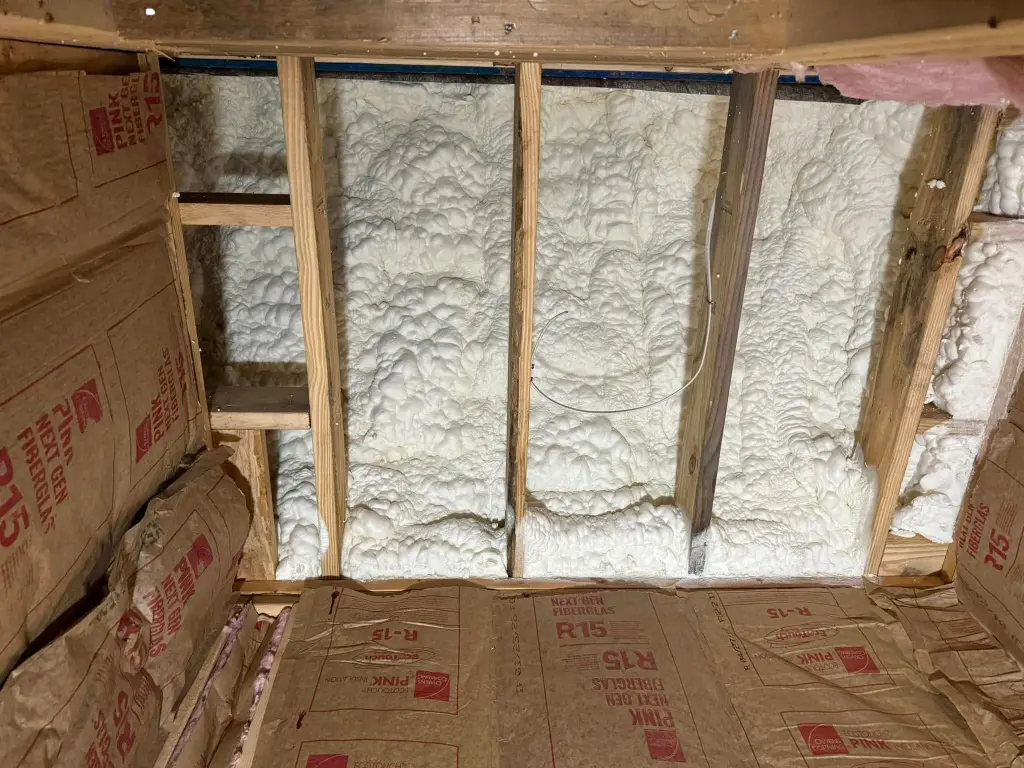
Choosing between open-cell and closed-cell spray foam is one of the first decisions you will face, and the right answer depends on where the insulation is being installed and what problems you are solving. According to InterNACHI’s guide to polyurethane spray foam, closed-cell foam is composed of tiny, gas-filled cells with solid walls that create a dense, rigid material. The U.S. Department of Energy rates closed-cell foam at approximately R-7 to R-8 per inch, and it functions as both an air barrier and a vapor barrier. This makes it the preferred option for areas exposed to moisture, such as crawlspaces, basement walls, and rim joists.
Open-cell foam has a softer, spongy structure with broken cell walls that allow air to fill the spaces. Its R-value per inch is lower than closed-cell, but it still provides strong air-sealing properties and expands to fill irregular cavities effectively. Builders often select open-cell foam for its lower material cost, its ability to absorb sound, and its flexibility, which allows it to adjust to framing movement without cracking. However, open-cell foam should not be used in locations where it may become wet, since moisture passing through it will reduce its insulating effectiveness.
| Feature | Closed-Cell Spray Foam | Open-Cell Spray Foam |
|---|---|---|
| R-Value Per Inch | R-7 to R-8 | R-3.5 to R-3.8 |
| Vapor Barrier | Yes | No |
| Density | ~2 lb/ft3 | ~0.5 lb/ft3 |
| Sound Dampening | Moderate | Excellent |
| Best Applications | Basements, crawlspaces, rim joists, exterior walls | Attics, interior walls, sound isolation |
| Flexibility | Rigid, can develop hairline fractures | Flexible, accommodates framing movement |
Boone sits in the High Country at roughly 3,300 feet above sea level, which places it within IECC Climate Zones 4 and 5 under North Carolina’s energy conservation code. The North Carolina Office of the State Fire Marshal code amendments specify that homes in Climate Zone 4 require a minimum ceiling insulation of R-49 and wall insulation of either R-20 cavity plus R-5 continuous insulation, R-13 plus R-10 continuous, or R-15 cavity alone. Climate Zone 5 adds further stringency for mass walls and crawl space insulation.
One provision that directly benefits spray foam users is the unvented attic assembly alternative. When air-impermeable insulation such as spray foam is installed directly to the underside or top of the roof deck, the code allows compliance at a reduced R-value. For Climate Zone 4, R-25 of spray foam applied to the roof deck satisfies the R-49 ceiling requirement. For Climate Zone 5, the same R-25 threshold applies. However, this alternative is only available when the home has a mechanical ventilation system, the residence achieves an ACH50 blower door result of less than 3.0, and all HVAC equipment and ductwork are located within the thermal envelope.
Understanding these code requirements matters because not every contractor will automatically propose the most efficient compliance path. A knowledgeable contractor will evaluate whether your home meets the criteria for the unvented attic alternative and design the insulation plan accordingly, helping homeowners make informed decisions when switching to spray foam insulation in Boone, NC.
Spray polyurethane foam involves a chemical reaction between isocyanates and polyols that produces expanding foam. During application, this reaction generates vapors and aerosols that contain unreacted chemicals. The EPA’s resource on potential chemical exposures from spray polyurethane foam states that inhalation exposures during spraying will typically exceed OSHA occupational exposure limits and require skin, eye, and respiratory protection for installers. Homeowners and building occupants must not be present during application.
After spraying, the foam enters a curing period during which it continues to off-gas. The EPA notes that some manufacturers recommend at least 24 hours before re-entry without protective equipment and re-occupancy by residents, though curing times vary based on product formulation, foam thickness, temperature, and humidity. BuildingGreen’s coverage of EPA health concerns reports that safe re-entry times from manufacturers range from 8 to 24 hours for one-component foam and 23 to 72 hours for two-component foam.
Once fully cured, spray foam is considered relatively inert and stable. The EPA does note, however, that maintenance workers performing hot work such as drilling, welding, or grinding on or near the foam can generate toxic emissions, including isocyanates and hydrogen cyanide. If you notice persistent odors after installation, the EPA recommends working with the contractor or hiring an independent indoor air quality consultant to diagnose the issue.
What to confirm with your contractor before scheduling:
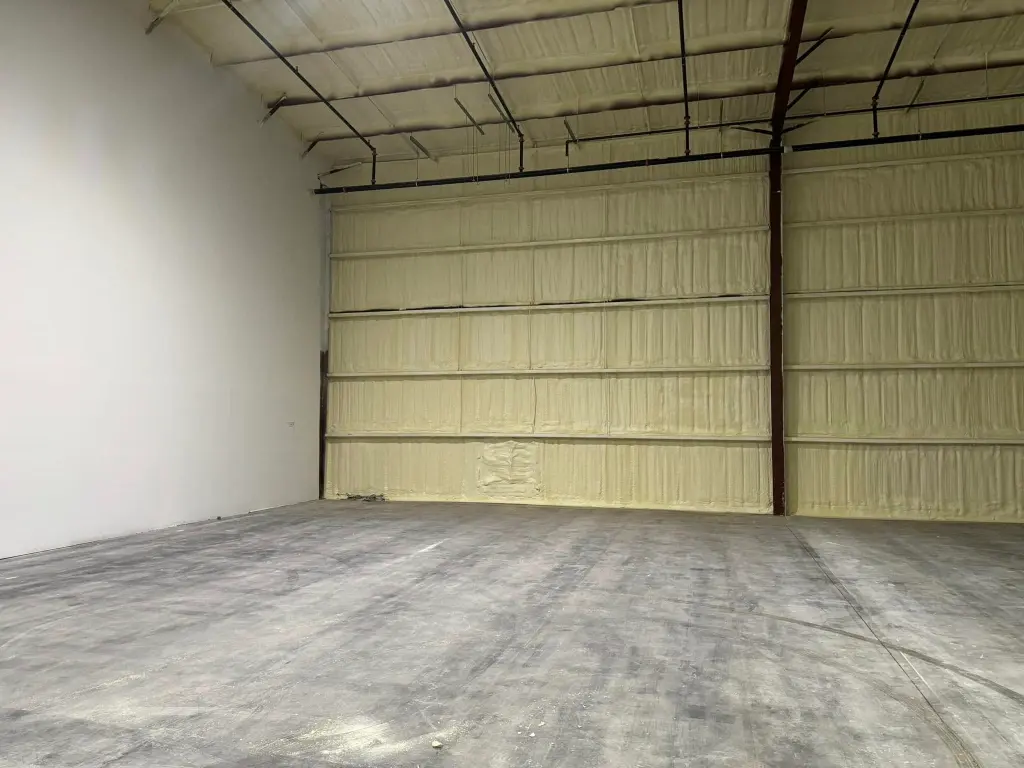
Spray foam is a foam plastic material, and the International Residential Code requires it to be separated from interior living spaces by an approved thermal barrier. According to InterNACHI, this typically means covering the foam with at least half-inch gypsum wallboard (drywall), a 23/32-inch wood structural panel, or another material that meets NFPA acceptance criteria.
There are limited exceptions. In attics, a thermal barrier is not required when the space is entered only for maintenance and repairs, the attic access is provided, and the foam has been tested or protected with an ignition barrier material. For basement walls that will remain unfinished, a fire-rated foam panel or similar covering must be used instead of standard drywall.
This requirement matters for your planning because it affects scheduling and budget. If you are insulating a basement or crawlspace with spray foam, you will need to account for the installation of a thermal barrier after the foam cures. Discuss this with your contractor before the project begins so there are no surprises when working with a spray foam insulation contractor in Boone, NC.
The quality of a spray foam installation depends heavily on the installer. Improper mixing ratios, incorrect substrate temperatures, or spraying in unfavorable conditions can result in foam that never fully cures, which means ongoing off-gassing and potential health risks. Here are specific factors to assess when evaluating a contractor:
A strong contractor will demonstrate several qualities throughout the estimation process. They will ask detailed questions about your home’s age, construction type, existing insulation, and any moisture or comfort problems you have noticed. They will walk through the areas to be insulated rather than relying on photos or descriptions alone. They will explain the differences between open-cell and closed-cell foam without pushing one product exclusively, and they will connect their recommendation to the specific conditions of your home.
They will also discuss code compliance openly, including whether your project triggers the unvented attic alternative or whether additional measures such as mechanical ventilation upgrades are needed. Their written proposal should specify the product, thickness, and R-value to be installed in each area, along with preparation requirements, curing timelines, and thermal barrier obligations.
| Project Type | Recommended Foam Type | Key Considerations |
|---|---|---|
| Crawlspace encapsulation | Closed-cell | Moisture exposure, vapor barrier needed, thermal barrier required |
| Unvented attic assembly | Open-cell or closed-cell | Code allows reduced R-25 at roof deck for Zones 4 and 5 |
| Rim joist air sealing | Closed-cell | High moisture potential, limited cavity depth benefits high R-value per inch |
| Interior wall sound control | Open-cell | Superior sound dampening, lower material cost |
| Basement walls | Closed-cell | Vapor barrier function, moisture resistance, fire-rated covering needed |
Spray Foam Pro serves homeowners throughout the Boone, NC area with professional spray foam insulation installations designed for the demands of the High Country. Our team evaluates each home individually, recommends the right foam type for every application area, and follows EPA and North Carolina building code requirements from start to finish. Whether you are building new, retrofitting an older home, or solving specific comfort and moisture issues, we are here to help.
Request a Quote | [email protected] | (910) 606-6247
Request a Quote | Schedule a Home Assessment
The EPA notes that manufacturer re-occupancy recommendations range from 24 hours for professional two-component systems to 72 hours in some cases, depending on the product, thickness, and environmental conditions.
Temperature and humidity affect curing rates, so installation during very cold periods requires specific precautions. Your contractor should confirm that conditions meet the product manufacturer’s requirements before scheduling.
Closed-cell spray foam acts as its own vapor barrier. Open-cell foam does not, so a separate vapor retarder may be needed depending on the application and climate zone.
When installed as air-impermeable insulation directly to the roof deck, spray foam can satisfy ceiling R-value requirements at R-25 in Climate Zones 4 and 5, provided your home meets specific ventilation and blower door testing criteria.
Once fully cured, spray polyurethane foam is considered relatively inert and stable according to the EPA. The primary safety concerns apply during application and curing, not after the foam has fully reacted.