
Choosing the right insulation contractor in Badin, NC comes down to verifying credentials, understanding building code requirements specific to your climate zone, confirming the contractor communicates in R-values rather than inches, and demanding full transparency in contracts and documentation. Badin sits in North Carolina’s Climate Zone 4A, where the Department of Energy recommends R-60 for uninsulated attics and R-20 plus R-5 continuous insulation for wood-frame walls under the 2021 IECC. A detailed insulation guide for Troy, NC can also help homeowners understand the factors involved in selecting the right insulation approach. The contractor you hire needs to understand these local requirements and have the technical expertise to meet them. Below is a structured approach to evaluating insulation contractors, organized by the factors that actually separate reliable professionals from the rest.
Insulation is not a commodity you can shop for purely on price. The material sitting in a bag or tank is only part of the equation. Installation quality determines whether that material actually performs at its rated R-value. A poorly installed R-60 assembly can function closer to R-30 in practice due to gaps, compression, and voids. In a climate like Badin’s, where summers bring sustained heat and humidity and winters dip below freezing, those performance gaps translate directly into higher energy bills, moisture problems, and comfort complaints.
The ENERGY STAR program notes that 9 out of 10 homes in the U.S. are under-insulated, which means the majority of homes in Stanly County are likely leaving significant energy savings on the table. A qualified contractor will identify exactly where your home is losing energy and prescribe a solution that addresses the full building envelope, not just the attic floor.
Before you can evaluate whether a contractor is recommending the right solution, you need to know what standards apply to your area. Badin is in Climate Zone 4A (mixed-humid) under the 2021 International Energy Conservation Code. The Department of Energy outlines these minimum R-value requirements:
| Building Component | Minimum R-Value (Zone 4A) | Notes |
|---|---|---|
| Uninsulated Attic | R-60 | Applies to ceiling/attic floor assemblies |
| Wood-Frame Wall | R-20 + R-5 CI | Cavity insulation plus continuous exterior insulation |
| Basement/Crawlspace Wall | R-10 CI or R-13 batt | Varies by foundation type |
| Floor Over Unconditioned Space | R-30 | For floors over crawl spaces or garages |
CI = Continuous Insulation applied to the exterior or interior of the wall assembly. A contractor who does not reference these standards or who recommends significantly less insulation than what the code requires is not serving your interests.
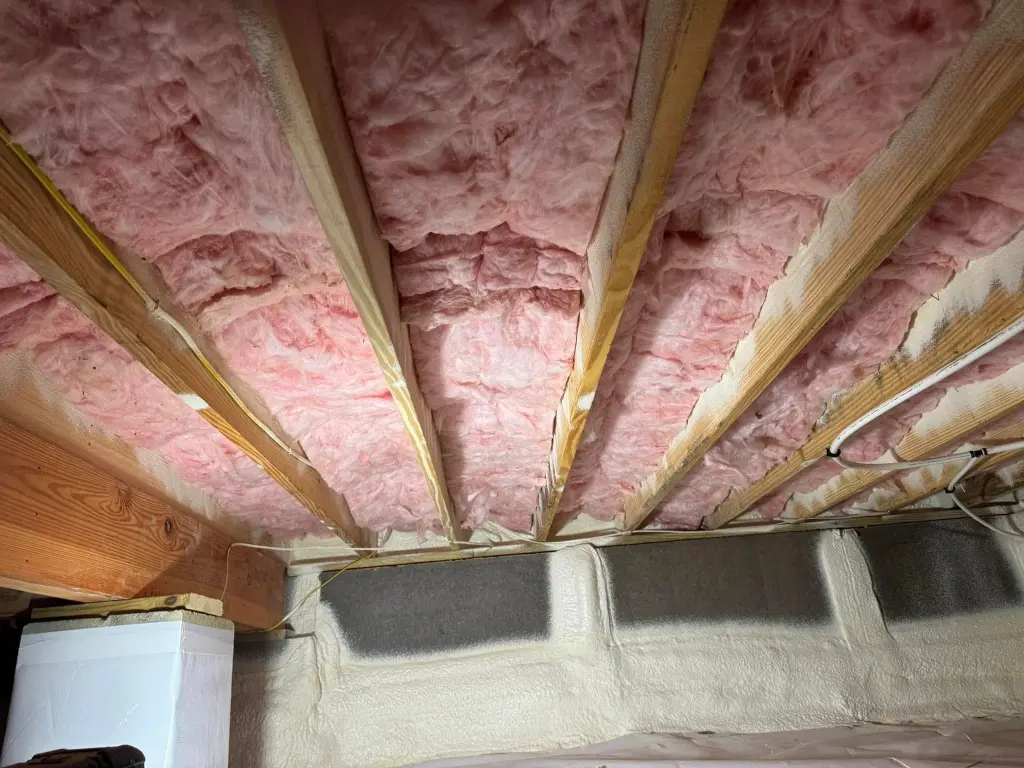
North Carolina does not require a specific insulation contractor license at the state level, but general contracting rules may apply depending on project scope. At minimum, the contractor you hire should carry general liability insurance and workers’ compensation coverage. Ask for a certificate of insurance and verify that it is current. If a worker is injured on your property or damages your home during installation, you want to confirm you are not exposed to liability. Understanding the differences between available types of insulation in Troy, NC can also help you choose a qualified contractor and the right solution for your property.
Industry certifications demonstrate that a contractor has invested in technical education beyond the basics. Organizations like the Insulation Contractors Association of America (ICAA) offer certification programs that test a contractor’s knowledge of materials, installation methods, and building science. A contractor who holds active certifications has a measurable commitment to professional standards.
Ask for references from recent projects in or near Badin. A contractor with a solid local track record will have multiple customers willing to discuss their experience. Pay attention to how quickly and willingly they provide these references. Hesitation or vague answers are a red flag.
One of the most important things to watch for is how a contractor talks about insulation performance. The Federal Trade Commission’s R-Value Rule (16 CFR Part 460) requires professional installers to provide R-value information based on standard test results. This means every contract or receipt you receive must show the coverage area, thickness, and R-value of the insulation installed. For loose-fill insulation, the receipt must also include the initial installed thickness, minimum settled thickness, and the number of bags used.
Some contractors try to sell insulation by quoting inches rather than R-values. This is a problem because different materials deliver very different R-values per inch. R-value per inch for common materials ranges from roughly R-2.2 for loose-fill fiberglass to R-6.0 or higher for closed-cell spray foam. If a contractor tells you they will install “10 inches of insulation” without specifying the material and the resulting R-value, you cannot accurately compare their proposal to anyone else’s. Always insist on R-value guarantees in writing.
| Red Flag | Why It Matters |
|---|---|
| No written contract or receipt | Violates FTC labeling requirements and leaves you with no documentation |
| Quoting only inches, not R-values | Makes it impossible to compare performance or verify code compliance |
| Installers paid per square foot covered | Creates incentive to rush through the job, leading to gaps and compression |
| No mention of air sealing | Air leaks significantly reduce insulation effectiveness and should be addressed first |
| Unwilling to show bag labels or product data | You cannot verify the material’s actual R-value or quality |
| No discussion of ventilation needs | Especially with spray foam, proper ventilation and re-occupancy times are health and safety matters |
| Significantly lower bid than competitors | Often indicates the contractor is cutting corners on material quality, thickness, or labor |
A reliable contractor does not simply look at your attic from the hatch and hand you a quote. A proper assessment includes:
Contractors who skip any of these steps are not giving you the information you need to make a sound decision.
| Project Type | What to Prioritize in a Contractor | Key Considerations |
|---|---|---|
| Attic retrofit on older home | Air sealing expertise, knowledge of ventilation requirements, loose-fill or spray foam capabilities | Existing homes often have significant air leaks that must be sealed before adding insulation |
| New construction | Grade I installation standards, ability to inspect before drywall, familiarity with NC energy code | Mistakes are much harder and more expensive to fix after drywall is up |
| Crawlspace encapsulation | Moisture management knowledge, vapor barrier installation, understanding of closed vs. vented crawl space debate | Badin’s humidity makes moisture control a priority in crawlspaces |
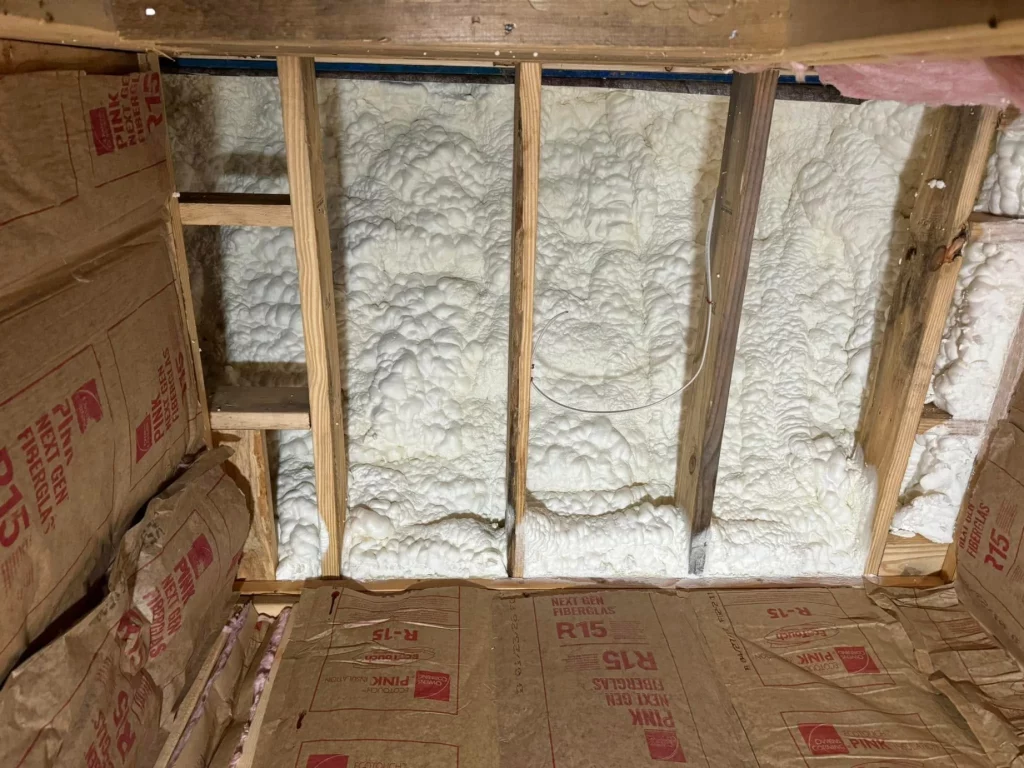
| Spray foam installation | Manufacturer-specific training, proper re-occupancy protocols, temperature and humidity monitoring during install | Spray foam requires controlled conditions and specific safety measures |
A contractor who checks all the right boxes will demonstrate several clear qualities throughout your interactions. They will explain their process in terms you can understand, without talking down to you or hiding behind jargon. They will bring up topics like air sealing, vapor management, and ventilation before you have to ask. They will provide a detailed written proposal that specifies R-values, coverage areas, materials, and thickness for every area of the project. They will welcome your questions about their insurance, certifications, and references, and they will answer them directly. They will also offer to inspect the work after installation and confirm that the specified R-values were actually achieved. These behaviors indicate a contractor who takes pride in their work and stands behind the results.
Spray Foam Pro serves Badin, NC and the surrounding communities with professional spray foam insulation installation backed by building science expertise and a commitment to code-compliant results. Our team assesses every project individually, recommends the right solution for your specific home or building, and documents every detail from R-values to coverage areas. Request a quote today or call us at (910) 606-6247 to schedule an on-site assessment. You can also reach our team directly at [email protected] with any questions. Let us show you what professional insulation work looks like.
Request a Quote | Schedule an Insulation Assessment
North Carolina does not have a separate insulation contractor license, but general contracting licenses may apply depending on the project’s total value. Always verify that your contractor carries adequate insurance regardless of licensing status.
Badin is in Climate Zone 4A, which requires a minimum of R-60 for an uninsulated attic and R-49 if you already have 3-4 inches of existing insulation, according to ENERGY STAR recommendations.
Air leaks reduce insulation effectiveness, and once insulation covers an area, those leaks become much harder to find and seal. HUD recommends sealing gaps first to maximize the performance of your insulation investment.
Under the FTC’s R-Value Rule, your contractor must provide a signed contract or receipt showing the coverage area, thickness, and R-value of every insulation type installed. For loose-fill insulation, this must also include bag count and settled thickness.
If your home was built before modern energy codes were enforced, or if you notice uneven temperatures, high energy bills, or drafts, you likely need an assessment. ENERGY STAR reports that 9 out of 10 U.S. homes are under-insulated, making a professional evaluation a worthwhile step for most homeowners.