What Type of Crawl Space Insulation Works Best for Homes in Charlotte, NC?
Jacob Wilberg
November 5th, 2026
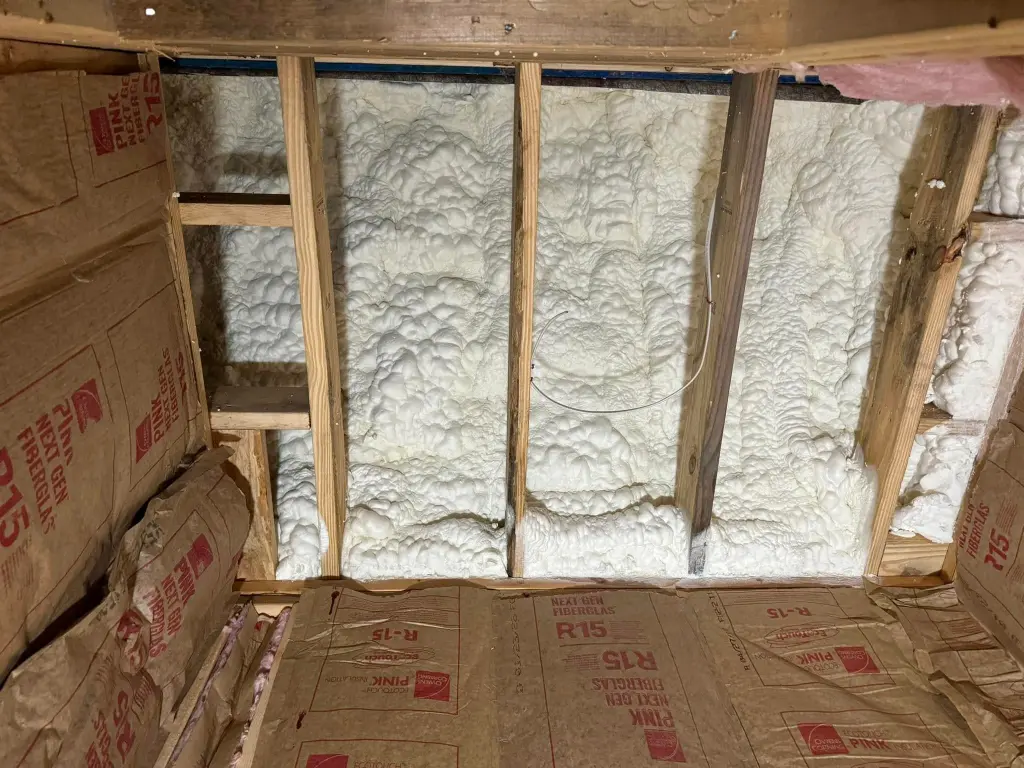
The crawl space insulation in Charlotte, NC homes gets the most benefit from closed-cell spray foam on the walls of a sealed, encapsulated crawl space. Fiberglass batts struggle here because they soak up damp air, lose R-value, and grow mold. Closed-cell foam blocks moisture, seals air leaks, and holds its rating in our mixed-humid climate.
TL;DR
Closed-cell spray foam on foundation walls is the strongest performer in a sealed crawl space.
Fiberglass batts soak up humidity, sag, and grow mold under Charlotte homes.
Rigid foam board is the sensible budget option for sealed walls.
A vented crawl space needs floor joist insulation instead, usually around R-19 here.
Moisture control decides whether insulation survives, so treat it like part of the job.
Why Charlotte’s Climate Is Hard on Crawl Space Insulation
Charlotte sits in a mixed-humid climate zone, and that shapes everything under your floor. Summer air carries moisture through foundation vents, and that damp air settles on cool joists, ducts, and insulation. A crawl space insulation guide can help explain how insulation addresses these conditions. Piedmont clay soil holds rainwater too, so vapor keeps rising from the ground long after a storm ends. The pattern shows up as sagging batts, mold on the wood, musty smells drifting upstairs, and cold floors each winter. A guide from the EPA puts it plainly: the key to mold control is moisture control. Insulation that ignores moisture ends up as money you spend twice.
Crawl Space Insulation Types Compared
There are four main crawl space insulation types around Charlotte, and they don’t age at the same speed here. Here’s where each one belongs and where we usually pull it out.
Fiberglass Batts
Fiberglass is the pink stuff in most older crawl spaces, and it’s usually the first thing we remove. It soaks up moisture, loses much of its rated R-value when damp, and slides out of the joists over time. A vented space with a vapor barrier and support rods can keep it alive, but treat it as a short-term fix.
Rigid Foam Board
Polyiso or XPS panels glued to foundation walls don’t drink water and can’t sag. At roughly R-5 per inch, rigid foam is the sensible pick for sealed walls on a budget. Every seam needs sealing, and the top of the wall should keep a 3-inch strip open for termite inspections.
Closed-Cell Spray Foam
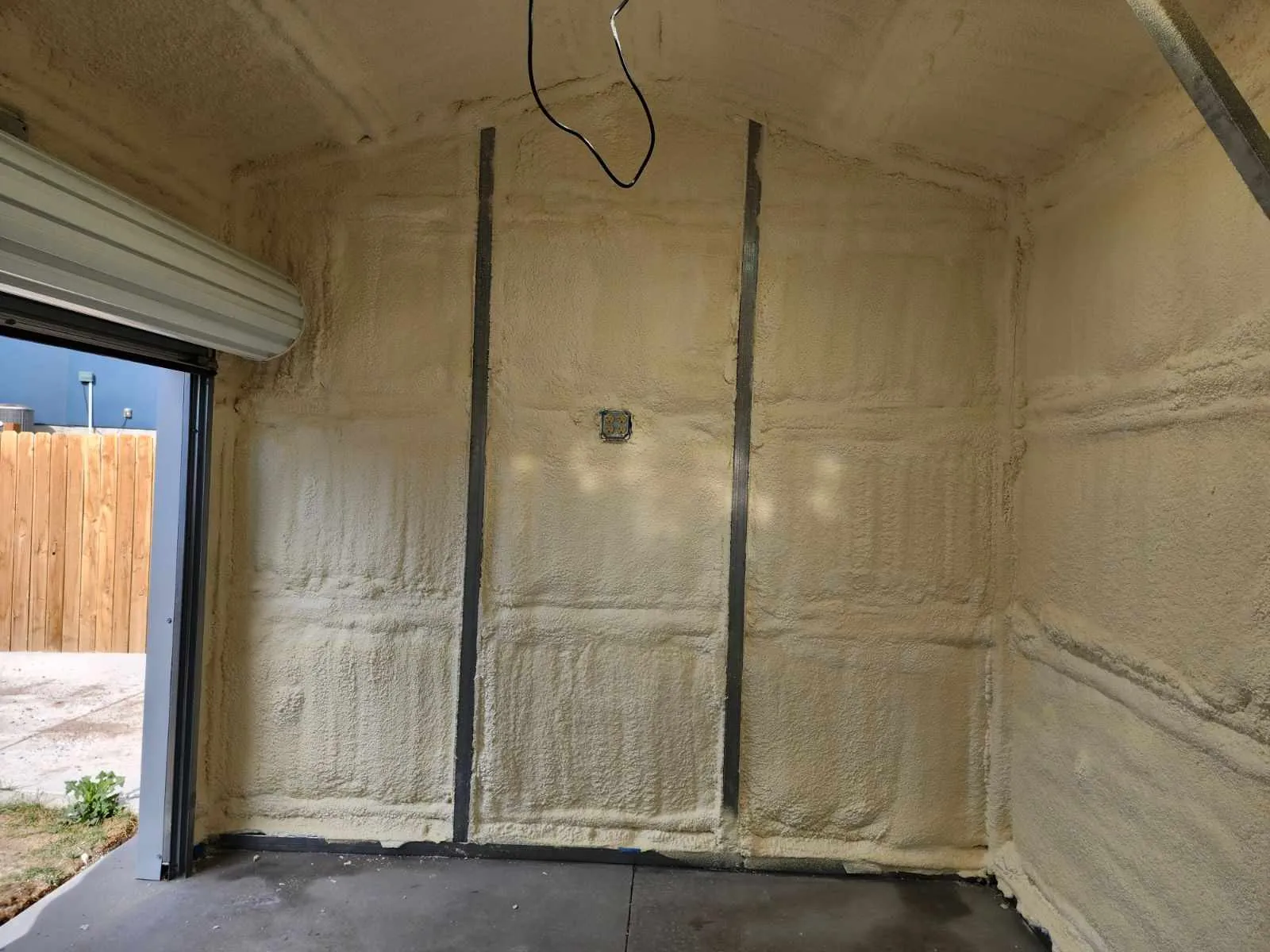
This is our workhorse for crawl space work in Charlotte. It insulates at about R-6 per inch, air seals as it expands, and bonds to concrete or block permanently. Two to three inches covers most walls, and the same pass seals the rim joist, usually the leakiest band in the floor.
Open-Cell Spray Foam
We turn this one down for below-grade spaces. Open-cell foam is vapor permeable, so it absorbs humid air and can hold moisture against your framing. If a quote looks unusually cheap, ask which foam is actually going in.
Should You Insulate the Walls or the Floor Joists?
Material matters less than location. The right move depends on one question: is your crawl space vented or sealed?
Vented crawl space, with foundation vents still open: the thermal boundary belongs at the floor. Insulation goes between the joists, and the number most Charlotte inspectors work with is about R-19, sitting on a ground vapor barrier.
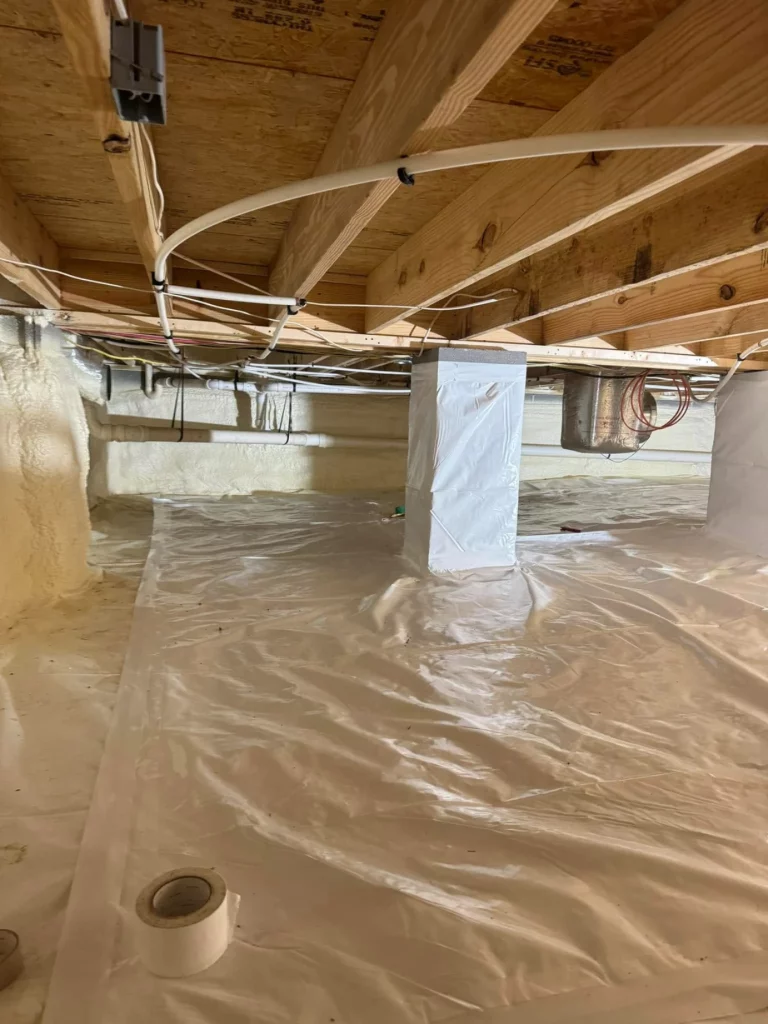
Sealed crawl space, with vents closed and a liner down: the space becomes part of your home, so insulation moves to the foundation walls, roughly R-5 continuous in this zone, with the rim joist sealed too. Researchers at Advanced Energy in Raleigh have studied Southeastern crawl spaces for decades, and their guides treat the sealed, wall-insulated setup as the standard under North Carolina’s closed crawl space code provisions.
The Setup We Recommend for Charlotte Homes
For most homes we work on, the best crawl space insulation isn’t one product. It’s a system installed in the right order, with moisture handled before anything gets attached.
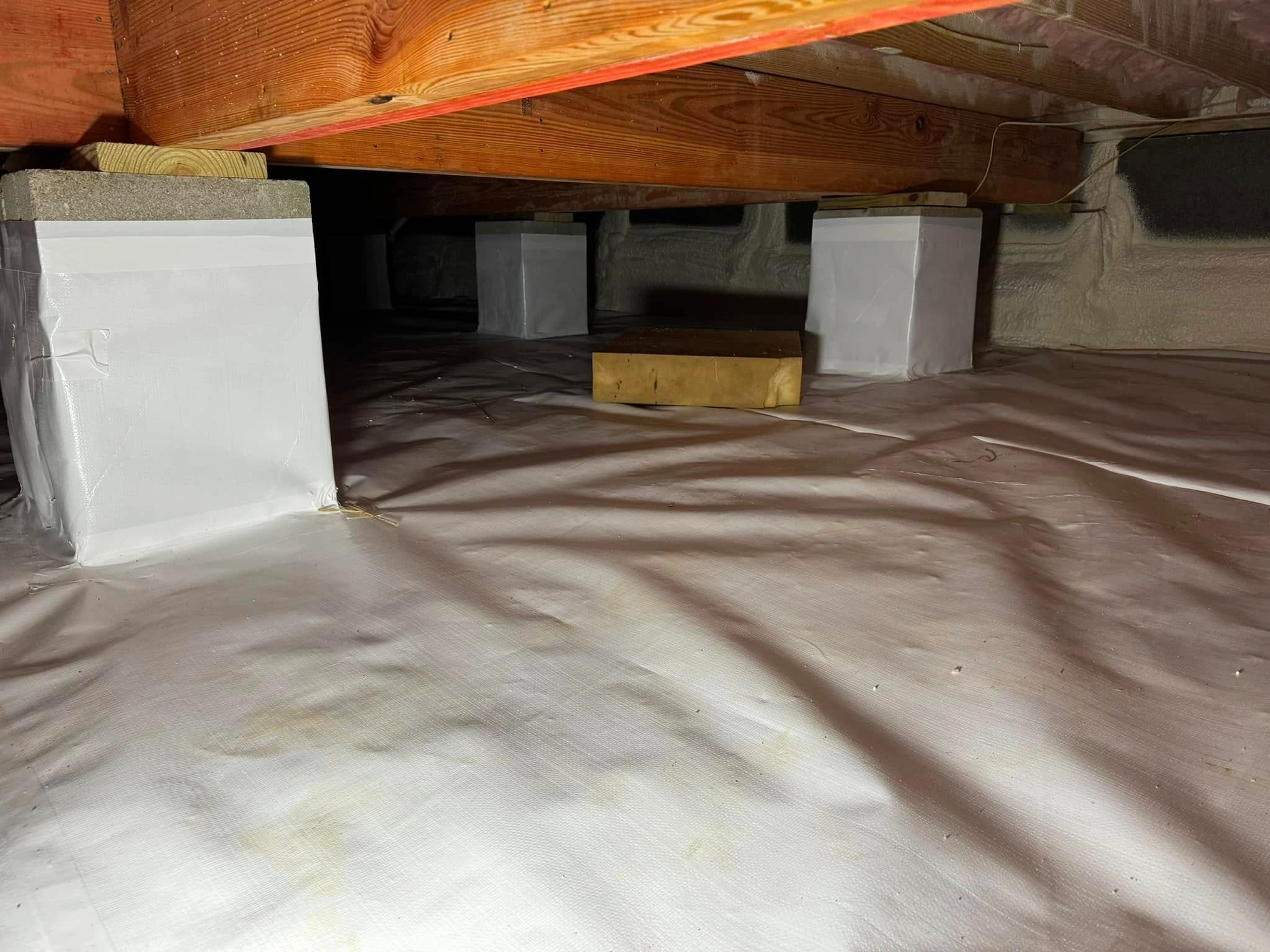
Vapor barrier: a 10 to 20 mil liner, sealed at seams and piers, so ground vapor stops before it reaches anything.
Sealed vents and foam walls: two to three inches of closed-cell foam from the rim joist down, leaving the termite inspection strip visible.
Dehumidifier: most sealed spaces need one, and Angi’s Charlotte cost guide lists installed units at $800 to $3,200.
Realistic budget: Angi’s local data puts full encapsulation in Charlotte at an average of about $5,352, with most projects between $4,865 and $14,595. Insulation-only work costs less and fixes less.
What Our Crew Checks Before We Insulate Anything
Insulating a wet crawl space is how budgets get wasted. Here’s what we look at first:
Water sources: standing water, drainage trouble, and grading problems get fixed before anything else.
Moisture readings: wood and air readings show whether humidity is already out of range.
Existing insulation: damp, matted, or fallen batts come out, along with any mold or pest cleanup.
Ducts and framing: ductwork, wiring, and joist condition get documented so the plan fits the space.
Frequently Asked Questions About Crawl Space Insulation in Charlotte, NC
How Thick Should Closed-Cell Spray Foam Be in a Crawl Space?
Thickness follows the target, not a habit. Sealed walls usually need just enough to reach the code-level R-value, and extra foam there mostly adds cost. Floor joists above a vented space are the exception, because hitting R-19 takes about 3 inches.
Do I Need to Remove Old Fiberglass Batts Before New Insulation Goes In?
If batts are damp, matted, or fallen, yes, they’re holding moisture against your subfloor. If the space is being sealed, they usually come out anyway because the walls take over as the insulated surface.
How Long Does a Crawl Space Insulation Job Take?
Insulation-only work usually wraps up in one to two days. Vapor barriers, drainage fixes, or mold cleanup stretch the schedule because those steps come first.
Can Spray Foam Trap Moisture and Rot My Joists?
Closed-cell foam doesn’t soak up water, so it sits fine over dry, sound wood. Trouble starts when a space gets sealed while a leak or drainage problem is still active. That’s why we won’t foam over an unresolved water problem.
Can I Insulate My Crawl Space Myself?
Rigid foam board on walls is the realistic do-it-yourself project if the space is clean and dry. Spray foam takes heated rigs and trained applicators, and wet or moldy spaces need professional cleanup before anything new goes in.
Sources
Advanced Energy, Crawl Spaces – sealed crawl space guidance for the Southeast and an overview of North Carolina’s residential code requirements.
I’m Jacob Wilberg, with three years of experience in the insulation industry, and I founded my company in 2025. I hold Master Insulation Installer certification and focus on proper installation and better customer experiences.
best crawl space insulation Charlotte, crawl space insulation Charlotte NC, crawl space insulation materials, crawl space insulation types, crawl space moisture control, fiberglass crawl space insulation, rigid foam insulation, spray foam crawl space insulation
A reliable Spray Foam Insulation Contractor in Albemarle, NC shows proof before promises. Verifying credentials upfront protects homeowners from unqualified…